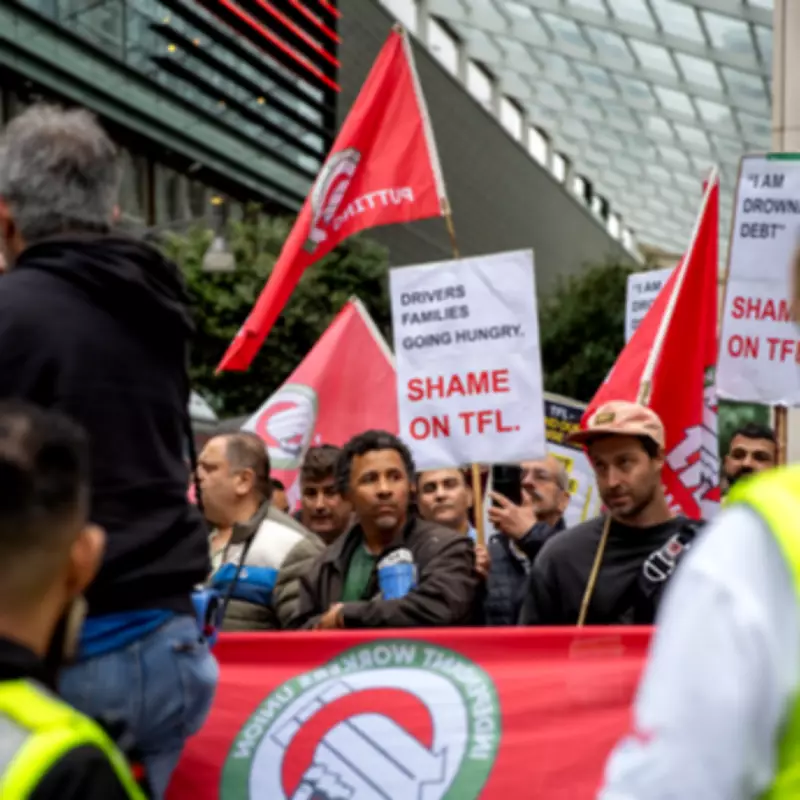
Private Hire Drivers Launch Valentine's Day Strike Over Exploitation
Thousands of private hire drivers working for major platforms like Uber, Bolt and Addison Lee are taking coordinated action this Valentine's Day, urging customers to boycott ride-hailing apps and joining a central London motorcade protest. The strike, organised by the Independent Workers of Great Britain (IWGB) Private Hire Drivers branch, highlights what unions describe as systemic exploitation, falling pay, dangerous working conditions and inadequate regulatory oversight from Transport for London (TfL).
Drivers Face Extreme Hours and Passenger Violence
Nader Awaad, the 59-year-old chairman of the IWGB Private Hire Drivers branch from Walthamstow, has painted a stark picture of the industry. "The UK's private hire industry is a wild west," he told The Mirror. "With no protection from unfair dismissal, drivers see their livelihoods disappear in the blink of an eye." He emphasised that drivers frequently work gruelling 12 to 18-hour shifts just to cover basic operating costs like fuel, insurance, vehicle maintenance, traffic fines and platform commissions, often earning less than the minimum wage after expenses.
Safety remains a critical and tragic concern. Awaad pointed to the lack of real safety measures, leaving drivers unprotected from passenger violence which can result in serious injuries or death. He cited the heartbreaking case of Gabriel Bringye, a 37-year-old private hire driver from Tottenham, north London, who was fatally stabbed during a robbery by teenagers in February 2021. Following the trial, Bringye's family established Gabriel's Campaign for Driver Safety, calling for stronger protections to prevent future tragedies.

Pay Structures and Regulatory Failures Under Fire
The protest centres on several key grievances. Drivers criticise "upfront" or "dynamic pricing" algorithms that set passenger fares and determine driver pay, a system which Oxford University research indicates has led to declining earnings for Uber drivers. Awaad highlighted a specific case where a passenger paid £111 for a Heathrow-to-central London ride, but the driver received only £29. "After expenses, many drivers are earning less than the minimum wage," he stated.
This action follows the landmark Supreme Court ruling that classified Uber drivers as workers entitled to minimum wage and holiday pay. Awaad argues that operators have responded by adjusting pay structures in ways that ultimately reduced driver earnings. Beyond pay, the union is demanding stricter passenger identity checks to combat incidents involving stolen or fraudulent accounts, and wants TfL to oversee any decisions regarding sudden driver account deactivations by operators.
Industry and Regulatory Responses
Awaad's attempts to present detailed evidence of these issues directly to TfL Commissioner Andy Lord were reportedly declined. When contacted by The Mirror, a TfL spokesperson defended their approach: "We take our responsibilities as the licensing authority seriously to ensure that everyone can travel safely and reliably. Operators must meet high standards in order to be licensed in London and we continually keep licensing requirements under review to ensure safe services for Londoners."
In response to the concerns, an Uber spokesperson emphasised their engagement with drivers and the benefits offered, including flexibility and transparency over trips and earnings. They noted their industry-leading agreement with the GMB Union, which is not participating in this strike action.
A Bolt spokesperson outlined their different model outside London, called Bolt Flex, which allows drivers to set their own fares and operates on a transparent, flat commission. On safety, Bolt stated it has committed €100 million globally to strengthen platform safety, leading to a reported 14% reduction in safety-related incidents. They highlighted features like passenger ratings, live trip sharing, a 24/7 emergency assist button and affordable CCTV schemes for drivers.

Calls for Legislative Change and Public Support
The IWGB is actively lobbying Parliament for legislative reforms to address pay transparency, commission levels, safety protections, and due process in account suspensions. Alex Marshall, IWGB president, urged public solidarity: "If drivers and riders unite, we can push TfL and the government to implement protections similar to New York, France, Mexico and Barcelona. Drivers deserve fair pay, capped hours, holidays and safety measures. The time for change is now."
The Valentine's Day motorcade protest, scheduled from 5pm in central London, represents a significant escalation in the drivers' campaign for dignity, safety and a fair wage in the UK's gig economy.