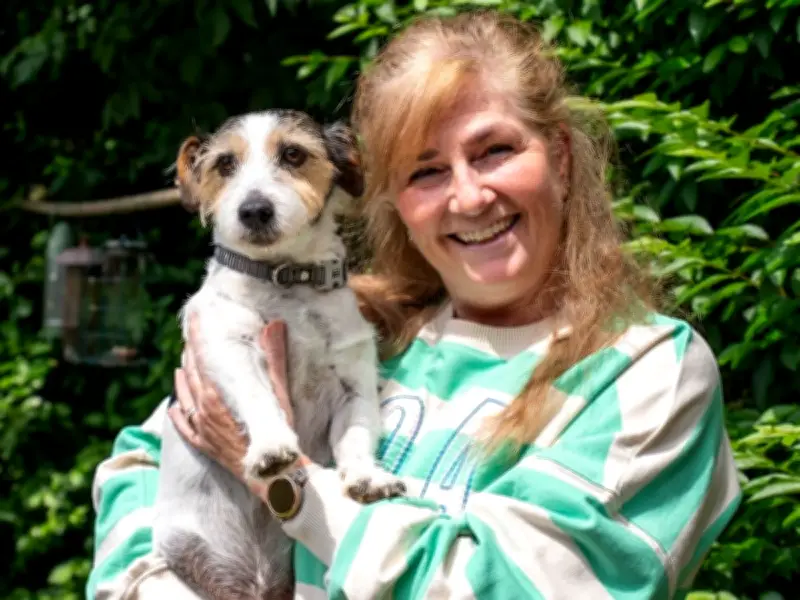
A persistent itch on her shoulder while on a family skiing holiday led to a life-changing melanoma diagnosis for Julie Phillips-Spurway, a mother of three from Picketston, Barry.
In 2022, while on holiday, Julie experienced a consistent itch on her right shoulder blade. She asked her daughter to take a photo, revealing a collection of suspicious moles on her back. “She took a photo and the moment I saw it I knew something wasn't right,” Julie recalled. “I went to my GP immediately after I got home.”
Diagnosis and initial treatment
Her GP referred her to the dermatology department at the University Hospital of Wales in Cardiff, where one of the moles was removed. It was confirmed to be melanoma, one of the most serious forms of skin cancer. Further surgery found the cancer had been completely removed. “I honestly thought I'd dodged a bullet; like I'd been given a second chance,” the now 55-year-old said. “I was told everything was clear and to put it behind me.”
Two years later, a new symptom
In 2024, a chance radio advert prompted Julie to check herself again. After hearing the phrase “you're supposed to have an armpit, not an arm puff,” she noticed a slight swelling beneath her right arm. Despite initial reassurance it could be a muscle strain, the lump continued to concern her. “I couldn't shake the feeling that something wasn't right. It was tiny but every time I looked at it I became more convinced I needed it checked,” she said.
Her GP referred her to the breast clinic at University Hospital Llandough, where she underwent a mammogram, examination, and biopsy. In April 2024, she received the news that cancer cells had been found. “They told me they'd found cancer cells. It felt like the world stopped,” she said.
Further surgery and treatment
Julie cancelled plans for a month-long holiday to Thailand to undergo further investigations. Scans revealed the melanoma had spread to one lymph node in her right armpit. Surgeons removed 13 lymph nodes in June 2024, with only one found to contain cancer. During the same operation, doctors also removed a mole above her right ankle after Julie noticed it had changed in appearance. Tests confirmed it was also melanoma, requiring further surgery and a skin graft.
Following her operations, Julie began preventative immunotherapy. Although initially successful, the treatment had to be stopped after it caused permanent damage to her adrenal glands, leaving her dependent on lifelong hydrocortisone medication. “I used to be a very active person and I loved jogging, but I now suffer a lot with fatigue,” she said.
Clear scans and a new outlook
Despite the setbacks, Julie has since received four consecutive clear scans and continues to attend dermatology appointments every three months. She says the experience has transformed her outlook on life. “We've made memories, travelled and appreciated every day,” added Julie, who has since become a grandmother. “Cancer is terrifying, but being told there's no evidence of disease is something I'll never take for granted.”
Now, she hopes others will learn from her experience. “If you notice something different, however small it seems, don't ignore it and don't let anyone talk you out of getting it checked. You know your own body better than anyone. Catching melanoma early can save your life. Delaying could cost it.”