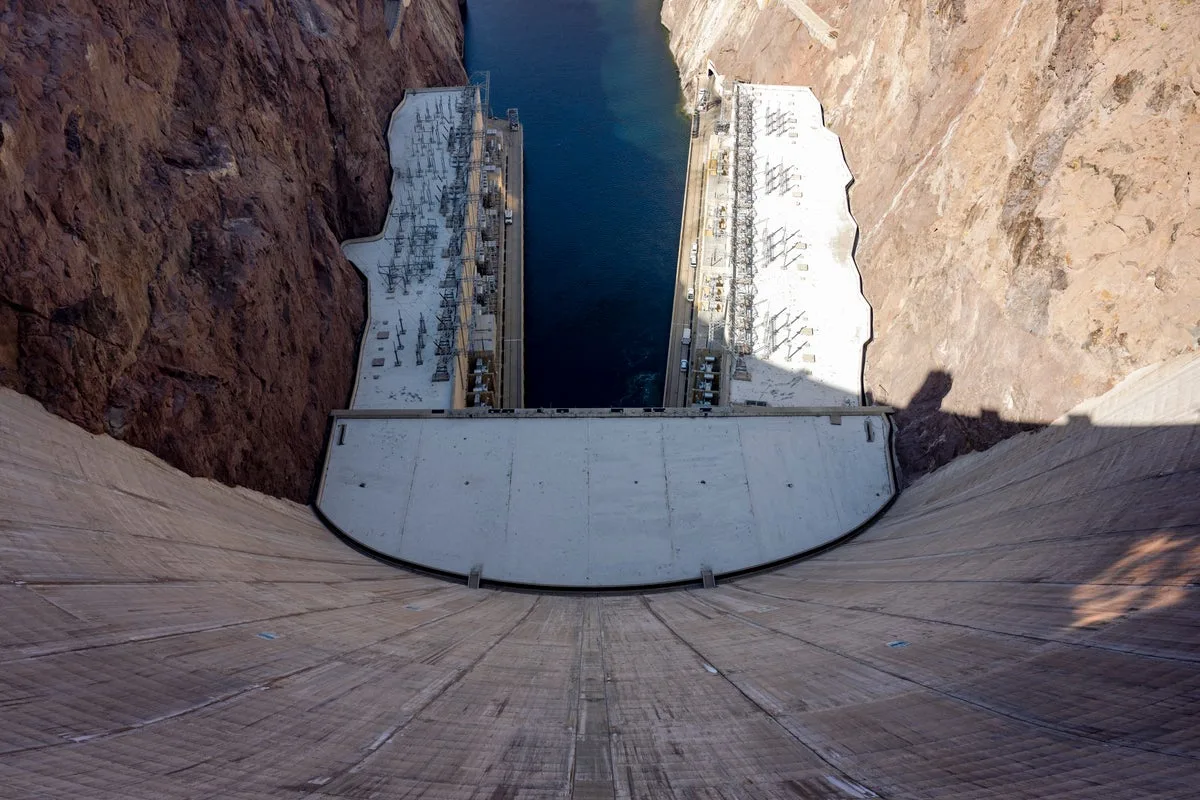
The Hoover Dam could generate up to 40 percent less power this year as federal and state officials take emergency measures to protect the Colorado River system from a historic drought exacerbated by climate change.
On April 17, the US Bureau of Reclamation announced it will reduce water releases from Lake Powell, upstream of Lake Mead, to prevent the Glen Canyon Dam from shutting down completely. This will further lower Lake Mead's already record-low water levels, potentially leaving some of Hoover Dam's turbines unable to operate.
The bureau said long-term drought has reduced Colorado River system storage to about 36 percent of capacity, with record-low snowpack and record-breaking March heat intensifying conditions. It warned that reduced flows from Lake Powell could accelerate the decline of Lake Mead, leading to up to a 40 percent reduction in Hoover Dam's hydropower capacity as early as this fall.
Currently, only five of the dam's 17 turbines are generating power due to low water levels, with one undergoing repairs. Lower power output will force cities like Las Vegas and Los Angeles to buy electricity on the open market, often at higher costs that are passed on to consumers.
Officials are collaborating to conserve water in Lake Mead, but experts say the Colorado River basin is running out of time. Lake Mead is predicted to fall more than eight feet lower in the next two years, compounding the crisis.