

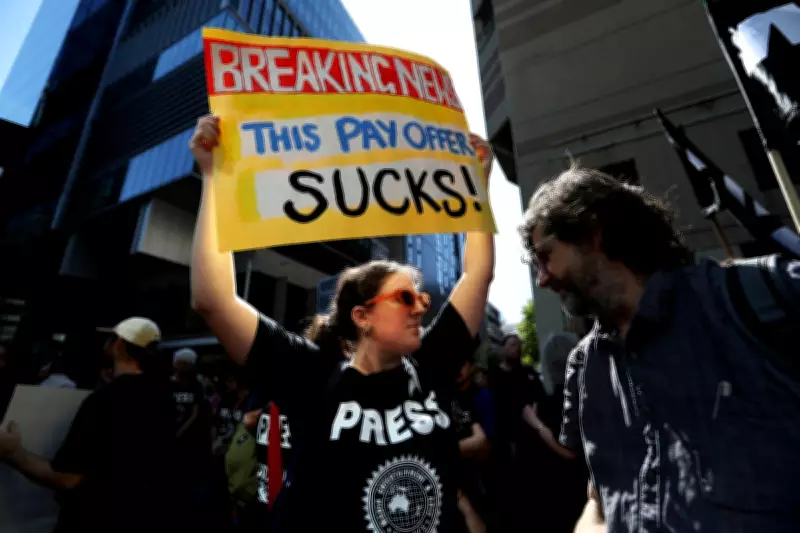
ABC Journalists Stage Historic 24-Hour Strike Over Pay Dispute
In a significant industrial action, hundreds of staff from the Australian Broadcasting Corporation (ABC) have staged a 24-hour strike, marking the first such walkout in two decades. The large-scale protests erupted outside the broadcaster's offices across Australia, with journalists and employees demanding better pay and improved working conditions.
Programmes Go Dark as Staff Walk Out
The industrial action has led to the disruption of several flagship ABC programmes. Key television and radio shows including 7.30 with Sarah Ferguson, AM, PM, The World Today, and Radio National Breakfast have been taken off air between Wednesday and Thursday. These programmes are being replaced with content from the BBC for the duration of the strike.
ABC Radio will broadcast national programmes across its local stations during the protected industrial action. Music stations Triple J and ABC Classic will continue to operate but will only air pre-programmed music without presenters. The broadcaster's 7pm TV news bulletin has been cancelled, with an episode of Australian Story scheduled in its place. Emergency broadcasting services remain unaffected.

Pay Offer Rejected by Majority of Staff
The strike was triggered after a majority of ABC staff voted to reject the broadcaster's latest pay offer. The proposal included a 10 per cent pay rise staggered over three years, with a 3.5 per cent increase in the first year followed by 3.25 per cent in the subsequent two years. Additionally, a A$1,000 bonus was offered to all ongoing and fixed-term staff covered by the Enterprise Bargaining Agreement.
Despite these terms, 60 per cent of participating staff voted against the offer. The Media, Entertainment and Arts Alliance (MEAA), representing many of the protesting employees, argued that the proposed pay rise falls below Australia's annual inflation rate, which stood at 3.8 per cent in January. The union also highlighted concerns over short-term rolling contracts, which they claim have been inadequately addressed.
Protests Draw Prominent Figures and Widespread Support
Approximately 2,000 journalists and staff members gathered outside ABC headquarters in Sydney and other offices in metropolitan, rural, and regional areas. The protests included prominent ABC journalists such as David Marr and Triple J favourites Abby Butler and Tyrone Pynor.
Michael Slezak, an ABC journalist and co-chair of the MEAA ABC National House Committee, outlined three key demands: fair pay, fixed-term contracts, and career progression. He criticised the pay offer as "a below-inflation pay offer; that is just a pay cut with better branding."
Veteran journalist Fran Kelly, who participated in the last strike 20 years ago, addressed the crowd, emphasising the financial struggles faced by staff. "I really think it's time the ABC started acknowledging the talented pool of young producers and journalists we have, and start backing them. It's not acceptable that they're stuck at a pay level that is not enough to live on in Sydney or Melbourne or wherever you are," she stated.
Management Response and Apology
ABC's managing director, Hugh Marks, apologised for the disruption, describing the situation as "very unfortunate." He expressed regret over the pay negotiations reaching this point and acknowledged the difficult position faced by staff. "On behalf of the ABC, I feel terrible," he told 702 ABC Sydney. "And I'm sorry to some of the staff that I know are in a really difficult position today."
Marks defended the pay offer, suggesting that with the additional $1,000 bonus, some workers would receive pay increases above inflation. However, this argument has failed to appease the striking staff, who continue to call for a more substantial and immediate resolution to their grievances.
The ABC employs over 4,400 people, with around 2,000 staff in news roles. The strike underscores ongoing tensions within the public broadcaster as it navigates financial pressures and workforce demands in a challenging economic climate.






