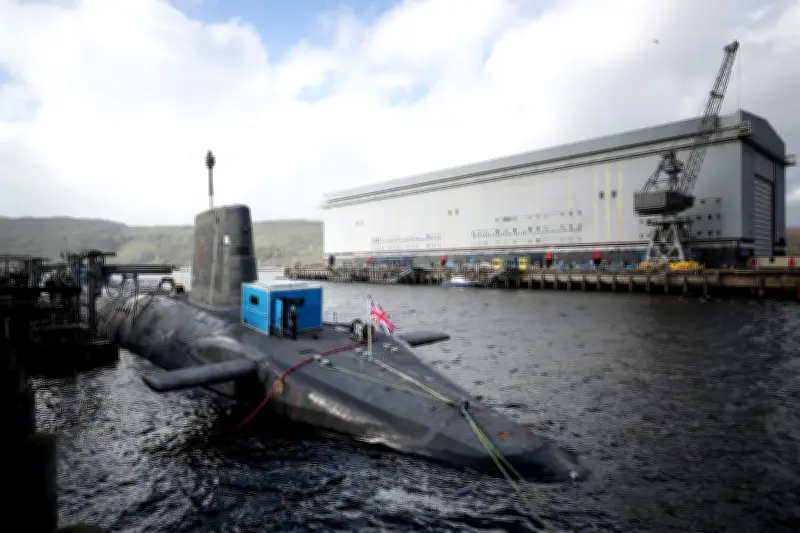
A contract worth around £8 billion has been awarded to UK firm Babcock to improve the maintenance and availability of the UK's submarines, creating 900 jobs at Faslane. The Ministry of Defence (MoD) said the five-year Gateway Agreement will allow Royal Navy submarines to get back to sea faster by transforming submarine maintenance and critical naval base services.
Thousands of new roles across the UK
The MoD said the contract will create around 3,000 highly skilled roles across the UK. At HMNB Clyde, known as Faslane, this includes 900 jobs and 450 apprentice and graduate opportunities. Faslane is home to the Royal Navy's Submarine Service and the UK's nuclear deterrent.
Prime Minister Andy Burnham said: “With this new agreement, we’re not just investing in our national security, we’re also making a huge investment in our people. We’re providing opportunities to get young people into work, to bring jobs to communities in Clyde, and to boost growth across the UK. Keeping the public safe will always be my top priority. This investment is a clear demonstration of that commitment – supporting not just the submarines that maintain our nuclear deterrent but also the people who build and maintain them.”
Support for the Clyde Transformation Programme
The MoD said the Gateway Agreement will also support delivery of the wider Clyde Transformation Programme, which will see more than £15 billion invested at HMNB Clyde over the next decade. Faslane has around 8,000 military and civilian personnel and is Scotland's largest military establishment.
Defence Secretary Wes Streeting told BBC Radio Scotland: “As part of the £8 billion announcement we’re making today for submarine repair and maintenance, we can expect to see around 900 new jobs on the Clyde, in addition to 450 new early career opportunities, things like apprenticeships and graduate job roles that will be supported and sustained through the contract. Today’s announcement is good news for the Royal Navy because it improves the availability, the repair, the maintenance of our submarine and ship fleet, so that’s good news for them. But it’s also good news for jobs, for opportunities, and I want to make sure that we’re investing more in defence, that we are investing in those jobs and opportunities right across the length and breadth of the country. Defence is a big part of the industrial picture in Scotland, £2.5 billion of investment went into Scotland through defence last year alone and we know that sustains just over 12,000 jobs overall. This is great news for the Royal Navy, great news for jobs, great news for Scotland.”
Political and industry reaction
Scottish Secretary Douglas Alexander welcomed the news, saying: “In an increasingly volatile world, our submarines are the UK’s first and final line of defence, and the Clyde is where they are kept ready. This £8 billion deal will get them back to sea faster while providing a real defence dividend for Scotland – with new skilled jobs, new opportunities for our young people, and investment flowing to Scottish suppliers. Backing the home of the Royal Navy Submarine Service and the UK’s nuclear deterrent means backing our security, our Nato allies and the communities around the Clyde. Alongside a wider £15.1 billion UK Government programme to modernise the base over the next decade, we are future-proofing our defence, improving living and working conditions for our submariners and driving reindustrialisation in Scotland.”
Babcock said the deal is the largest contract award in its history, comprising an £8 billion contract and £0.7 billion framework. Harry Holt, Babcock chief executive, said: “We are very proud at Babcock of the critical support that we provide to the Royal Navy, in particular our unwavering support to the continuous at-sea deterrent – the UK’s highest defence priority. The Gateway Agreement will enable us, in collaboration with the MoD, to continue our support for the deterrent, increase submarine availability, and develop the skills, infrastructure and capability to support the Royal Navy’s submarine force for the years ahead.”