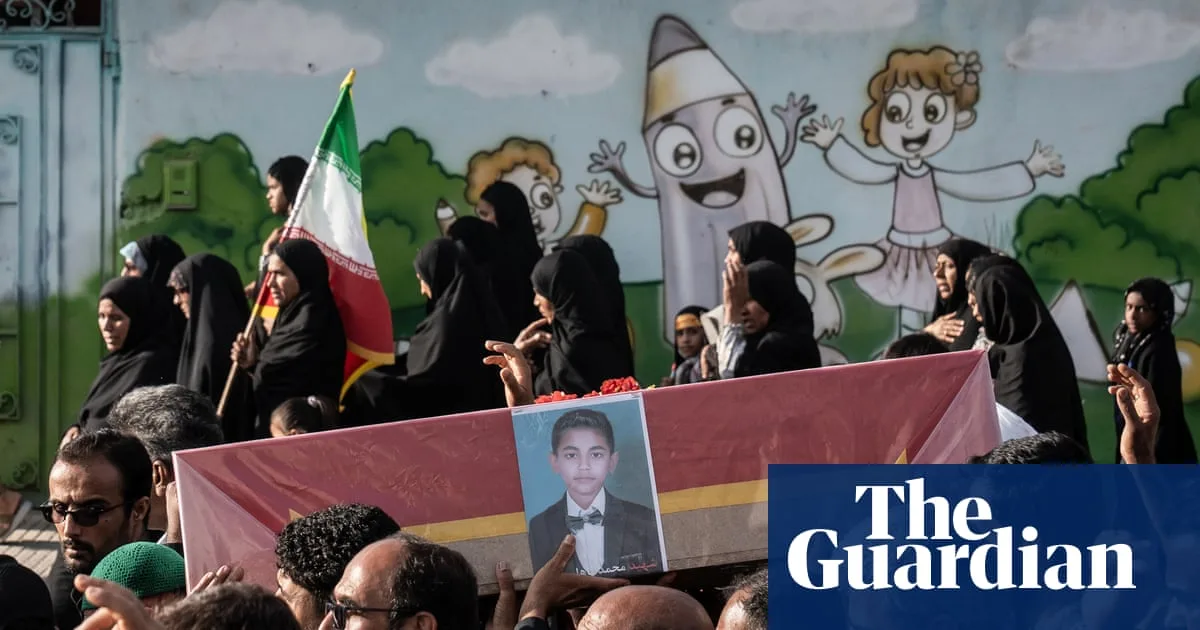
The head of the UN's humanitarian agency, Tom Fletcher, has said the $2bn (£1.5bn) a day spent by the Trump administration on the war in Iran could have funded efforts to save more than 87 million lives. Speaking at Chatham House in London, Mr Fletcher criticised the conflict as 'reckless' and warned that the normalisation of violent language, such as threatening to bomb Iran 'back to the stone ages', was dangerous and encouraged other autocrats.
Mr Fletcher, a former UK diplomat and undersecretary-general for humanitarian affairs, said the war was having a ripple effect across the globe, with food and fuel inflation approaching 20 per cent. He predicted the impact would be felt for years in sub-Saharan Africa and east Africa, pushing millions more into poverty. He noted that his entire budget target for a hyper-prioritised plan to save 87 million lives is $23bn, which could have been funded in less than a fortnight of the conflict.
The UN official also took aim at British politicians, accusing them of forming a 'circular firing squad' for over a decade, leaving the UK in a 'defensive crouch'. He described the scale of recent UK aid cuts as so severe that people 'giggle' at conferences when the UK claims to be a thought leader on the issue. Mr Fletcher is grappling with a humanitarian funding crisis he described as 'cataclysmic', with a 50 per cent cut in his budget driven by both US and international cuts to overseas aid.
Mr Fletcher revealed he was losing sleep over whether to accept US aid funding if it came with new conditions concerning issues such as abortion or transgender rights, stating he did not intend to do so. He described UN relations with the Trump administration as an 'absolute rollercoaster ride', noting progress in convincing the US president's team that the UN is not just 'a bunch of woke, incompetent, useless, exhausted bureaucrats'. He contrasted statecraft with what he called 'real-estatecraft', saying the Trump team prioritises personal relationships over institutions.