

US Consumers Face Soaring Costs as Iran Conflict Fuels Global Economic Volatility
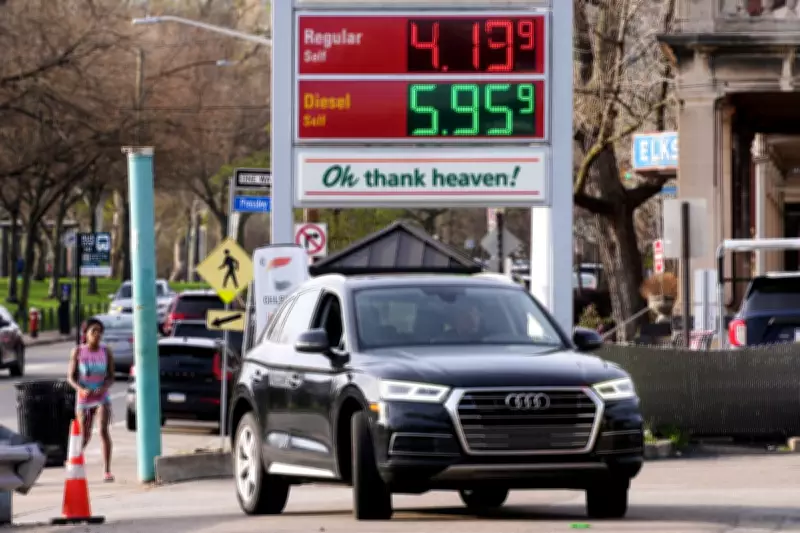
As gas prices climb at stations like a Sunoco in Pittsburgh, Pennsylvania, and air travel becomes more expensive, economic analysts caution that this marks only the initial phase of widespread price increases triggered by the ongoing war in Iran. The conflict, which began in late February, has sent crude oil prices soaring above $110 per barrel, intensifying financial pressures on American households and businesses alike.
The End of Affordable Era: Experts Predict Sustained Inflation
"The good old days are gone," stated Christopher Tang, a professor at the UCLA Anderson School of Management specializing in global supply chain management. "Right now we see gasoline prices going up, but that is only part of the story. Everything will be more expensive." This sentiment is echoed by other economists who point to Iran's strategic control over the Strait of Hormuz, a critical maritime passage where approximately 20% of the world's oil transits. Disruptions here, including blockades or hefty tolls of up to $2 million, force tankers to take longer routes or incur additional costs, thereby elevating logistics expenses globally.
Political Rhetoric Versus Market Realities
In a recent address, former President Donald Trump asserted that "America has plenty of gas" and emphasized U.S. independence from Middle Eastern oil. However, Samantha Gross, director of the energy and security initiative at the Brookings Institute, countered that oil is an internationally traded commodity. "We're going to pay the same high prices that the global market is paying," she explained, noting that despite the United States being a top oil producer, it still relies on imports and is vulnerable to global price fluctuations.

Ripple Effects Across Industries and Retail
The economic impact extends beyond fuel, affecting various sectors:
- Shipping and Logistics: Companies like UPS and FedEx have implemented fuel surcharges exceeding 25%, while the US Postal Service has introduced an 8% surcharge, citing competitive pressures.
- Retail: Amazon announced a 3.5% surcharge for third-party sellers, reflecting increased operational costs.
- Agriculture: Rising diesel prices, used in fertilizers, are driving up costs for crop cultivation and livestock production, as highlighted by Christopher Wolf, a professor of agricultural economics at Cornell University.
- Consumer Goods: Oil is crucial for chemical processes in pharmaceuticals and fertilizers, potentially elevating prices for prescription drugs and groceries. The Independent Grocers Alliance projects that a 10-15% fuel price hike could increase food prices by 2-4% by mid-summer.
Long-Term Economic Implications and Strategic Reserves
David Bieri, an economist at Virginia Tech, warned that as countries deplete strategic oil reserves to mitigate shortages, replenishing them with high-priced oil will further inflate costs. "What we're seeing now is as these inventories have been depleted, they will need to be filled up again with actually high-priced oil," he said, suggesting that current price surges are merely the beginning. Ravi Ramamurti, a professor at Northeastern University, added that the political risk premium on oil pricing will persist, as the Strait of Hormuz remains a volatile chokepoint. "This will be a persisting effect," he noted, implying that even a swift end to the war may not reverse the inflationary trend.
In summary, the Iran conflict is catalyzing a broad economic upheaval, with experts like Tang succinctly observing, "When the prices go up, they rarely come back down." As Americans grapple with affordability challenges, the situation underscores the interconnectedness of global markets and the lasting repercussions of geopolitical instability on everyday expenses.






