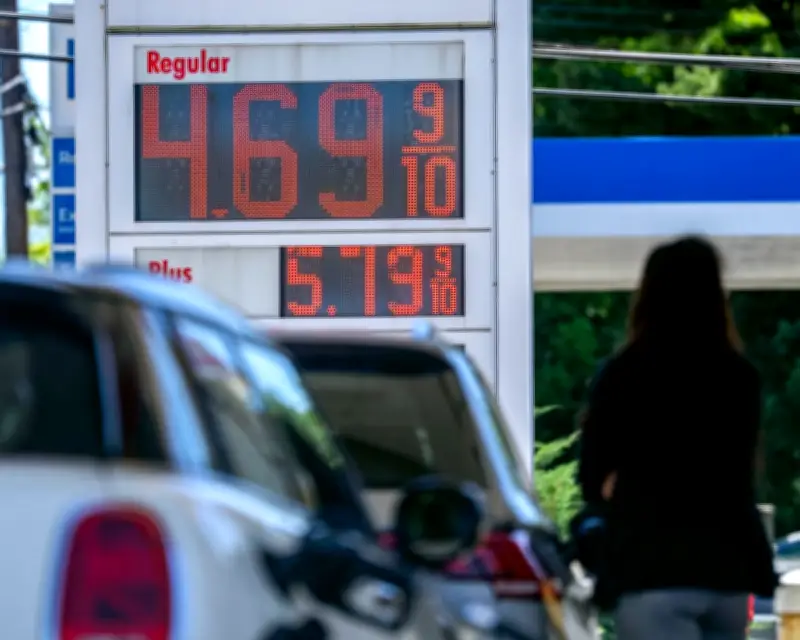
US inflation jumped 4.2% in May, marking the third consecutive monthly increase since the start of the Iran war and reaching a three-year high. Americans continue to face steep oil prices as the conflict drives energy costs upward.
Prices have risen sharply over the past several months, climbing 3.3% in March and 3.8% in April. Before the conflict began in February, inflation stood at 2.4%. The latest data from the Bureau of Labor Statistics shows that energy prices were once again the primary driver, accounting for 60% of the overall monthly increase in the consumer price index.
Although gasoline prices are slightly lower than a month ago, they remain about $1 per gallon higher than a year ago. Other essential expenses, including food, energy services, and clothing, also increased. Excluding volatile energy and food prices, core CPI rose 2.9%.
Since the US-Israel war with Iran began, inflation has hit its highest levels since 2023, though it remains well below the 2022 peak of 9%. Higher prices have dampened Americans' financial outlook. A survey from the Federal Reserve Bank of New York released on Monday shows households have become more pessimistic about inflation, the labor market, job prospects, and potential layoffs. Consumer sentiment has also fallen to a historic low, according to the University of Michigan, declining for three consecutive months.
The new inflation data puts pressure on Federal Reserve officials, who will meet for the first time next week under new Chair Kevin Warsh. The Fed has maintained interest rates since the end of last year. Warsh has expressed belief that rates, currently at 3.5% to 3.75%, should be lowered, aligning with Donald Trump, who has spent the past year urging the central bank to cut rates.
Despite rising prices, the president is unlikely to be deterred from calling for rate cuts. On Tuesday, Trump told reporters he did not think US fuel prices were "very high, relatively speaking."
The Fed typically reduces rates to address high unemployment, at the risk of increasing inflation. The US job market remains strong, with employers adding a surprising 172,000 jobs in May, while the unemployment rate held steady at 4.3%.
Goldman Sachs stated on Friday that it no longer expects the Fed to cut rates this year, predicting instead that the central bank will keep rates unchanged throughout 2026 and delay any cuts until next year. JP Morgan Global Research forecast that rate hikes across global central banks are on the horizon and predicted the Fed would increase rates by 2027.
"Two recent developments are upending the debate about inflation inertia and the monetary policy path," wrote Bruce Kasman, chief global economist at JPMorgan Chase, in an April report. "The energy price spike is now raising inflation and generating a sharp squeeze on household purchasing power that could intensify if the Middle East conflict keeps the strait of Hormuz closed."