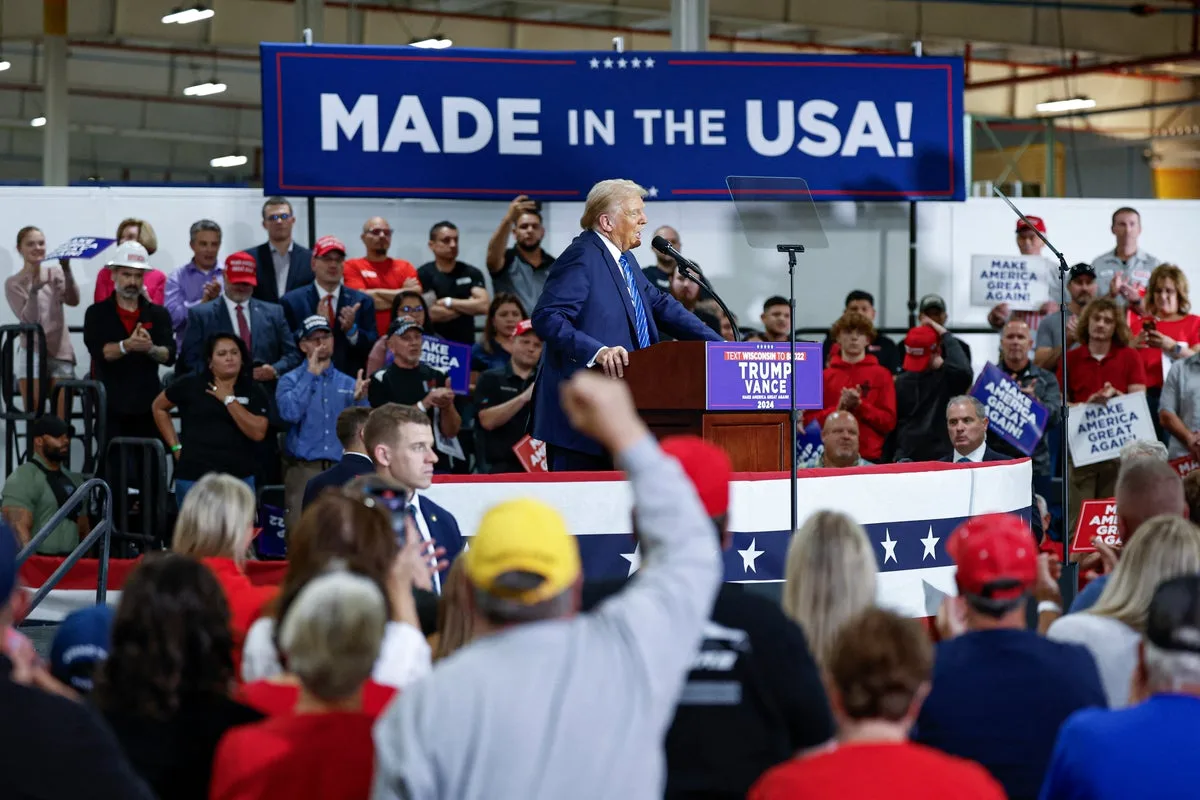
President Donald Trump’s promise of a manufacturing ‘golden age’ has fallen short, according to a new report. Sixteen months into his second term, private investment in manufacturing construction stood at $15.2 billion in April, a 16 percent decline from his inauguration. Factory employment also dropped by 77,000 jobs over the same period, The Financial Times reports.
Despite Trump’s sweeping tariff regime and pressure on executives to invest in U.S. production, actual spending has not matched announcements. Eighty-four firms have pledged nearly $1 trillion, but “dollars spent is what’s actually happening,” said Didi Caldwell, CEO of Global Location Strategies. “We are not seeing signs of a manufacturing renaissance.”
The White House defended the administration’s record, with spokesperson Kush Desai citing “targeted tariffs, rapid deregulation, and investment-friendly tax cuts.” He pointed to the May ISM Manufacturing PMI and job growth as evidence of progress. However, industry insiders note that tariffs, struck down by the Supreme Court in February, have had mixed effects. BNSF Railway CEO Katie Farmer said steel has seen a resurgence, but other areas have plateaued due to uncertainty.
American factory jobs peaked in 1979 at nearly 20 million and have since declined due to automation and global competition. In Indiana, which has the highest proportion of manufacturing jobs, recovery is patchy and slow. “It’s not this mushroom cloud of explosive growth,” said John Urbahns of Greater Fort Wayne Inc. Experts have called Trump’s vision a “pipe dream,” with economist Dean Baker labelling it “fantasy.” Studies show that tariff benefits for manufacturers came largely at the expense of consumers.