

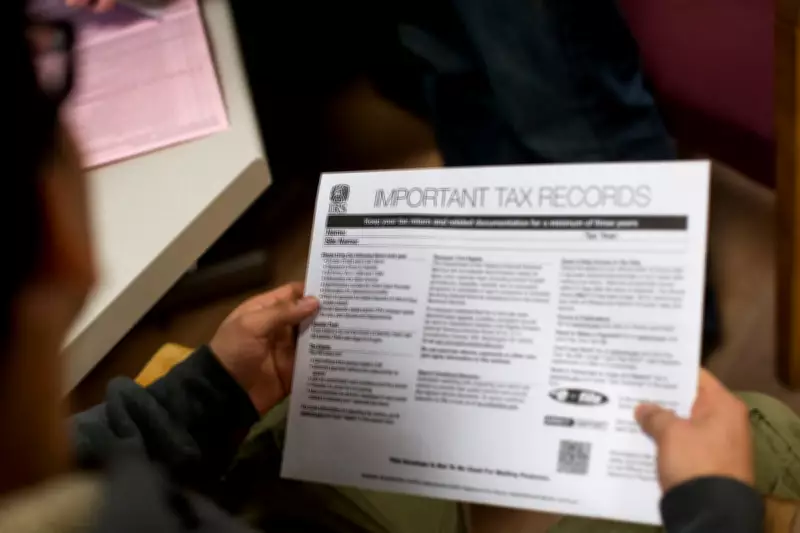
The Trump administration's immigration crackdown could lead to a loss of up to $479bn in tax revenue over the next decade, as undocumented immigrants are increasingly reluctant to file their taxes, according to tax experts.
Fear of Data Sharing Deters Tax Filings
Tax advisers report that major policy changes, including a proposed agreement to share taxpayer data with immigration enforcement agencies, have made filing taxes risky for undocumented immigrants. The removal of tax benefits for immigrant parents has further reduced the incentive to file.
Daisy Schmidt, a tax adviser in Springfield, Virginia, said she has lost up to 75% of her clients at Crece Latino this tax season. Many clients expressed fear that filing taxes could lead to deportation. “They said: ‘If they can deport me, what am I filing taxes for?’” Schmidt explained.

Last year, the IRS reached an agreement to share names and addresses of undocumented immigrants with the Department of Homeland Security, the parent agency of ICE. Although a federal judge paused the agreement in November and later ruled it violated federal law, concerns persist.
Additionally, parents without legal status became ineligible for the child tax credit in 2025, even if their children are US citizens. This credit typically amounts to thousands of dollars in savings.
Historical Trust Eroded
Undocumented immigrants are still required to pay taxes, and a longstanding IRS policy assured them of data protection. Luisa Godinez-Puig, a senior research associate at the Urban-Brookings Tax Policy Center, noted that the system relies on trust. “To think that the IRS would share information with any agency would have been unthinkable a few years ago,” she said.
Approximately 50% of undocumented immigrant households typically file income tax returns. In 2022 alone, they paid an estimated $96.7bn in taxes, according to the Institute on Taxation and Economic Policy. However, they do not qualify for most deductions, often paying a higher percentage of their income than US citizens.
Projected Revenue Losses
Experts believe a drop in tax filings could cost the federal government billions. According to Yale's Budget Lab, losses could range from $147bn to $479bn over the next decade. Up to 2.7 million children who are US citizens or lawful permanent residents might lose access to the child tax credit due to policy changes.
The IRS estimates that a 1% decrease in voluntary tax compliance would result in $46bn in lost federal tax revenue. The IRS did not respond to a request for comment.
Edgar Villacorta, owner of Latin Tax in Maryland and Virginia, said about 30% to 40% of his clients did not file this year. “They see that it isn’t giving them any benefit,” he said, referring to the loss of the child tax credit.
Widespread Fear Among Immigrant Communities
An Urban Institute survey found that one in four adults in immigrant families, both documented and undocumented, are worried about deportations. One in six reported personally seeing or knowing someone taken into ICE custody in 2025.
Advocacy groups argue that children are most harmed by the change in the child tax credit. Proponents emphasize it is a crucial tool for reducing poverty, with child poverty recently surging to an estimated 13% to 16% of children, up from a record low of 5.2% in 2021.
“It used to be the case that as long as the child was American and had a social security number, the parents could qualify, even if they both were undocumented,” said Godinez-Puig. “The point of this credit was to help American children, regardless of who the parents were.”






