

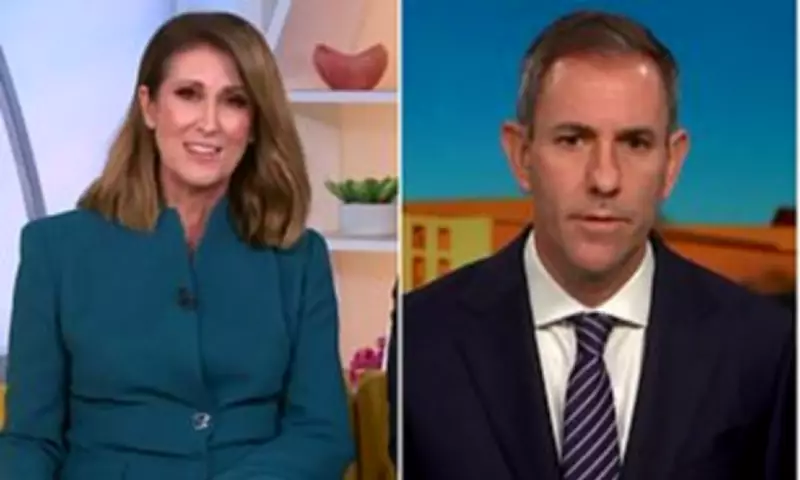
Sunrise Host Confronts Treasurer Over Inflation and Rate Hikes
Sunrise host Natalie Barr has launched a direct challenge to Treasurer Jim Chalmers, amid escalating claims from the opposition that government expenditure is fuelling inflation and driving interest rates upward. The confrontation unfolded as the Reserve Bank of Australia implemented its second consecutive monthly rate increase, warning Australians of further financial strain if the Middle East conflict persists.
RBA Implements Tightest Vote Decision in Recent History
In a narrowly split five-four decision on Tuesday—the closest margin since the central bank began publishing vote tallies—the RBA's monetary policy board elevated the cash rate by 25 basis points to 4.1 per cent. This follows an identical rise in February, compounding financial pressures on households across the nation.
Each 25 basis point increment adds approximately $90 to monthly repayments for a typical $600,000 owner-occupied loan. Combined with February's increase, mortgage holders with average loans now face roughly $180 more each month compared to December figures.

Heated Exchange Over Economic Responsibility
During Wednesday morning's broadcast, Barr pointedly questioned Chalmers: 'Are you spending too much? Because every man and his dog is saying that.' The Treasurer countered, outlining two primary drivers behind Australia's inflation challenge.
'We've got two parts to this inflation challenge,' Chalmers explained. 'Before the escalation of hostilities in the Middle East, we had an inflation challenge primarily towards the end of last year because the private sector recovered quickly—quicker than anticipated—not because of increased public spending. In recent weeks, that challenge has intensified, particularly at petrol stations, due to global oil prices and other factors.'
Barr challenged this perspective, noting that RBA Governor Michelle Bullock had indicated the latest rate rise wasn't linked to fuel prices. 'But this interest rate rise had nothing to do with fuel. You acknowledge that, don't you? The RBA Governor said that yesterday. So this is on you, isn't it?' she pressed.
Government Spending Under Scrutiny
The Sunrise host continued her interrogation, suggesting many Australians believe the Labor government has been 'spending like crazy,' with government expenditure at decades-high levels and consumer confidence at its lowest since 2020. 'Do you think you're accepting your own responsibility for that?' Barr demanded.
Chalmers defended his government's fiscal management, insisting they had strengthened the budget position since taking office. 'I'm accepting my part in the fight against inflation and all aspects of my job, including that we've improved the budget condition. When we came to office, spending as a share of the economy was near one-third; we've reduced it closer to one-quarter,' he responded.
Economic Experts Voice Concerns
The RBA's divided vote has highlighted internal tensions between inflation hawks and economic doves on the board. Experts note that future monetary decisions will depend heavily on geopolitical developments in the Middle East alongside domestic inflationary pressures.
Matt Grudnoff, Senior Economist at The Australia Institute, criticised the RBA's decision: 'Inflation caused by a supply shock cannot be reduced by increasing interest rates. How can raising Australian rates open the Strait of Hormuz? This increase only adds misery to mortgage holders already suffering from higher fuel prices. The RBA must acknowledge that it cannot combat inflation driven by global oil shocks.'
While central banks in the US, UK, European Union, Japan, Canada, Switzerland, and Sweden are expected to maintain current rates this week, all remain vigilant amid global economic uncertainties.
Chalmers addressed recession concerns, stating: 'The Reserve Bank's forecasts indicate they are not anticipating a recession, nor is the government. However, significant global economic risks exist, and we must address this inflation challenge decisively.'






