

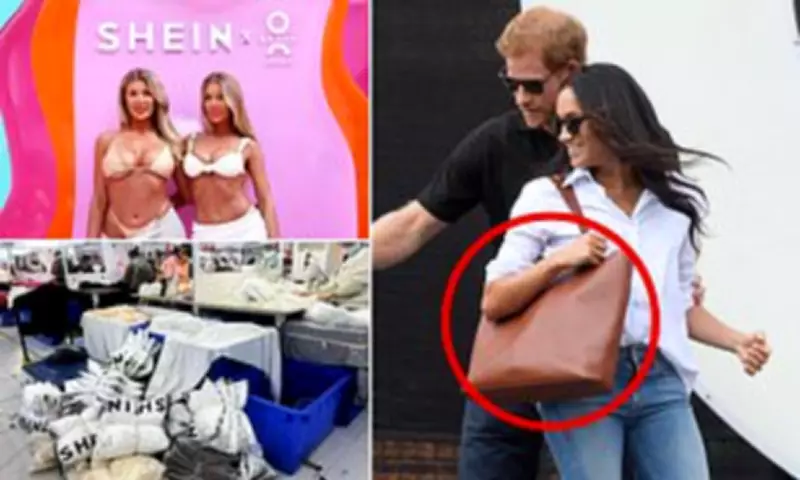
Shein is reportedly acquiring Everlane, a sustainable clothing brand favoured by Meghan Markle, in a deal valued at around $100 million. The transaction, which has already sparked backlash among ethical fashion shoppers, marks a dramatic fall from Everlane's peak valuation of roughly $600 million several years ago.
Neither company has officially confirmed the acquisition, but Bloomberg reported that Everlane's majority owner, L Catterton, approved the sale over the weekend, making the deal highly likely to proceed. The surprising takeover would unite two brands with radically different reputations in the fashion world.
Everlane's Ethical Roots
Everlane built its name around ethical sourcing, 'radical transparency' and sustainability messaging, marketing itself as an antidote to fast fashion excess. Its website describes the company as being 'on a mission to clean up the industry' through what it calls 'Cleaner Fashion.' Thanks to its green credentials, it quickly gained popularity after launching in 2010, with Meghan Markle among its fanbase. She chose a $175 Everlane tote bag for her first appearance with Prince Harry at an official royal event, adores its skinny jeans and slingbacks, and wore its black jumpsuit when she guest-edited British Vogue in 2019.

Shein's Controversial Model
Shein, by contrast, has become one of the world's most controversial retailers due to its ultra-fast fashion business model, massive product volumes and environmental footprint. The company adds thousands of new items online daily and has faced repeated criticism from sustainability advocates over waste, emissions and supply chain practices. That stark contrast has left many shoppers stunned by the reported acquisition.
Expert Reactions
Retail analyst Neil Saunders of GlobalData told the Daily Mail that the sale itself was 'no real surprise' because Everlane had struggled financially in recent years and needed a stronger owner to survive long term. Saunders said Shein gives the company financial stability while also helping the fast-fashion giant expand beyond its core low-cost clothing business. However, he warned that the cultural fit between the two brands could prove deeply uncomfortable for Everlane's loyal customer base. 'Shein is not a natural home for Everlane,' Saunders said, pointing to the sustainable brand's focus on transparency and low-impact materials.
Fashion branding expert Sunny Bonnell, co-founder of agency Motto, described the deal to Forbes as 'a collision of narratives.' 'Everlane built cultural equity around conscious consumption and transparency,' Bonnell said. 'Shein became shorthand for hyper-fast consumption. Acquisitions don't just transfer assets. They transfer associations.'
Everlane's Financial Struggles
The deal highlights how dramatically Everlane's fortunes have changed in recent years. The retailer became a cult favourite in the late 2010s among younger consumers seeking minimalist basics and more ethical alternatives to mainstream fast fashion. But after the pandemic, Everlane struggled with rising operating costs, shifting shopping habits and growing competition in the premium basics market. Under CEO Alfred Chang, the company attempted a repositioning toward 'clean luxury,' but reports suggest the turnaround failed to fully revive growth. Puck News previously reported that Everlane and L Catterton had been searching for investors to help address roughly $90 million in debt. The company reportedly required additional financing, including a $25 million loan from Gordon Brothers and a $65 million revolving credit facility.
Broader Strategy for Shein
Industry analysts say the acquisition reflects Shein's broader strategy of buying struggling Western fashion brands and folding them into its massive global supply chain and data ecosystem. Shein has previously acquired stakes in or explored deals involving retailers including Forever 21, Missguided and Topshop. Experts believe such deals help Shein gain access to valuable customer data, shopping preferences and stronger brand recognition in Europe and North America.

Backlash from Consumers
Social media users reacted with shock after rumours of the deal emerged online, with some longtime customers declaring they would stop shopping with Everlane entirely. One commenter wrote on Reddit: 'This is actually hilarious to me considering the core principles Everlane was supposedly founded on.' Another exclaimed: 'WHAT that is so lame! This is what happens when companies exist only for shareholders and maximizing any potential profit. Can't we just have decent companies based on morals and missions, that don't have to increase profits 10,000 percent every quarter?'
While Shein may be able to improve Everlane's profitability and operational efficiency, experts warn the takeover risks undermining the very identity that made the brand successful. 'The perception remains the same publicly,' analysts noted, 'and the impact will likely be felt immediately.'





