The Reserve Bank of Australia (RBA) appears to be prioritising inflation control over its full employment mandate, potentially risking a recession, according to Guardian columnist Greg Jericho. The central bank recently raised the cash rate to 4.6%, with markets now pricing in a rise to 4.85% before March next year.
RBA's Dual Mandate Questioned
The RBA's governing legislation gives it a dual mandate: price stability and the maintenance of full employment. However, Jericho argues that in practice, the RBA seems to ignore the full employment aspect. This view is echoed by ABC's Alan Kohler, who noted that Governor Michele Bullock defines full employment in terms of inflation, effectively making inflation the only real mandate.
Despite the RBA's stated commitment to full employment, the market predicts further rate rises, even though inflation in August would have fallen without the increase in petrol prices driven by the war on Iran. Core inflation remained steady at 3.6%.
Petrol Prices and Corporate Profits
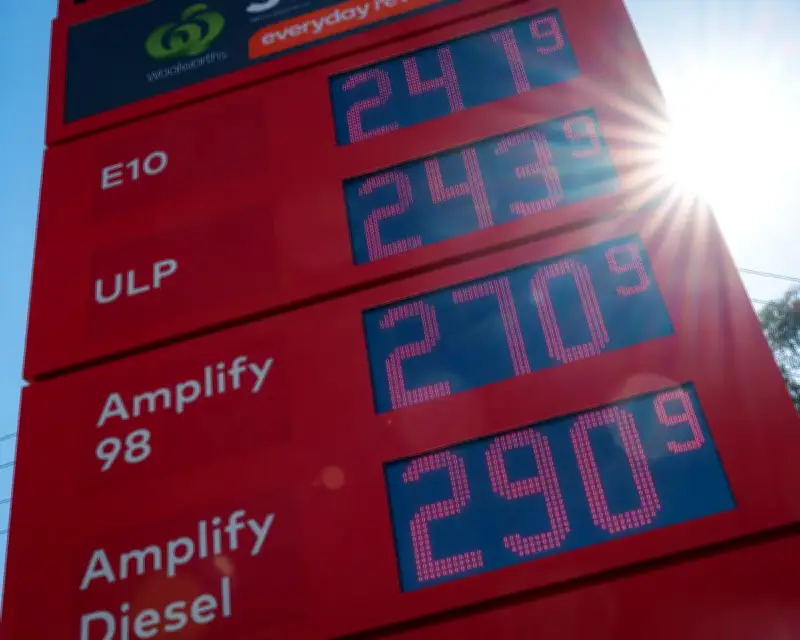
Jericho highlights that Ampol's interim profit rose 376% this year, and its share price has surged since the war on Iran began. Household spending in August also fell when adjusted for petrol price increases. Yet, the RBA remains focused on getting inflation under 3%, regardless of the cause.
Bullock stated that the RBA is not failing to deliver full employment because the target is consistent with low and stable inflation. She added that the current unemployment rate is "a bit tight" and not consistent with that goal.
Recession Scenarios Considered
When asked if a recession might be needed to achieve the midpoint inflation target of 2.5%, Bullock said, "I hope it's not needed. Are there scenarios in which it might have to happen that way? I guess possibly. And the scenario that I'm thinking of there is if inflation expectations get away from us."
Jericho criticises this stance, noting that a recession could be on the table if people start accepting inflation between 3% and 4%. He also points out that Bullock told journalists that rising unemployment "doesn't mean job losses" but rather people taking longer to find a job.
Historical Impact of Recessions
Jericho warns that recessions have long-lasting effects. During the 1990s recession, job losses took a decade to recover, and over the past 55 years, the level of men in full-time work has never recovered after recessions. He argues that avoiding massive increases in unemployment is important, but apparently not a dealbreaker for the RBA.