

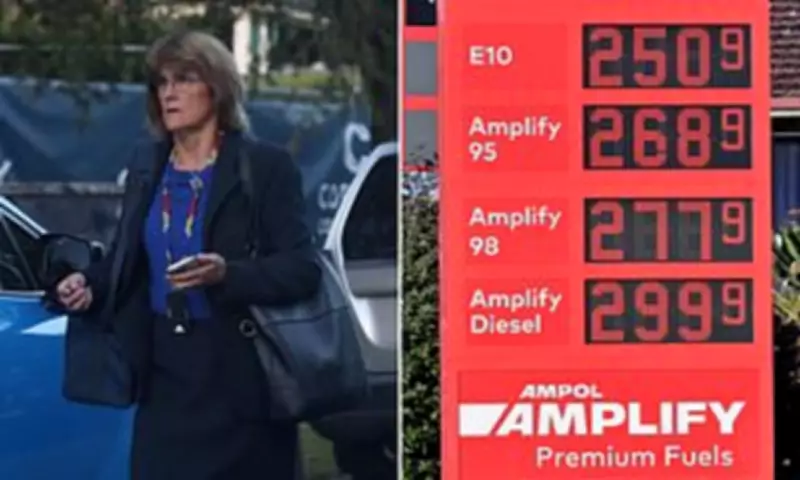
The Reserve Bank of Australia has issued a stark warning that the ongoing war in the Middle East possesses the potential to spill over into a severe international shock, with direct consequences for the Australian economy. In its twice-yearly financial stability review released on Thursday, the central bank highlighted that international risks are currently high and rising, posing significant threats to global economic stability.
Geopolitical Tensions Intensify Financial Volatility
Assistant Governor Brad Jones emphasised that geopolitical pressures are intensifying, exacerbating existing concerns over stretched valuations and high volatility in global equity markets. The recent US-Israeli attack on Iran and its disruptive impact on global energy markets have sharply increased financial risk, with the potential for markets to become disorderly if further shocks occur.
Dr Jones noted that Australia's financial system remains relatively well-positioned, with most households having built up financial buffers and banks maintaining strong capitalisation. However, he warned that non-financial risks have also heightened, including increased threats from operational, cyber, and security incidents that could disrupt economic activity.

Oil Market Disruptions Send Prices Soaring
The closure of the Strait of Hormuz, through which approximately one-fifth of global oil supplies transit, combined with attacks on oil and gas infrastructure across the Middle East, has sent crude prices skyrocketing above $110 per barrel. This dramatic increase in energy costs represents a direct transmission mechanism through which Middle Eastern conflict could impact Australian consumers and businesses.
RBA staff elaborated in the financial stability review that elevated geopolitical tensions could indeed spill over into a severe international shock. The report specifically warned that prolonged supply disruptions to oil and other commodity markets could destabilise the global economy, with Australia vulnerable to these external pressures.
AI Investment Volatility Adds to Economic Uncertainty
Beyond immediate geopolitical concerns, the Reserve Bank also highlighted growing fault lines in technology investment markets. Even following the so-called 'SaaSpocalypse' sell-off in tech companies during early 2026, when traders panicked that artificial intelligence might render existing software companies obsolete, risk premiums in global equity and credit markets have remained surprisingly low by historical standards.
The bank cautioned that a sharp revision in outlook for AI-related investments could trigger significant economic consequences. Should expectations around the productivity benefits of the current surge in AI investment be reduced, the report warned this could lead to substantial downgrades in profitability forecasts and asset valuations, with negative implications for asset quality in the financial system and investment plans across the real economy.
Domestic Financial Vulnerabilities Under Scrutiny
The RBA's assessment also turned to growing vulnerabilities within Australia's domestic financial system. While banks remain well-positioned to absorb significant loan losses during an economic downturn, the central bank warned that a disruptive adjustment in international financial markets could still challenge Australia's financial stability.
Of particular concern is the increase in high loan-to-valuation lending to first-home buyers, following the federal government's expansion of the five percent deposit guarantee scheme. This trend indicates that risky lending practices have picked up, though the broader financial system would be mostly insulated from defaults due to taxpayer guarantees covering up to fifteen percent of loan values.
In a related development, banking regulator APRA announced changes to lenders' liquidity and capital requirements on Monday, which will allow financial institutions to write more loans for property development and infrastructure projects, potentially boosting national productivity despite the challenging economic backdrop.
The Reserve Bank's comprehensive assessment underscores how interconnected global events have become, with Middle Eastern conflict, technological disruption, and domestic lending practices all converging to create a complex risk environment for Australian economic stability.






