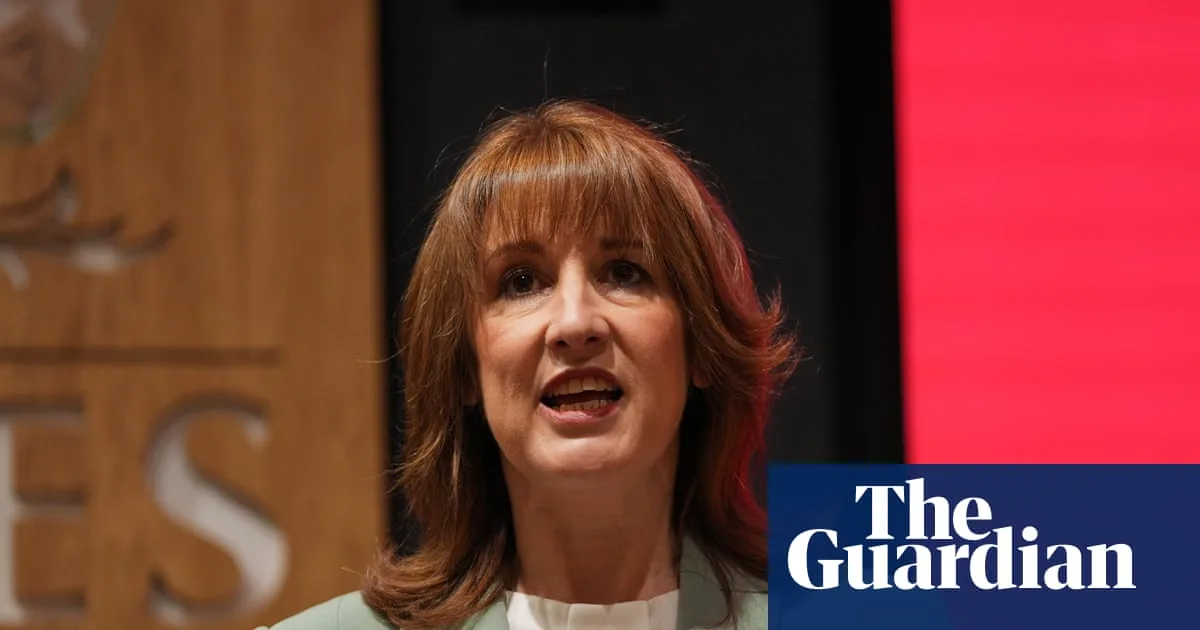
Chancellor Rachel Reeves has announced plans to give England's regional mayors a share of national tax revenues, starting with income tax, as part of a radical push to rebalance the economy. Speaking at the Mais lecture in London, Reeves promised 'a genuine break with the past' to shift spending power away from Westminster and tackle what she called 'the most politically centralised of advanced democracies, and one of the most geographically unequal'.
Treasury officials will bring forward a plan at the autumn budget to allow regional leaders to receive a portion of national taxes, beginning with income tax. Reeves also unveiled new city investment funds worth £2.3bn for England's metro mayors to spend on long-term projects, and confirmed they would be able to retain future business rates revenue. The chancellor described the approach as 'a permanent transfer of power and resources, not another exercise in local ambition frustrated by central government control'.
The announcement comes amid a severe funding squeeze for local authorities, with several large councils having been forced into bankruptcy. Aditi Sriram, an economist at the Institute for Public Policy Research, welcomed the move, stating: 'Giving regions a share of tax revenues, including income tax, is the missing piece of the UK's devolution settlement.' Reeves's chief economic adviser, Neil Amin-Smith, previously researched the case for tax devolution at the Institute for Fiscal Studies, suggesting income tax as a starting point.
Reeves acknowledged the 'anxious moment' of global uncertainty due to the Iran conflict, which she said could push up inflation, but insisted the UK was in a stronger position than before the Ukraine war. She reiterated three strategic choices for growth: closer EU ties, support for growth corridors between Oxford-Cambridge and Liverpool-York, and a bet on AI benefits. Citing research suggesting Brexit may have depressed GDP by up to 8%, she stressed the importance of the EU relationship, noting that 'no trade deal with any individual nation can outweigh the importance of our relationship to a bloc with which we share a large border'.
Reeves will travel to Madrid on Wednesday to meet Spanish businesses and investors, and will announce a simplified process for UK professionals to work in Spain for up to 90 days. Despite recent tax-raising budgets that have caused friction within her party, the chancellor defended fiscal responsibility as a necessary argument 'to be fought and won, over and over again'.