

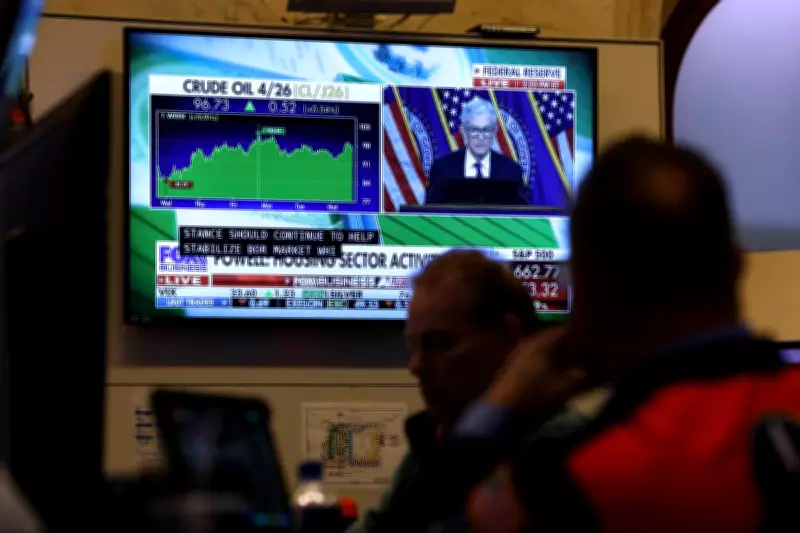
Oil Price Threshold of $138 Could Trigger US Recession, Economists Warn
Economists are sounding alarms that if crude oil prices surge to approximately $138 per barrel and maintain that elevated level for 14 consecutive weeks, the probability of the United States entering a recession would tip above 50 percent. This critical assessment emerges from a comprehensive survey conducted by The Wall Street Journal, which polled 50 economists from leading banks, universities, and consulting firms.
Middle East Tensions Fuel Oil Price Volatility
Analysts are closely monitoring developments in the Middle East amid President Donald Trump's military campaign against Iran, with particular attention on oil prices. The joint U.S.-Israeli military operations have significantly disrupted global oil supplies, causing prices to soar dramatically. The international benchmark, Brent crude, briefly reached $119 per barrel on Thursday morning before retreating to $110. This represents a stark increase from February's average trading price of $70 per barrel, before the bombing campaign commenced.
The survey revealed that economists' estimates for the oil price threshold that would push recession probability above 50 percent ranged widely from $90 to $200 per barrel, with $138 emerging as the average critical point. The duration required at these elevated prices also varied significantly among respondents, with some economists suggesting just four weeks could trigger recessionary conditions, while others believed 55 weeks would be necessary. The average consensus settled at 14 weeks of sustained high prices.

Economists Voice Growing Concerns
Robert Fry of Robert Fry Economics told The Wall Street Journal that his current probability assessment for an economic downturn stands at 40 percent, with $125 per barrel maintained for eight weeks representing his "make-or-break" threshold. "My forecast is contingent on the assumption that the Strait of Hormuz will be fully open to tanker traffic by mid-April," Fry explained. "If it isn't, oil prices will go much higher, and I will put a recession in my forecast."
Mark Zandi, chief economist at Moody's Analytics, warned this week that recession has become "once again a serious threat." Zandi noted that even before the recent Middle East developments, his firm's model indicated recession probability had already risen to 50-50. "Despite mounting evidence that the economy is struggling and recession risks are high, economists will be loath to utter the word 'recession,'" Zandi added in a social media post. "However, if oil prices remain elevated for much longer (weeks and not months), a recession will be difficult to avoid."
Broader Economic Implications
Bob McNally, a former energy adviser in the George W. Bush administration, characterized the rising crude prices as "a body blow" to the economy. "Oil companies are not thrilled with these sharply rising crude prices," McNally told The Washington Post. "This is not a healthy, sustainable increase in prices and profits and investment opportunities for these companies. It is a body blow to the economy that will likely end up hurting demand for petroleum products."
Bernard Baumohl of the Economic Outlook Group acknowledged that the U.S. economy has demonstrated resilience in the face of multiple challenges including "surging oil prices, high tariffs, AI and the severe constraints on immigration." However, he cautioned that "we must not take this resilience for granted."
Administration Response and Policy Measures
The Trump administration has maintained that the current rise in oil prices represents only "short-term disruptions" and constitutes "a small price to pay" for global "peace and safety." In response to the escalating prices and cargo disruptions caused by the conflict, the administration temporarily waived maritime shipping requirements under the century-old Jones Act on Wednesday. This legislation had previously mandated that goods transported between U.S. ports must be carried on American-made and operated ships.

The broader economic survey indicated that economists currently assess the probability of a recession occurring within the next 12 months at 32 percent, marking an increase from 27 percent in January. As Middle East tensions continue to influence global energy markets, the $138 per barrel threshold remains a critical marker that economists worldwide will be monitoring closely in the coming weeks and months.





