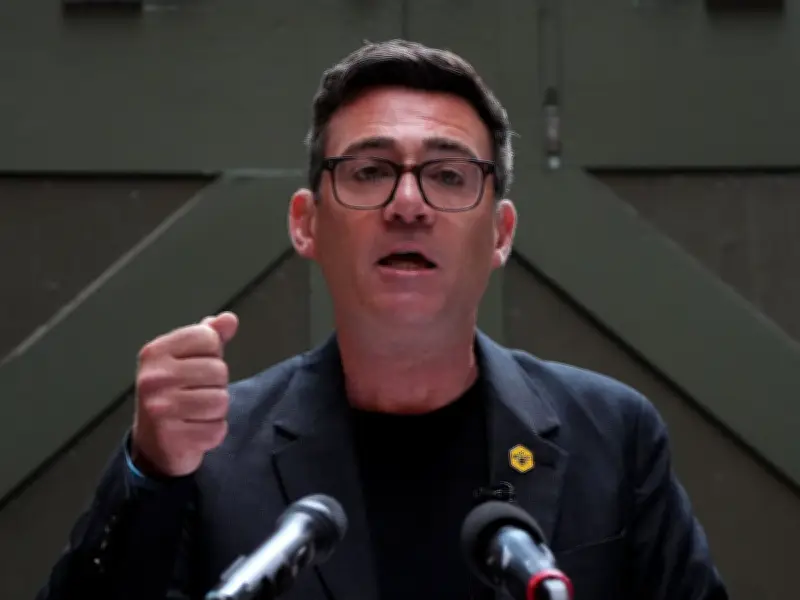
The Office for Budget Responsibility (OBR) has warned that the UK's national debt could triple over the next 50 years, reaching approximately £9 trillion in today's money, driven by an ageing population and rising healthcare costs. The stark forecast comes as Andy Burnham prepares to replace Sir Keir Starmer as Prime Minister, with the public finances on an “unsustainable and ever-rising path,” according to the government's fiscal watchdog.
Current Debt and Projections
The UK's national debt currently stands at just under £3 trillion, equivalent to almost 100% of gross domestic product (GDP). The OBR's new report warns this could surge to 300% of GDP over the next five decades. “Almost all of its scenarios show that public finances will eventually move onto an unsustainable path because they suggest that debt will ultimately grow explosively,” the OBR stated.
Key Drivers: Ageing Population and Healthcare Spending
The OBR singled out an ageing population and a surge in healthcare spending as key pressures on public finances. The UK population is projected to peak at around 73 million by 2050, then decline. Healthcare spending alone is forecast to rise from 8% of GDP in 2030/31 to 13% by 2075. Adult social care costs are also expected to jump from 1.2% of GDP to 1.8% over the same period.
Triple Lock and Other Pressures
The triple lock pledge, which increases the state pension by the highest of average earnings, inflation, or 2.5%, has cost around three times more than initially envisaged due to volatile inflation. Andy Burnham has committed to maintaining this policy. Other welfare spending is projected to remain stable at around 6% of GDP.
Tax Revenue Changes
While government spending rises, a key tax source is forecast to decline. The planned ban on new petrol and diesel car sales and the shift to electric vehicles will reduce fuel duty income from 1.6% of GDP to just 0.5% over the next 50 years.
Reactions and Policy Implications
William Ellis, senior economist at IPPR, said: “It’s right that the government – and Andy Burnham as the prospective new prime minister – have committed to the fiscal rules. With markets unstable and borrowing costs high, responsible borrowing gives markets the certainty they need. But the OBR’s report shows that sound public finances mean taking sustainability seriously over the next fifty years, not just until the next election. Ageing, climate change and weak productivity will pile pressure on the public finances for decades – and the current rules reward short-term headroom whilst penalising the very investment that would ease those pressures. The government should consider rethinking the fiscal rules in the years ahead to meet the long-term challenges we face.”