

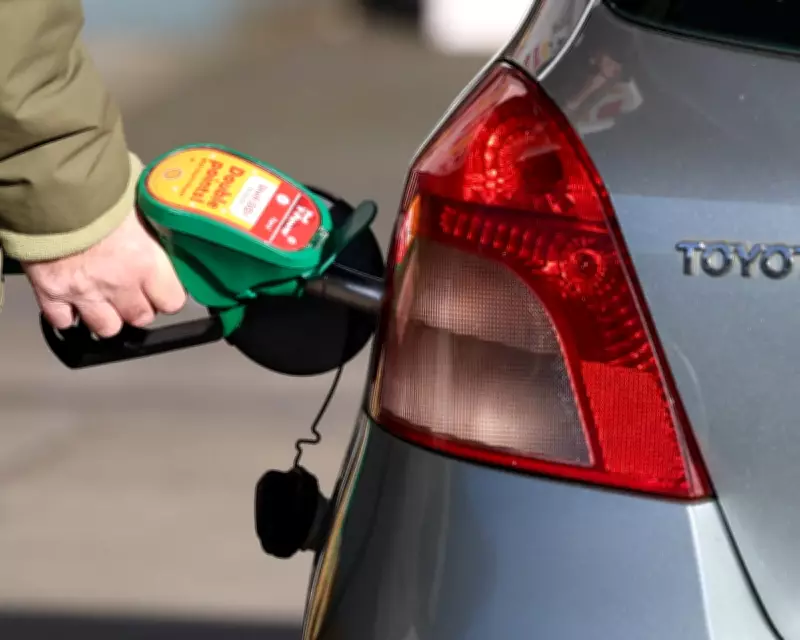
Middle East Conflict Drives Petrol Prices Higher, UK Faces Economic Shock
The ongoing conflict in the Middle East has already added 3p to the cost of a litre of unleaded petrol, according to the RAC. This immediate impact underscores the vulnerability of global supply chains, with oil prices potentially breaching $100 a barrel within days due to disruptions from the Iran war. Governments worldwide are awakening to the necessity of closer oversight of essential supply chains, as geopolitical instability and climate crises expose the fragility of just-in-time systems.
Oil Market Volatility and Economic Consequences
Following Donald Trump's Operation Epic Fury, energy markets initially showed restraint. However, by Friday, the closure of the Strait of Hormuz and production cuts in Kuwait pushed oil to $90 a barrel. Oil shocks are particularly painful due to their broad applications in fertiliser, manufacturing, and transport, exacerbating economic inequality. Recent research from the University of Massachusetts Amherst highlights that energy, along with food and agriculture, disproportionately increases inequality when prices rise.
Benefits from higher oil prices are narrowly shared. A recent study revealed that after the 2022 oil price surge in the US, 50% of windfall gains went to the wealthiest 1% via the stock market, while the bottom 50% received only 1%. As lead author Gregor Semieniuk notes, while inflation costs affect everyone, extraordinary profits accrue to a small minority of affluent shareholders.

Impact on UK Households and Policy Responses
In the UK, a net oil importer, the Middle East conflict's effect on petrol prices is unambiguously negative. If sustained gas price increases occur, household energy bills could spike when the next quarterly price cap takes effect in July, complicating Labour's plans to reduce household costs. Ministers are already considering consumer protection measures, reflecting a shift away from relying solely on central banks to manage inflation.
Even Liz Truss acknowledged this by implementing the energy price cap in 2022, a statist move for a free market advocate. A fresh oil shock poses a nightmare for central bankers, including the Bank of England's Monetary Policy Committee (MPC). While they can theoretically "look through" supply-side shocks, the prospect of renewed inflation may delay further rate cuts, potentially leading to prolonged economic cooling and rising unemployment, particularly among young people.
Long-Term Solutions and Government Action
Economists at the London School of Economics' Grantham Research Institute propose "adaptive inflation targeting" to allow more leeway during repeated shocks. However, politicians must look beyond monetary policy, securing key commodity supplies, protecting the poorest, and preventing price gouging. In the energy sector, the long-term solution, as outlined by Ed Miliband and pursued by Labour since 2024, is to transition from fossil fuel dependence to clean, homegrown power.
This transition will take time, and governments must increasingly engage with supply chains for essentials like food and rare earths. Should hostilities abate, energy supplies might stabilise, but for now, as Rachel Reeves prepares to discuss growth plans, the UK must brace for another economic shock in a world marked by fracturing geopolitics and climate crises.






