

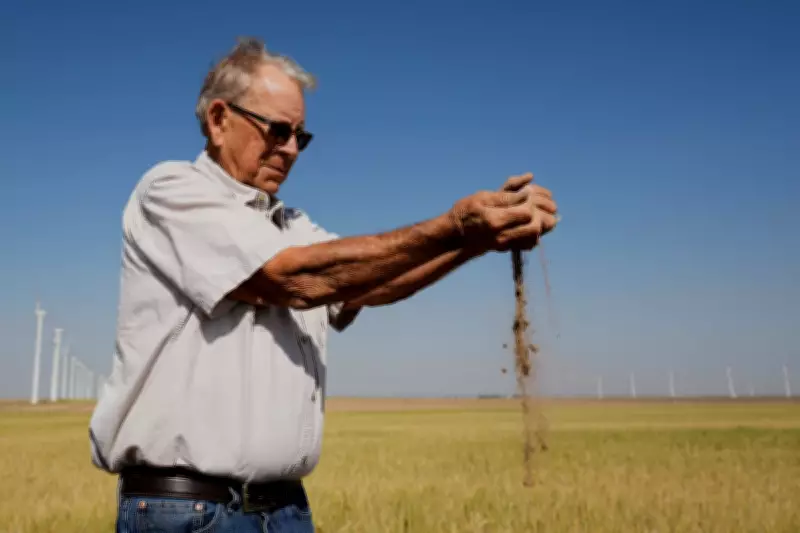
Kansas farmers are grappling with extreme weather and soaring expenses, potentially leading to the worst wheat harvest since 1972. The punishing drought, combined with tariffs and high fertilizer prices, has made wheat farming increasingly uncertain in the region.
Record-Low Production Expected
The U.S. Department of Agriculture estimates this year's wheat crop will total just 1.05 billion bushels, down from 1.56 billion bushels in 2025. For Kansas, a top wheat producer, 58% of the crop is rated as "poor" or "very poor" as of May 17, a condition not seen since the severe drought of 2023. Only five times in the past 40 years has the state's wheat been in such a dire state.
Orville Williams, a 76-year-old farmer in Montezuma, Kansas, has seen healthy crops every year since his teens. But this season is different. "All in all, it's not going to be a good year," he said. Record-setting drought, hotter temperatures, and sharp weather swings have impacted much of the U.S., including the Plains. Drought has worsened the spread of wheat streak mosaic virus and barley yellow dwarf virus, harming crop potential. Climbing costs for fertilizer, diesel, and tariffs add to the pain. "It's kind of a double whammy," Williams added.

Impact on Farmers and Consumers
Kansas State agronomist Romulo Lolloto said tough conditions affect consumers through higher bread prices and loss of international market share. Many growers have filed for crop insurance or considered relying on other crops. Williams expects only 30 to 40 bushels per acre on irrigated land, down from nearly 100 last year, and just 10 to 15 on dryland. He knows he'll lose money. "Stay the course. Don't make any new purchases," he advises.
Climate change, driven by fossil fuel burning, has made farming increasingly challenging. Wheat is no exception. Farmers report worsening extremes: intense winter heat, late freezes, and ongoing rain shortages. The U.S. has lost ground in the global wheat market to Russia and the European Union, with national acreage declining. USDA meteorologist Brad Rippey noted a downward trend for wheat in the Great Plains due to weather challenges over the past two decades.
Wheat Abandonment and Quality Issues
Dry conditions sped up crop growth, a negative sign for harvest quality. By early May, 86% of Kansas wheat had produced a seed head, compared to 61% average over the previous decade. Early heading often leads to poor quality. Only 32.4 million acres were planted, with harvested acreage at 22 million, marking a 32% abandonment rate—historically high except for the 2022-2023 cycle. In Kansas, about 17% of the crop is being abandoned.
"Rain makes grain," said Mike Nickelson, a wheat and corn farmer in western Kansas. "We can do the very best we can do and then if we don't get the rain, it makes it pretty tough." Forecasters predict a substantial El Nino, which may bring warmer summer temperatures and delay drought relief. Nickelson, 60, worries about transitioning his farm to his son. "It's a great life, but man, right now it's just tough."
Rising Costs and Trade Policy
The war in Iran has sent fuel prices soaring. Williams drives 150 to 200 miles daily, and diesel is up nearly $2 per gallon from last year. Seed and fertilizer costs are also rising. Nickelson said urea, a fertilizer, previously cost $400 per ton; now he pays $600 to $700. "You hope to break even, but I'm not sure we're gonna do that," he said.
Ben Palen, a fifth-generation farmer and consultant, says solutions are tough. Crop insurance and one-time bridge payments from the Trump administration are limited. Letting fields fallow or planting alternative crops isn't viable due to lack of soil moisture. "It's a little late now to try to plant something on a wheat crop that's failed," Palen, 70, said. "This is probably about as challenging of a time to be a farmer that I can recollect. It's a pretty serious situation."






