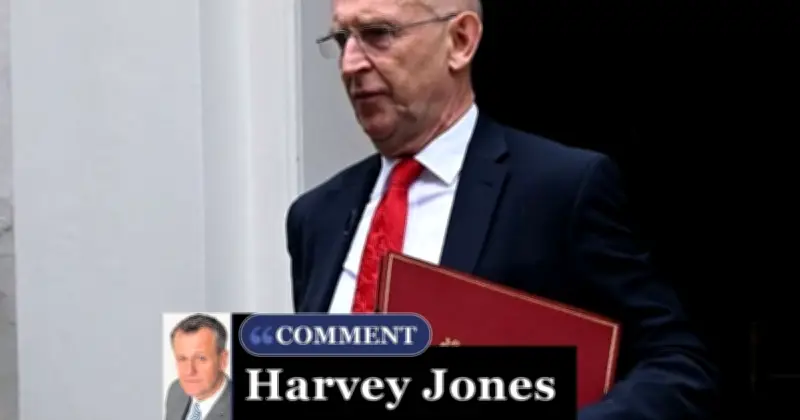
Chancellor John Healey's first Budget is shaping up to be a disaster, even before it has begun. While not wholly his fault, he will still take the blame, according to an opinion piece by Harvey Jones in the Daily Express.
Healey was hailed as a safe pair of hands, but he faces mounting problems. His predecessor Rachel Reeves drove tax and spending to the stars, leaving the country on course to borrow £130 billion this year. Both of her Budgets triggered fury and confusion in equal measure.
Burnham's spending promises
Healey's first problem is Prime Minister Andy Burnham, who just wants to be loved. As a Labour leader, the surefire way of doing that is to throw the cash around: lower bus fares, energy bill support, rough sleeping initiatives, more council houses, and a solution for social care. It is all vote-winning stuff, but it costs money. Burnham made clear in Parliament that he will not touch the spiralling welfare budget.
Soaring borrowing costs
Healey has another problem, also not of his making. Thanks to Donald Trump's misfiring war in Iran, oil prices are soaring and so is inflation. That is driving up government borrowing costs and putting the nation's finances on a knife-edge.
In August 2024, weeks after Keir Starmer's landslide, 10-year gilt yields slipped below 3.8%. They now stand at 5.4% and still climbing, the highest since 2007. Under Liz Truss, they peaked at 4.5%.
Higher gilt yields are a disaster because they drive up the cost of servicing the national debt. The interest already eats up around £1 in every £10 the government spends. Now it will be even more, leaving less for the NHS, military, pensions, roads and education. A rise of 1% in borrowing costs will ultimately cost around £10 billion a year in extra interest, as more debt is refinanced at the higher rate.
Rising national debt
It took 300 years for the national debt to hit £1 trillion, in 2010. It took 10 years to hit £2 trillion, and just six years to hit £3 trillion. By the end of this Parliament, it could already be at £3.5 trillion.
Bond investors look at that, then at Andy Burnham, and realise he is not the man to make the tough decisions required to cut spending, reduce the deficit or shrink the national debt. So they either demand still more interest, or refuse to lend at all.
Healey inherited fiscal headroom of about £24 billion from Rachel Reeves. That has now shrunk below £10 billion. That is not his fault either, but he has to find the solution. And it will not be popular.
Healey is chancellor of a party that only wants to tax more and spend more, which is the last thing he must do. Taxes are as high as the economy can stand, and so is spending. He must target that debt, as the IMF is scared stiff and begging for action. But Healey knows Labour will hate him forever if he even tries. The party has descended into fantasy economics, blended with class warfare, just as it did in the 1970s. They would not listen to the chancellor then, whose name was also Healey: Denis Healey. It all ended in chaos on his watch.
John Healey's Budget is descending into hell, and being a safe pair of hands is not enough. He needs to get a grip on both the Budget and the Labour Party. Best of luck.