

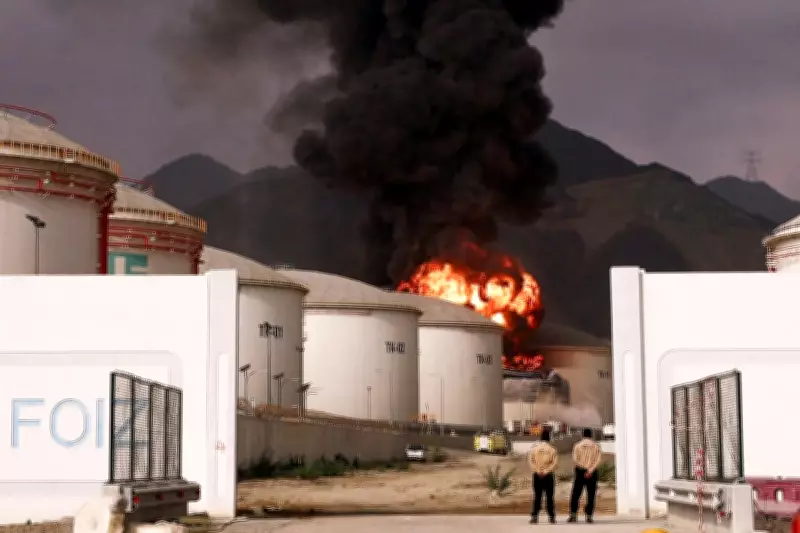
Iran Conflict Threatens Global Cost of Living with Soaring Energy Prices
As the conflict in the Middle East continues to intensify, the economic repercussions for Western nations are becoming increasingly severe. While military developments dominate headlines, the real battle may be fought on commodities markets and in the conference rooms of central banks worldwide. The escalating Iran war poses a direct threat to global prosperity, primarily through its impact on energy prices, which could dramatically affect the cost of living and employment across advanced economies.
Energy Price Surge: Current Market Realities
Spot prices for energy commodities have risen sharply in recent months. The price of West Texas Intermediate (WTI) oil, a key international benchmark, has climbed from approximately $55 per barrel at the start of the year to around $85 currently. While this remains below the peak of over $120 reached after Russia's full-scale invasion of Ukraine four years ago, the upward trajectory is concerning. Natural gas prices tell a similar story, with UK spot prices rising about 40 percent since January to 137 pence per therm.
Due to regulatory mechanisms like the Ofgem price cap, British consumers may not feel the immediate impact until the second half of the year. However, businesses remain unprotected by such caps, and some advantageous fixed-price energy deals are already being withdrawn from the market. Fuel oil prices appear to be climbing already, signaling broader inflationary pressures.

Potential Economic Fallout: How Bad Could It Get?
The severity of the economic impact depends entirely on the duration and scope of the conflict. A brief confrontation similar to last summer's "12-day war" would likely result in minimal, transient effects. However, if the conflict leads to a permanent reduction in oil supply from Iran and Gulf states, the consequences could be catastrophic, potentially tipping the global economy into depression.
Analysts at leading consultancy Wood Mackenzie warn that oil could reach $100 per barrel if the crisis remains unresolved. The sudden loss of supply is driving these price increases, with approximately 300 oil tankers currently stranded in the Gulf after Iran closed the Strait of Hormuz. Furthermore, oil and gas fields in Saudi Arabia and Qatar are being shut down due to vulnerability to drone attacks, while maritime insurance has become virtually unavailable in the region.
Government Responses and Limitations
International efforts to mitigate the crisis include US naval escorts, government-backed maritime insurance, and the lifting of sanctions on Russian oil production. However, increased production from the US, Venezuela, and Gulf states is unlikely to fully compensate for the lost supply. Additionally, oil refineries require specific blends of crude oil to produce fuel, plastics, and chemicals, meaning that abundant North Sea or Texas oil cannot simply replace Arabian product in the production mix.
Broader Economic Implications
While global industries and consumers are less exposed to oil price shocks than during the 1973 Yom Kippur War, significant vulnerabilities remain. In the UK, gas remains the dominant source of domestic heating and continues to play an important role in energy generation, while petrol remains the prevalent transportation fuel. Virtually every sector of the economy—from manufacturing and offices to leisure and transportation—is affected by energy costs.
The inflationary impact appears inevitable, though the extent remains uncertain. While it may not reach the post-Ukraine peak of 11 percent, current conditions suggest an additional 1-2 percent on the Consumer Price Index. This development complicates monetary policy decisions, as central banks must determine whether this represents a temporary shock or the beginning of domestically-driven inflation fueled by higher wage demands.

Energy Price Cap: Limited Protection
The energy price cap offers mixed protection for consumers. While it provides a recognized policy response, it excludes businesses and imposes substantial costs on the Treasury. The original energy price guarantee launched in 2022 was estimated to cost £150 billion—approaching the entire NHS budget. Even as energy prices subsided, the program still amounted to approximately £44 billion, roughly equivalent to the defence budget. In a worst-case scenario, such subsidies could become unaffordable given current debt levels and servicing costs.
Additional Economic Vulnerabilities
Beyond direct energy costs, the conflict threatens investor confidence and financial markets, potentially devastating savings and pension funds. Particularly vulnerable are energy-intensive sectors like cryptocurrency mining and AI data centers, which face existential threats from spiraling global energy prices. The potential for widespread industrial action also looms as workers respond to declining real wages.
The economic argument for resolving the Iran conflict is compelling. Continued hostilities risk not only human tragedy but also severe economic disruption that could undermine living standards across the developed world for years to come.





