

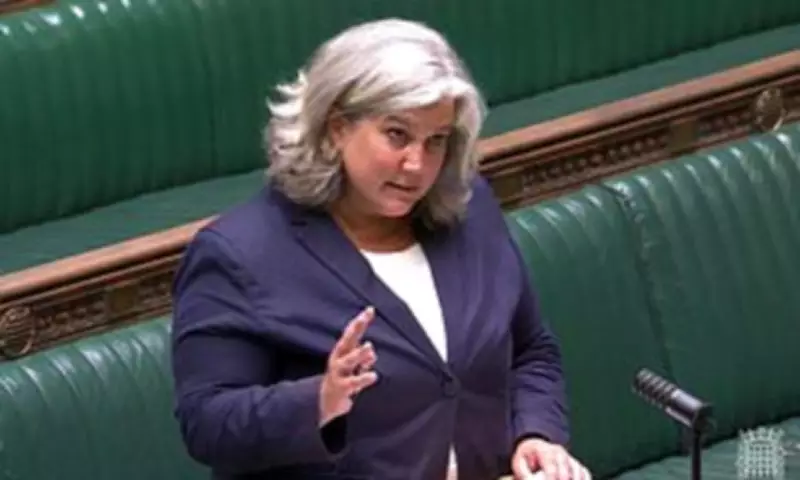
The HS2 'fiasco' is on track to cost £100 billion and might not open until 2039, it was revealed today. Transport Secretary Heidi Alexander also admitted the trains will not be as 'high speed' as planned as she gave an update on the crisis-hit scheme.
Extraordinary details of failings
Extraordinary details of failings were revealed in a statement to the House of Commons this afternoon, as critics branded the project a 'national embarrassment' and 'white elephant'. Ms Alexander told the Commons she was 'angry' about the 'obscene increase in time and costs' – which has happened despite the route being drastically cut back.
She said the expected cost of completing the high-speed railway was now put at between £87.7 billion and £102.7 billion in 2025 prices. That means it will be more expensive than the Artemis II mission to send four astronauts to the Moon, which is estimated to have cost $93 billion to date – £69 billion.

Route changes and delays
HS2's original route was supposed to connect London with Leeds and Manchester, but the two northern legs were axed amid spiralling costs and delays. Constructing HS2 from London to Birmingham – plus the now abandoned onward legs to Leeds and Manchester – was initially estimated to cost £32.7 billion in 2011 prices, but the budget has spiralled. Services were planned to launch in 2026, but the new target schedule is between May 2036 and October 2039.
Ms Alexander also announced that HS2 trains will run slower than planned to save money. She said the maximum speed of services will be 320 km/h (199 mph), down from the original design of 360 km/h (224 mph).
Previous plans criticised
The original route would have seen new tracks continue onto Leeds and Manchester after forking into an Eastern and Western leg northwards from Birmingham. But these were scrapped by previous Tory governments to save cash as costs rocketed. It suggests that delivering the original route would have comfortably exceeded £150 billion.
Ms Alexander branded the previous plans a 'massively over-specced folly, with the prospect of the fastest trains anywhere in the world tickling the fancy of Conservative ministers'. Services will still be among 'the fastest trains in Europe' despite the top speed being cut, she told MPs.
Reasons for cost increase
Ms Alexander said the cost increase is mostly because of 'past misunderstanding of the work required, underestimation and inefficiency, issues within the control of HS2 Ltd, some of its suppliers, and previous governments'. HS2 services between Old Oak Common in west London and Birmingham's Curzon Street station are expected to start running between May 2036 and October 2039.
The high-speed trains will not run between Euston station in central London and Handsacre Junction in Staffordshire until between May 2040 and December 2043. Handsacre Junction is where HS2 trains are planned to leave the dedicated high-speed tracks and merge onto the conventional West Coast Mainline.
Euston and private investment
Ms Alexander said the overall budget includes work at Euston, but the Government was still seeking a private investor for the site. The revised cost and schedule for HS2 follows a comprehensive review by HS2 Ltd chief executive Mark Wild, who began his role in December 2024.
Review findings
A major review published following the announcement found that 'gold plating' HS2, including by focusing on achieving the 'highest possible speeds', is among the faults that contributed to the project's woes. Sir Stephen Lovegrove, the former national security adviser, criticised the 'original sins' in the decision-making behind the scheme.
Labour ministers commissioned an internal review into whether scrapping the entire project would be better value for money than continuing with it. This found that abandoning the scheme – which has already cost an estimated £40 billion – would cost at least as much as completing it.






