

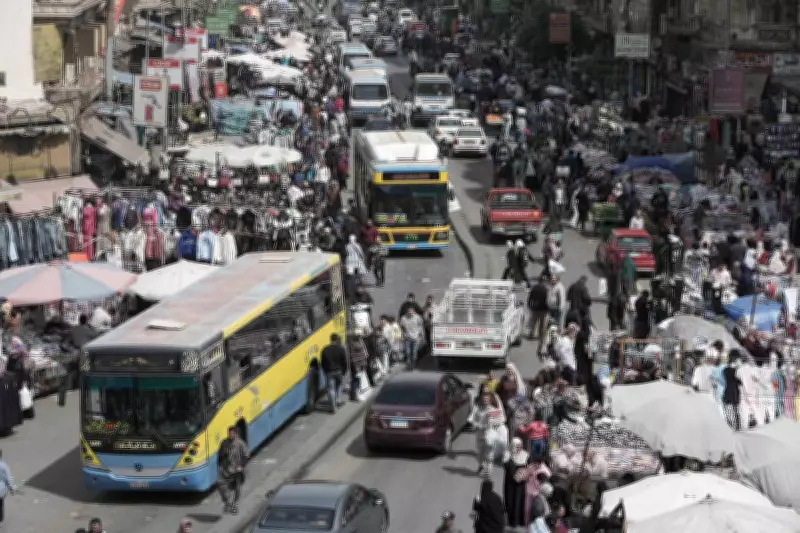
Egypt's Economic Crisis Deepens as Distant Iran War Sends Prices Soaring
Millions of Egyptians are grappling with severe economic strain as the repercussions of a distant conflict in Iran drive up local market prices, hitting the nation's already vulnerable poor and middle classes with devastating force.
Families Struggle to Survive Amidst Soaring Costs
Sayyed Ragheb, a father of four school-age children, exemplifies the daily struggle. Earning less than $100 per month through casual work in cafes and construction, he now faces even greater hardship after Egypt implemented steep fuel price increases. "This means a price increase for everything," Ragheb lamented while serving hot drinks at a Cairo cafe. "This is catastrophic for someone like me."
With meat and produce prices jumping 15-30% in recent weeks, Ragheb worries about meeting his family's basic needs. His household has tightened its budget, resorting to the cheapest food staples, and he has abandoned plans to buy new clothes for his children during the upcoming Eid al-Fitr holiday. "One has no other option," he said resignedly.

Energy Price Surge Forces Government Action
Egypt, though not directly involved in the Iran war now entering its third week, is feeling its economic impact acutely. Soaring global energy prices prompted the government to announce significant hikes on March 10: 15% for gasoline, 22% for cooking gas, and 17% for diesel fuel.
President Abdel-Fattah el-Sissi acknowledged the pressure on citizens but defended the measures as "inevitable" and "the least expensive" option to protect the economy. "The requirements of the reality sometimes necessitate taking difficult measures to avert harsher options and more serious consequences," he stated during a Ramadan Iftar event.
Multiple Economic Vulnerabilities Exposed
The crisis reveals Egypt's multiple economic vulnerabilities:
- Energy Dependence: The government dedicates substantial portions of its strained budget to subsidizing fuel and electricity, importing 28% of gasoline and 45% of diesel needs.
- Suez Canal Uncertainty: Shipping companies are rerouting traffic away from the Middle East due to regional turmoil, threatening a major source of government income that had just begun recovering from Houthi rebel attacks.
- Tourism Decline: Arrivals are expected to plunge as travelers avoid the region, jeopardizing another crucial foreign income stream.
Brent crude oil prices surged from under $70 per barrel on February 27 to nearly $120 by early March, currently hovering around $104. This spike follows Iran's retaliation against U.S.-Israeli military actions, including attacks on Persian Gulf energy infrastructure and disruption of Strait of Hormuz traffic.
Domino Effect Across the Economy
The fuel price increases are creating a domino effect across Egypt's struggling economy, arriving during the Muslim holy month of Ramadan when families traditionally hold large dinner gatherings and ahead of Eid al-Fitr shopping seasons.
Hussein Rashad, a grocer in a poorer Cairo district, reports customers have become more selective, with most reducing vegetable purchases and some abandoning fruit altogether. "Many things have become out of their reach," he observed.
Official figures show inflation climbing from 10% in January to 11.5% in February, with the situation worsening since the new fuel prices took effect. This hits particularly hard in a country where government statistics indicate one-third of the population lives below the poverty line.
Long-Term Risks and Mitigation Efforts
Alexandra Blackman, a Middle East politics expert at Cornell University, warns that prolonged conflict could transform short-term economic pain into broader political and economic crisis. "That will be more challenging for the regime to manage and control," she noted.
The government has announced mitigation measures including reducing official overseas trips, tightening public sector fuel consumption, and implementing salary increases starting in July. However, these come after a decade of austerity measures that have already eroded purchasing power for Egypt's poor and middle class through subsidy cuts and currency devaluation.

Petroleum Minister Karim Badawy emphasized the budget pressures from Egypt's $20 billion annual oil product consumption, including fuel for power plants. With the nation of over 108 million people caught in the crossfire of a distant war, the economic outlook remains precarious as families like Ragheb's struggle to survive.





