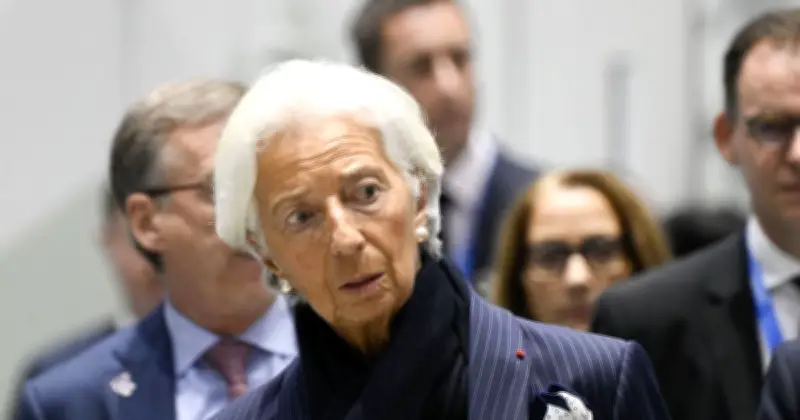
Christine Lagarde has announced she will step down as president of the European Central Bank (ECB) in February, almost nine months before her term was due to end. The move marks a major shake-up at the heart of the European Union.
Ms Lagarde informed the ECB's Governing Council and European Council president António Costa of her decision on Thursday, October 29. The central bank confirmed she would leave on February 7, 2027, despite her eight-year term originally being scheduled to run until the end of October next year.
Timing Linked to French Election
Her early departure comes ahead of France's presidential election in 2027, raising the stakes in the battle over who will succeed her at one of Europe's most powerful financial institutions. French president Emmanuel Macron is due to leave office next year, while Marine Le Pen and her National Rally party are seeking to capitalise on discontent with the political establishment.
The timing of Ms Lagarde's departure could allow Mr Macron and other European leaders to settle on her successor before the French election, rather than leaving the decision to a potential successor from the National Rally. Ms Le Pen has been a central figure in speculation about the political implications of the succession.
Succession Process and Tenure
A victory for her party could complicate the process of selecting the next ECB president, given France's influence in European financial appointments. The ECB said Ms Lagarde's successor would be appointed by the European Council following the nomination process set out in Article 283 of the Treaty on the Functioning of the European Union.
The bank's Governing Council thanked her for her service and gave her a long standing ovation, according to its official statement. Ms Lagarde took over as ECB president in November 2019, having previously led the International Monetary Fund.
Impact of Departure
During her tenure, she has overseen the institution through the Covid-19 pandemic, Russia's invasion of Ukraine and a major inflation shock. Her departure opens a crucial vacancy at a time of economic uncertainty for the eurozone and heightened political tensions across Europe. The ECB has not yet announced a successor.