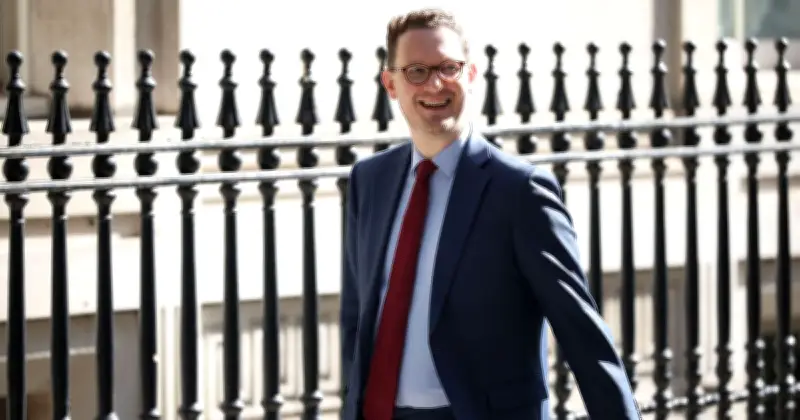
Darren Jones, a former chief secretary to the prime minister and a key ally of Sir Keir Starmer, has warned new Prime Minister Andy Burnham that his flagship policy to cut VAT on household energy bills may already have a funding black hole. The intervention signals a deepening rift within the Labour Party, despite Burnham's call for unity.
Funding dispute over VAT cut
Burnham announced an £850 million tax cut on energy bills, making them VAT-free from October 1, saving households around £45. The government claims the move will be funded by scrapping the digital ID scheme, previously championed by Starmer, which was estimated to cost £600 million per year over three years. However, Jones challenged this rationale, stating the digital ID program was itself unfunded and that the government must explain how it will pay for the new policy.
In a post on X, Jones said: “Good news that VAT will be cut on electricity bills. It’s a simple way for families to save a few quid, and to mechanically help to keep inflation that little bit lower. But the DigitalID program was unfunded. The government will have to set out how it will pay for its new policies at the budget.”

Conservative criticism and OBR assessment
Shadow defence secretary James Cartlidge also questioned the policy's viability, noting that the Office for Budget Responsibility (OBR) had previously stated the digital ID scheme was not funded. He told Times Radio: “They literally said that, so you can’t fund a tax cut with savings from a programme that itself wasn’t funded.”
Cartlidge added: “If you’re going to have policies to deal with it, they’ve got to last more than a few minutes in terms of scrutiny, to be honest.” The energy price cap is currently forecast at £1,849 for a typical household, though geopolitical tensions could push prices higher.
Burnham's call for unity undermined
Burnham had urged an end to “factionalism” within Labour, but his recent reshuffle was seen as a purge of Starmer allies. Jones's criticism suggests internal party conflict is far from resolved. The Prime Minister defended the policy, saying: “I said I wanted to give people breathing space, and that’s what I’m announcing on my second day as Prime Minister. We’re taking immediate action to cut taxes on energy bills, put more money in people’s pockets and bring back hope.”
Chancellor John Healey echoed this, stating the measure is funded this year from cancelling the digital ID programme and will help bring down inflation while supporting households. Energy suppliers are expected to pass the VAT reduction to all customers, including those on fixed tariffs.