

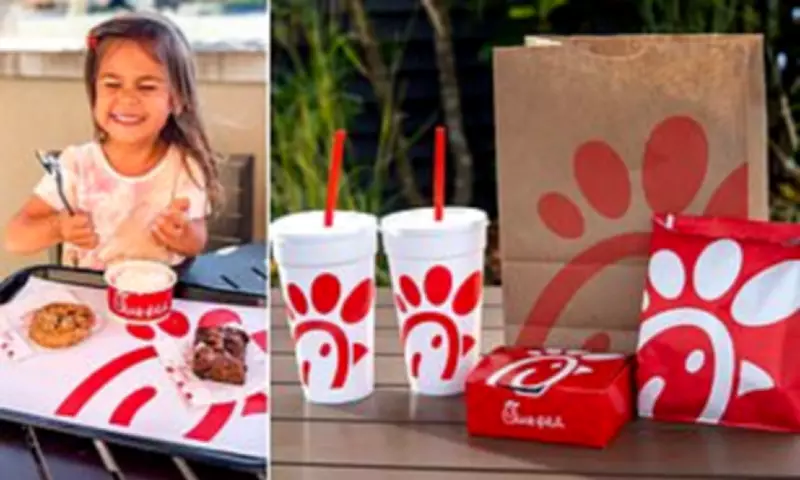
For most fast-food chains, shutting stores one day a week would be unthinkable. But Chick-fil-A has spent decades doing exactly that, despite estimates suggesting the company sacrifices more than $1 billion in revenue every single year by keeping its restaurants closed on Sundays.
The Policy That Defies Convention
The wildly successful chain, famous for its chicken sandwiches and famously polite staff, has never wavered from the rule first introduced by founder S. Truett Cathy in 1946. At first glance, the policy looks like a staggering financial sacrifice. However, business experts say it may be one of the smartest decisions in corporate America, helping Chick-fil-A build a loyal workforce, a powerful brand, and some of the highest sales per restaurant in the fast-food industry.
The policy was recently highlighted by business adviser Damon Millar, an accountant who works with business owners on growing profits and building long-term wealth. In a viral post, Millar argued that Chick-fil-A's refusal to abandon its Sunday closures has become a hidden competitive advantage rather than a weakness.

'They estimate it costs them over $1 billion a year in lost revenue,' Millar wrote. 'They've never broken the rule.'
A Counterintuitive Advantage
At first glance, the strategy appears baffling. Most businesses, especially in the cut-throat fast-food industry, push for longer opening hours, more locations, and maximum customer volume. Yet Chick-fil-A consistently generates higher sales per restaurant than many of its biggest rivals, including McDonald's, Starbucks, Subway, and Burger King, despite being closed roughly 14 percent of the year.
Industry analysts have long pointed to the chain's remarkable efficiency and fiercely loyal customer base as reasons for its outsized success. But Millar believes the company's self-imposed constraint is the real secret behind its dominance. Instead of stretching employees and operators to the limit seven days a week, the guaranteed weekly closure creates stronger workplace culture, lower staff turnover, and more consistent customer service.
'What looks like a cost actually compounds,' Millar explained, listing lower employee turnover, stronger customer loyalty, and a better pipeline of future operators among the benefits.
Lessons for Entrepreneurs
The argument cuts against the mentality many entrepreneurs embrace when trying to grow a business. 'Most owners I work with have the opposite habit,' he wrote. 'They open more hours, take more clients, accept more meetings, work more weekends. It feels like effort. It's usually erosion.'
Rather than accelerating growth, Millar argues that constantly expanding availability can dilute quality, exhaust employees, and distract companies from what made them successful in the first place. He says the businesses that ultimately build lasting wealth often enforce strict boundaries that they refuse to compromise on. That can mean limiting client numbers to maintain exceptional service, refusing projects that do not align with the company's goals, or setting hard boundaries around employee availability after work hours.
'Constraints don't slow good businesses down,' he said. 'They focus them.'
Brand Identity and Employee Welfare
For Chick-fil-A, that philosophy has become part of the brand itself. Customers know the restaurants will always be closed on Sundays, and employees know they are guaranteed one day off each week, regardless of demand. The decision also reflects founder Truett Cathy's religious beliefs. Cathy, a devout Southern Baptist, believed employees should have one day reserved for rest, family, and worship.
Nearly 80 years later, the company still refuses to bend the rule, even as competitors battle for every possible dollar in an increasingly crowded fast-food market. And despite the eye-watering amount of money reportedly left on the table each year, Chick-fil-A continues to outperform much of the industry while remaining one of America's most recognizable restaurant brands.

Contrast with Struggling Chains
Meanwhile, other once-thriving chains are struggling to stay afloat. Take Subway, long the largest fast-food chain in the US by store count, which has been quietly shutting locations across the country, shrinking its once-dominant footprint. Subway's struggles on home turf show no sign of slowing, with the sandwich giant shrinking its US footprint for a staggering 10th year in a row. The chain quietly closed a net 729 locations in 2025, leaving it with 18,773 restaurants nationwide, all run by franchisees. That's a sharp comedown from its heyday in 2015, when Subway boasted more than 27,000 stores across America. In the decade since, it has shed a net 8,345 outlets, a figure so large it would place among the country's top five biggest chains on its own.





