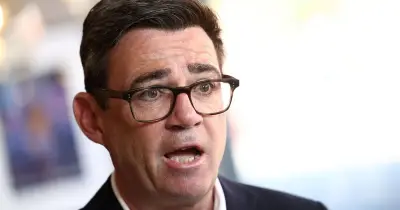
The easy days of summer are almost over for the Prime Minister, with the hard grind of office about to begin. As Parliament returns next week and the parties prepare for their annual conferences, Andy Burnham now faces the harsh reality of life at the summit of British politics.
No longer can he govern with just a smile or a stunt on YouTube. Instead, he will have to make hard choices and tough decisions, which will not be easy for a politician who craves popularity and loves to portray himself as a unifier.
Expensive brand of compassion
“Andy: For All of Us” ran the cloying slogan of his recent victorious campaign in the Makerfield by-election. The desire to be seen as “a nice bloke” animates his nostalgic, soft-left socialism, with its attachment to the idea of a large, benevolent state and ever increasing public expenditure.

But this expensive brand of compassion represents a real threat to the country, according to a new analysis. Britain has been living far beyond its means for too long, becoming a fantasy island where every financial problem can seemingly be resolved by more borrowing, taxation or printing money.
Debt passes £3 trillion
Without a change in direction, the present “Burnham Bounce” could swiftly turn into the “Messiah’s Meltdown.” The need for the government to get a grip on the public finances is now urgent, with the colossal national debt passing the milestone of £3 trillion this week.
The debt imposes brutal interest payments and has driven up the tax burden to its highest level since 1948. Equally out of control are the welfare state, the immigration system, energy bills and the vast state bureaucracy.
Any truly responsible government would recognise that retrenchment and reform are prime civic duties, but such a mission of fiscal sanity seems of little interest to Burnham, who has always shied away from confrontation. He would rather indulge in promises of greater intervention and expenditure by the state.
Spending pledges mount
“I’m more of a spender than a saver. I prefer to say yes,” he declared in 2024. As the Mayor of Greater Manchester, even when he was Chief Secretary to the Treasury under Chancellor Alastair Darling he was renowned for his inability to exercise control, so much so that Darling nicknamed him “the lorry on ice” because of the way he swerved all over the place.
Throughout the summer he has been true to his nature, dishing out his pledges like confetti. Only yesterday, the government announced “the biggest increase in social and affordable house-building in a generation,” costing £9.5 billion, while Burnham has also set out his vision for a national Social Care Service, which is likely to cost at least £18 billion-a-year.
Other commitments include a cap on bus fares (estimated cost £500 million), the end of rough sleeping (£340 million), and a cut in VAT on electricity bills (£850 million).
Callaghan's warning recalled
Burnham will no doubt list many more items in his conference speech next month as he drags his party deeper into its spendthrift comfort zone. But he should consider the speech given to the Labour Conference in Blackpool exactly 50 years ago by Jim Callaghan, who had become Labour Prime Minister early in 1976.
A naval veteran, Callaghan had much greater authority than Burnham, and he used this weight to deliver some home truths to the Labour delegates. “For too long, we have postponed facing up to fundamental choices”, he warned, before condemning “shallow analyses and false remedies”, such as the delusion that “we can spend our way out of a recession”.
In the “cozy world” of socialist “folly” we “are paying ourselves more than the value of what we produce”, he concluded with devastating common sense. It was a remarkably brave speech that smashed the liberal economic consensus of the time and is just as pertinent today as it was half a century ago. The economic tragedy is Burnham could never deliver such an address.