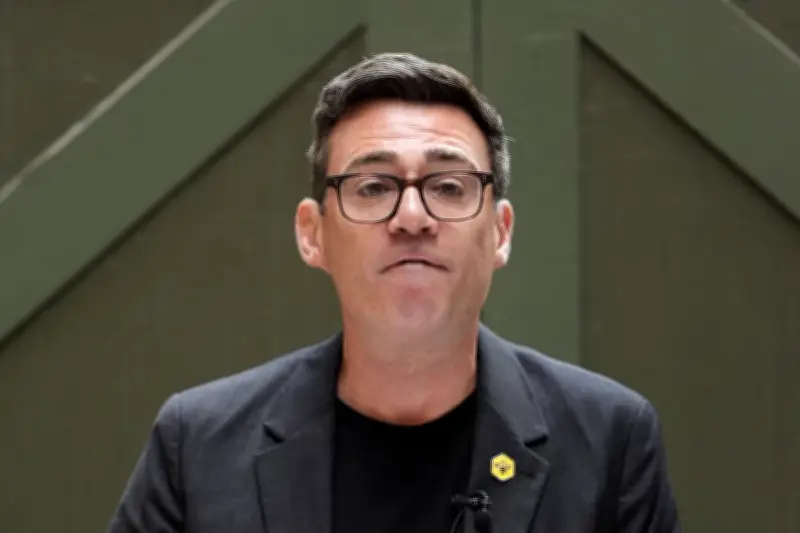
Andy Burnham has been cautioned that his plans to impose significant tax increases on London to finance landmark reforms could drive wealthy individuals out of the United Kingdom. Councillor Elizabeth Campbell, the Conservative leader of Kensington and Chelsea Council, argued that punishing the capital would ultimately impoverish the entire nation rather than enrich it.
Burnham's Tax Proposals and Manifesto Commitments
Burnham has indicated that there is "some room" within the Labour manifesto for tax adjustments. He cited the possibility of raising levies on warehouses to reduce taxes on high street businesses. The manifesto explicitly rules out increases in income tax, VAT, and employee National Insurance contributions.
The former Mayor of Manchester is also expected to focus on taxing wealth rather than work to generate additional billions needed to address a shortfall in defence spending, launch the largest council house building programme since the post-war era, and implement what he describes as the "biggest devolution of power in modern times." He has previously supported replacing council tax and stamp duty with a property tax that could impose an extra £7.5 billion burden on London.
Warning from Kensington and Chelsea Council Leader
Speaking to The Standard, Councillor Campbell stated: "Mr Burnham has floated higher taxes on expensive homes in London and the South East, the kind of measure that sounds painless until you remember how concentrated the tax base already is. The top one per cent of income taxpayers now contribute close to 30 per cent of all income tax, and the top 10 per cent well over half. Many of them live and work in boroughs like mine. Drive them out, and Britain is already projected to lose hundreds of thousands of its wealthiest residents this decade, and the bill does not disappear. It simply lands on everyone else."
The Trades Union Congress has also urged Burnham to impose a new windfall tax on the City, potentially raising between £9 billion and £60 billion over four years.
Impact on London and the UK Economy
Accusing Burnham of adopting "anti-London" language, Councillor Campbell emphasised that rhetoric shapes policy and policy shapes lives, including those of her residents and businesses in Kensington and Chelsea. She added: "London is not a rival to be cut down to size. It is the engine. The capital generates more than £600 billion of output a year and remains the largest net contributor to the Exchequer of any part of the UK, the money that funds schools and hospitals in Greater Manchester as much as anywhere. A country that punishes its most successful city does not become fairer. It only becomes poorer, North and South alike."
Burnham's Reassurances on Fiscal Discipline
Burnham, who has not yet chosen his Chancellor, has vowed not to abandon Rachel Reeves' fiscal rules to reassure markets before he is expected to become Prime Minister on July 20. He stated on LBC Radio: "I stick by the manifesto and the promises that it made. So, let me be absolutely clear about that, but there is some room within that manifesto for movement on tax. So, if you take business rates, for instance, I believe there is a case for higher business rates on warehouses and the major developments we see on the outskirts of our cities so that we can cut business rates for pubs. And I proposed a 20% cut and lift some high street businesses out of business rates altogether."
The Makerfield MP and former Cabinet minister stressed his fiscal prudence, noting his experience in the Treasury, the Department of Health, and as Mayor of Greater Manchester. His devolution plans are expected to move tens of thousands of jobs out of Whitehall.
Reactions from London Mayor and Other Leaders
London Mayor Sir Sadiq Khan has also warned Burnham against cutting investment in the capital, as billions in funding are expected to be redirected to the North and Midlands. Regional mayors, including Khan, are set to gain more powers over housing and education. A new "No10 North" would be established to drive economic regeneration in the regions.