

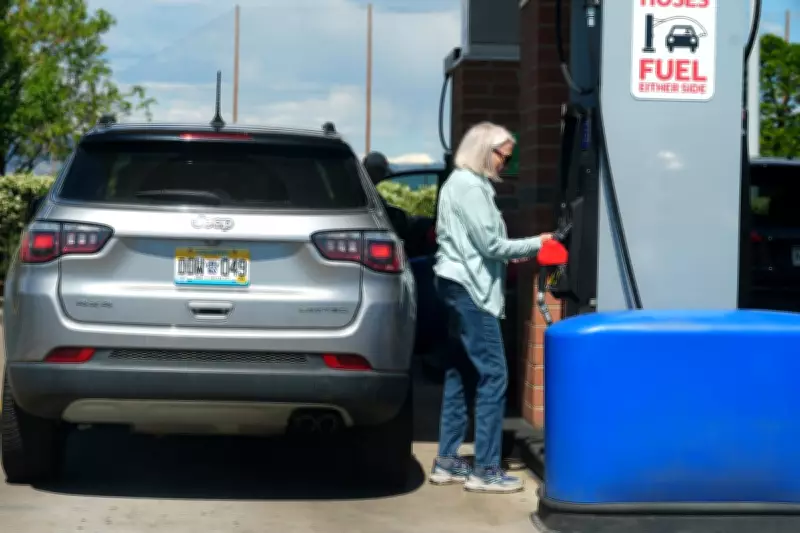
Americans have paid an additional $59 billion in inflated fuel prices since President Donald Trump launched his war against Iran, according to a report released on Friday. The extra spending, estimated at about $450 per U.S. household, has already consumed this year's average federal income tax refund, which was roughly $380 higher than last year.
Mark Zandi, chief economist at Moody's, provided the analysis, which was detailed by CNBC senior economics reporter Steve Liesman on the network's Squawk Box program. Liesman explained that the increased costs stem primarily from gasoline, with additional expenses from diesel and implied jet fuel costs reflected in higher airline fees.
Initially, the larger tax refunds offset the added fuel expenses, but by mid-May, the fuel cost increases surpassed the refunds, leaving consumers with a net financial burden. Zandi warned that unless the conflict ends soon, financially strained consumers may be forced to reduce spending, further weakening an already soft economy. A separate report from Goldman Sachs echoed these concerns, predicting that higher inflation would continue to weigh on spending growth for the remainder of the year.

The White House did not immediately respond to a request for comment from The Independent. However, senior deputy press secretary Kush Desai earlier stated that once the Iranian terror threat is neutralized and traffic in the Strait of Hormuz normalizes, Americans would see gas prices plummet, real wages grow, inflation cool, and trillions in investments pour in.
Trump has repeatedly downplayed concerns about rising gas prices. On Friday, the average price for a gallon of regular gasoline stood at $4.39, down from $4.55 a week earlier but up from $3.17 a year ago—a nearly 40 percent increase, according to AAA. Six days after the conflict began on February 28, Trump told Reuters that he was not worried about pump prices, stating they would drop rapidly once the situation resolved. In late April, he shrugged off a question about whether Americans should expect higher gas prices for the foreseeable future, saying it was temporary and necessary to prevent Iran from obtaining a nuclear weapon. Last week, ahead of the Memorial Day holiday, he called higher gas prices "peanuts" compared to the Iranian threat.
Retail giant Costco reported record-breaking gasoline sales in its third quarter as customers, including new members, sought lower prices. Trump has taken some measures to control fuel costs, such as suspending the Jones Act to allow foreign-flagged ships to transport oil between U.S. ports. However, this move has had limited impact due to higher shipping costs and the relatively small volume of fuel involved, according to Reuters. Jennifer Carpenter, president of the American Maritime Partnership, noted that the waiver has not delivered the promised price reductions at the pump.






