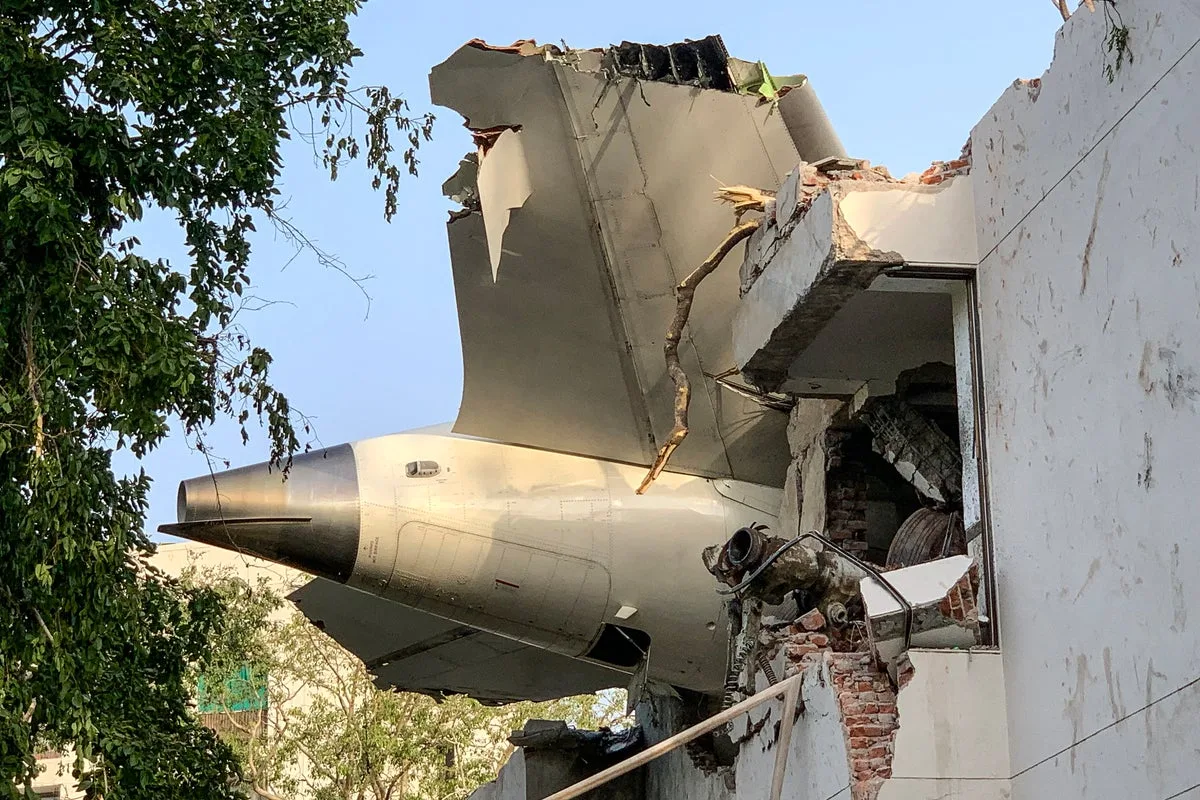
India's air accident investigators are preparing to release an anniversary report into the crash involving a London-bound Air India flight that killed 260 people last year. The Boeing 787-8 Dreamliner with 242 people on board crashed in Gujarat, western India seconds after take-off on 12 June, slamming into a medical college’s hostel outside Ahmedabad airport and erupting in a fireball. One passenger, a British citizen, miraculously survived the crash, while another 19 people were killed on the ground.
When will the Air India report be released?
Under international regulations, investigators must aim to provide a final accident report one year after an incident, revealing what they have found about the probable cause of the crash and providing recommendations on how to avoid similar incidents in the future. If they cannot do so, they must release an update on their investigation on each anniversary of the crash.
India’s authorities were prompt in releasing a preliminary report into the crash last year, exactly 30 days after the incident in line with their international obligations. India's civil aviation minister said last month that the investigation was in the “last stage” and that the report would “mostly” be ready by the one-year anniversary date. “However, the investigation is being done by the Aircraft Accident Investigation Bureau (AAIB) and we don't interfere in it,” Ram Mohan Naidu told reporters. “We are giving them all the resources they need.”
Officials have not committed to releasing their final findings by the 12 June anniversary of the crash, however, and media reports indicate that it is more likely an “interim” report will be produced instead. A source told Reuters it would not be a final report because “it is a very complex investigation and is taking time”, and that a timeline for the final report remained unclear.
There is plenty of precedent for final crash reports taking longer than the ideal target of one year stipulated by the UN’s aviation body. The final safety report after MH370’s 2014 disappearance was published four years later, for instance, while a revised final report into United Airlines Flight 585’s 1991 crash was published over 10 years later.
What did the preliminary report say?
Last year’s preliminary report stuck to providing the factual sequence of events, stopping short of any causal analysis and leaving deeper questions unanswered. It claimed that three seconds after taking off, both the aircraft’s fuel control switches almost simultaneously flipped from “run” to “cutoff”, starving the engines of fuel. The switches returned to the “run” position after about 10 seconds, but it was too late. Moments later, one of the pilots transmitted a “Mayday, Mayday, Mayday” call.
The plane immediately began to lose thrust and sank. One pilot could be heard on the cockpit voice recorder asking the other why he had cut off the fuel. "The other pilot responded that he did not do so," the report noted. An auxiliary power unit intended to provide power to the aircraft in the event of engine failure deployed automatically, but did not provide enough lift to prevent a catastrophic crash into a hostel at Byramjee Jeejeebhoy Medical College.
The 15-page preliminary report assigned no blame, identified no cause and didn’t conclude whether the crash was the result of technical failure, human error, maintenance issues, or systemic oversight gaps. However, it sparked a media trial of the pilots, first officer Clive Kunder, 32, who was flying, and captain Sumeet Sabharwal, 56, who was observing. US officials have said that the cockpit recording supports the view that it was the captain who cut the flow of fuel to the plane's engines, while the captain’s family have petitioned India’s top court to try and clear his name.
What will the report uncover?
The AAIB says its investigation “is looking into each and every factor to identify the root cause/ contributory factor(s) leading to the accident”. It said its final report would also issue safety recommendations to avoid a repeat of such accidents in the future, although it’s not immediately clear how much this point will be covered in the interim report.
Independent aviation experts hope the report will shed more light on theories beyond pilot action that have emerged since the crash, including a possible electrical fault. The lone survivor of the crash, Viswashkumar Ramesh, has described how the lights flickered inside the plane just before it started to fall – some experts say this could point to a water leak.
According to the Foundation for Aviation Safety, an advocacy group in the US, the specific Boeing aircraft involved had a record of technical and electrical failures. It entered service with Air India in 2014 and went on to suffer a series of system failures, including an electrical fire in 2022 which led to the replacement of core system components, the group said in a submission to the US Senate. The issues, it alleged, were caused by "a wide and confusing variety of engineering, manufacturing, quality, and maintenance problems throughout its 11-year life".
Boeing’s chief executive Kelly Ortberg had offered the manufacturer’s “deepest condolences” to the victims after the crash, and said Boeing “stands ready to support the investigation led by India’s Aircraft Accident Investigation Bureau”. The Independent has reached out to Air India, Boeing and the AAIB for a statement. Boeing has previously referred media inquiries to the Indian authorities, citing the ongoing crash investigation.
Many questions remain unanswered about what went wrong with Air India Flight 171, with both bereaved families and those injured on the ground anxiously awaiting the accident report – not least because a host of lawsuits filed against Air India and Boeing are now proceeding through the courts in both the UK and US alleging culpability on the part of the airline and manufacturer.