

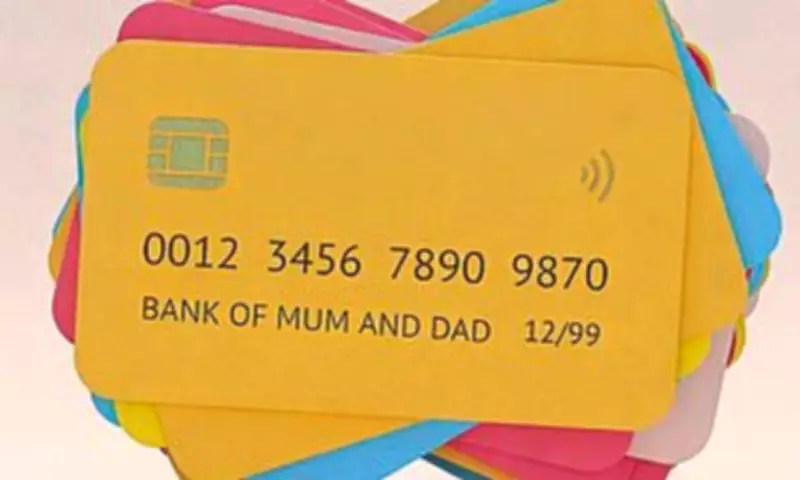
Last week, I enjoyed dinner with a friend at an upscale taqueria in Soho. The bill totalled £60 for food, plus £12 for a spicy margarita—and given it was Thirsty Thursday, I planned to indulge in at least three drinks. My bank balance had dwindled to double digits, and without swift action, I faced a financial crisis within two drinks. So, I grabbed my phone and sent a familiar text to my parents: 'Hope you're having a nice night. I love you guys! And also, can I borrow some money?'
By 'borrow,' I meant 'receive and spend immediately.' My parents understand this, responding with the same raised eyebrow and resignation as when I get another tattoo or when I graduated university and announced I wasn't pursuing a high-flying career in law or finance like my peers; instead, I chose journalism. At 27, I adore my job but have no desire to adjust my lifestyle to match my salary's financial reality. This is where the 'adult allowance' comes into play: a monthly £300 payment from my parents to cover 'living expenses,' a broad term encompassing pricey gym sessions, sushi, and numerous cocktails.
You're Not Alone in This Trend
Before passing judgment, know that I'm not an outlier. In January, sensible voices criticised adult allowances after Marina Hyde mentioned on The Rest Is Entertainment podcast that 31-year-old Nicola Peltz, known as Brooklyn Beckham's wife and Victoria Beckham's adversary, receives $1 million monthly from her billionaire father. However, a quick survey in our office revealed that most staffers under 35 get a monthly 'top-up' from their parents—though none match Ms. Peltz Beckham's sum.

My best friend Charlotte, 29, receives £250 monthly from her parents, ostensibly for savings but often spent on spin classes and matcha lattes. Then there's Bella, 34, who is buying a flat. Her mortgage adviser noticed £200 monthly payments from an RA Green and inquired if it was freelance income. Sheepishly, Bella admitted RA Green is her grandad, who has provided £200 monthly since she turned 18, and it will continue indefinitely.
The Stealth Allowance Phenomenon
Many parents might think, 'I'd never frivolously fund my spoiled offspring.' Yet, they likely fall victim to an equally finance-draining trend: the stealth allowance. For instance, my phone bill is a shocking £69.60 monthly—shocking because I've never seen the cost; my mum covers it. I'm also on her Netflix (£18.99), Amazon Prime (£8.99), and Disney+ (£9.99) subscriptions, ironically struggling to find content. Until two years ago, I had her card on my Deliveroo account, ordering fried chicken after bad days and feigning payment errors. I eventually confessed and removed it, feeling like a spider feeding off its matriarch.
A recent survey indicates 35% of adults under 35 have at least one subscription paid by parents. In my experience, this figure is an underestimate. Everyone I know participates. Charlotte uses her mum's card for Uber, enjoying 'free' taxis—though her mum tracks her 3 a.m. rides. Another friend, 29-year-old Harriet, has her mum pay £140 monthly for HelloFresh, citing nutritional needs. Isn't £140 a fair price to prevent rickets from a diet of Super Noodles?
Financial Realities and Gratitude
Seriously, I'm not overly proud of my financial dependence. I wish I earned enough to splurge on my parents. But this isn't the 1980s, and I'd make a terrible banker, meaning my take-home pay barely covers rent, bills, and food. Adding socialising, gym classes, films, holidays, and other activities 27-year-olds desire—and deserve—parental assistance becomes the only viable solution. So, to my parents, if you're reading this, I am truly grateful. I love you guys! And also, can I borrow 20 quid?






