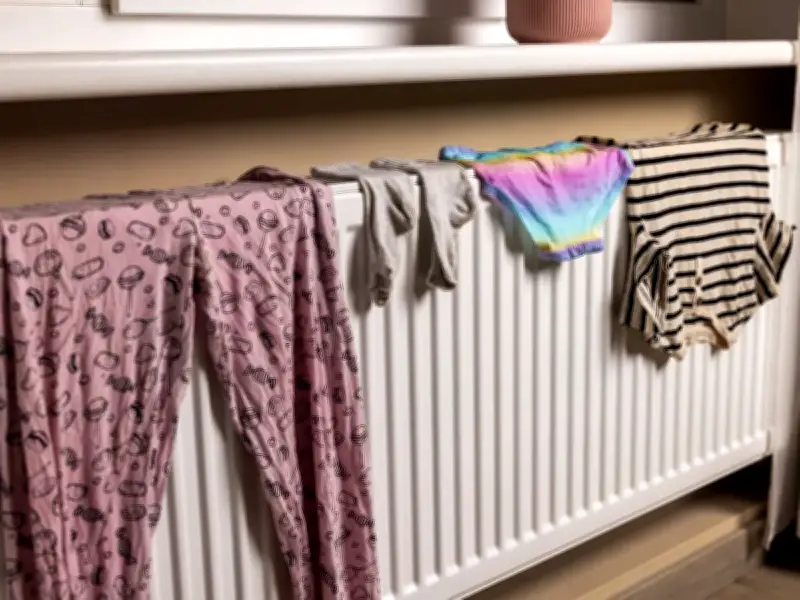
Consumer experts at Which? have warned that drying clothes on radiators can block heat, increase the risk of mould and push energy bills higher, urging households to switch to an airer or heated airer instead.
As temperatures drop and households turn up their heating, many rely on radiators to dry laundry. However, Which? highlighted the potentially damaging consequences of this habit, noting it may fail to dry clothes thoroughly, affect how efficiently the home heats up and significantly increase moisture in the air.
Why radiator drying is a problem
In a recent social media video, Which? said: "You need to stop drying your clothes on radiators." The experts explained that radiators circulate warm air around the room, and if the heating is set to 20 degrees celsius, the boiler stops once the room reaches that temperature. Cold, wet clothes act as a barrier to the heat being given off, meaning the room could be heated for much longer than necessary.
"And while you might end up with dry clothes, you'll also end up with a colder home and bigger energy bills and maybe even mould," the experts added.
Using an airer instead
Instead, Which? suggests using an airer for drying laundry, arranging garments on it and positioning it close to the radiator. While clothes may take longer to dry, placing items beside rather than directly on top of the radiator allows warm air to move freely around the room. A heated airer could speed up drying time, though Which? pointed out that heated airers are best suited to smaller washing loads.
Choosing the right room is also important. Researchers noted that drying laundry in spaces such as the bedroom could lead to problems including mould, damp and certain health risks, as bedrooms are typically more compact and can quickly become saturated with airborne moisture.
Dehumidifiers cut drying time
Laundry experts at In The Wash said: "Keeping moisture-filled laundry in your living spaces doesn't just encourage mould and dampness, it can also lead to respiratory issues, and wet laundry can be a bit smelly too. The bedroom is one of the rooms you spend the most time in."
Which? has previously highlighted that pairing a dehumidifier with an airer or heated airer can significantly reduce condensation and the onset of mould. The consumer group found that using a dehumidifier to assist with drying washing reduced drying time by nearly half, and that the device drew around two litres of water from the air. Which? said: "It also sucked up around two litres of water from the air, which would really help prevent mould."
Extracting excess moisture from the air means households are far less likely to encounter damp or mould problems indoors throughout the winter months.