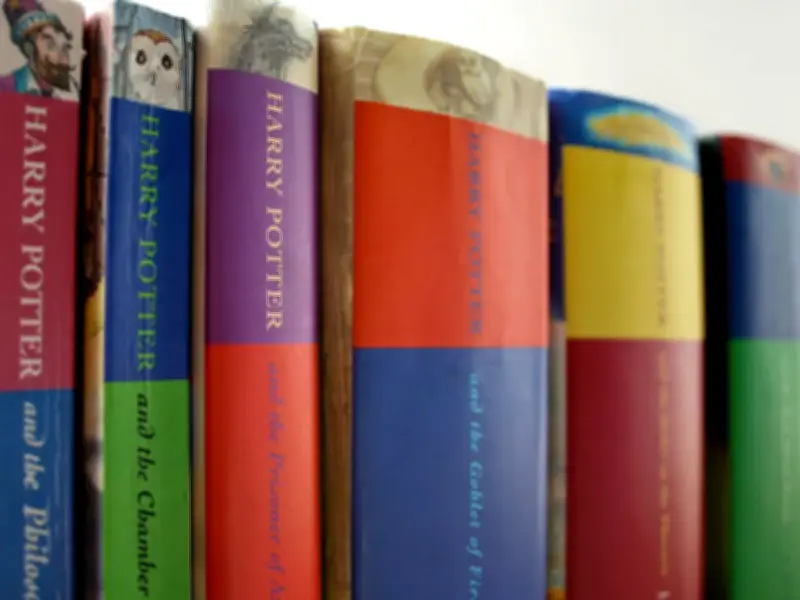
Old Harry Potter books sitting on your shelf could be worth far more than you paid for them. Collectors will pay serious money for certain early editions, rare printings, and small mistake details that most readers would never notice.
The difference between an everyday copy and one valued in the thousands can be as simple as what is printed on the copyright page. Before donating them or putting them in the loft, it may be worth taking a closer look, as they could end up making you a pretty penny.
To help identify which books could be sought-after by collectors, Sotheby's uploaded a short video explaining the key details to look for.
Four Ways to Tell If Your Book Is Valuable
An expert held up a rare copy and addressed viewers by saying: "Is your book of Harry Potter and the Philosopher's Stone worth $100,000? Here's four ways to tell."
First editions are often especially prized, particularly when a book becomes hugely popular or culturally significant. A first edition simply means the very first print run produced when the book was originally published.
The Sotheby's expert demonstrated by showing a valuable book, adding: "This is JK Rowling's first book and the first in the Harry Potter series. Because she was a completely unknown author, they only issued 500 copies of this first edition."
Print Runs and Printing Codes
If you do not have a novel from the first print run, there are other factors that make books valuable. Limited editions, signed copies, and special printings can also fetch a lot under the hammer. Some very early copies may even have notes from JK Rowling on them.
The fewer books in circulation, the more likely they are to be in higher demand, and collectors could stump up more for them. The Sotheby's example is considered highly valuable because only 200 were released to sellers. The video explains: "The initial print run of 500 copies: 300 were sent to libraries and 200 to bookstores. This is from a bookstore."
Checking the printing codes inside your books can also help work out whether they could be worth serious money. The number line on the copyright page helps to identify the book's printing. A complete number line (e.g., 10 9 8 7 6 5 4 3 2 1) often indicates a first printing. As printings continue, the smallest number is typically removed or moved down the sequence.
Mistakes Can Be Prized
The Sotheby's expert explained: "This is a first edition, first printing of Harry Potter and the Philosopher's Stone. And we know this by going to the publisher's imprint page because this is a first printing; this number line will go down from 10 to 1." In later printings, this will change. For example, for a third printing it would go down from 10 to 3.
Printing errors might seem like they would make a book less valuable, but for collectors it is often the opposite. The rarer and more distinctive a copy is, the more desirable it can become, and those small mistakes can be a major selling point. Sotheby's said: "Mistakes are often prized when collecting rare books. In later editions, they're corrected. For example, on page 53 listing Harry's school equipment, 1 wand is on there twice."