
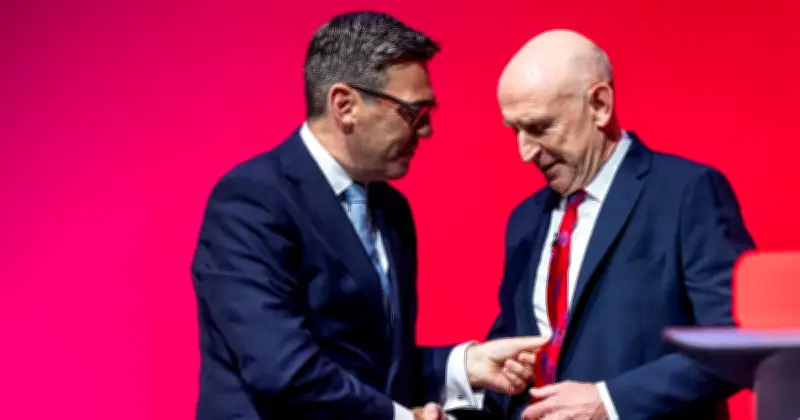
A fresh petition has been launched on the Parliament website urging the Government to raise the personal tax allowance to £18,000, as Chancellor John Healey prepares to deliver his first Budget on October 28.
The petition, titled 'Raise income tax threshold to £18,000', was launched by Mike Haynes, who was behind a previous petition on the same issue that closed on September 30 with 86,538 signatures - short of the 100,000 needed to trigger a potential parliamentary debate.
Previous petition and government response
That earlier petition, 'Raise the personal tax allowance to £18,000', did receive a Government response earlier this year, as it had reached 10,000 signatures. In its response, the Government said it had no plans to make changes at the moment.
However, there has been a change of Prime Minister and Chancellor since then. Andy Burnham indicated in the summer that the allowance could be looked at during this month's Budget.
Fiscal drag and campaigners' hopes
Campaigners will be hoping that John Healey's stance on the personal allowance might differ from that of his predecessor, Rachel Reeves, who confirmed it would remain frozen at £12,570 until 2031. It has been at that level since 2021.
Some experts argue that the situation causes fiscal drag, where more people are brought into paying tax - or a higher rate of tax - as wages rise but the allowance does not. Mr Haynes' petitions are not the only ones to call for a raise, with several high-profile people also backing a change.
Last month, Ecotricity owner Dale Vince argued that raising the personal allowance by £3,000 could generate a 1.2% boost to GDP. Mr Vince argued the measure could be financed by the Bank of England ceasing interest payments to commercial banks on their reserves.
Petition text and Prime Minister's stance
In his new petition, which runs until April 6, 2027, Mr Haynes wrote: "Before he became Prime Minister, the PM has previously hinted at increasing the tax thresholds which have been frozen since 2021. These are currently due to continue to be frozen for the next five years.
"We want the Government to raise the thresholds to £18,000 as we believe millions of people are hurting financially. The Prime Minister previously hinted at raising the allowances, we believe he is now apparently back-tracking."
"Had thresholds not been frozen in 2021 they today could be around £16,400 a year. Governments are expecting people to take what we feel is a 10-year pay freeze, which I believe is not acceptable."
Speaking in the summer, Prime Minister Andy Burnham suggested increasing the £12,570 tax-free personal allowance would be something that his Government would look at in the budget this year. Asked whether he was planning to change the income tax allowance, the Prime Minister said: "Well, it's funny these days you can't answer a question honestly without then people reading everything else into it."
He added: "I want to answer questions honestly in this job, as I said before. I think that's all about trust in politics and doing politics differently and I'm determined to keep working in that way. It was raised a lot, but I then went on to say, 'But we'll have to look at it at the budget alongside everything else'. So no commitment, no unfunded promise.
"It's just perhaps the way politics is these days and the way people report things, but that was an honest answer. There is no commitment at this point to change, but we will look at that at the budget."
Government's previous response
Responding to the previous petition in May, prior to Andy Burnham and John Healey replacing Sir Keir Starmer and Rachel Reeves as Prime Minister and Chancellor respectively, HM Treasury said: "The Government is committed to keeping taxes for working people as low as possible while investing in public services and not taking risks with the economy. The previous government froze the main income tax thresholds from 2021/22 until 2027/28 – this means the Personal Tax allowance was not due to rise until April 2028 at the earliest.
"To ensure that the Government can deliver on the public's priorities, at Budget 2025 it was announced that the personal tax thresholds, including the Personal Allowance, would be maintained at their current levels for a further three years to the end of this decade. The Government currently has no plans to increase the Personal Allowance to £18,000. Increasing the Personal Allowance to £18,000 would come at a significant fiscal cost of over £40 billion per year. This would also benefit higher earners more than basic-rate taxpayers on average.
"Raising the Personal Allowance to £18,000 would reduce tax receipts substantially, decreasing funds available for the UK's hospitals, schools, and other essential public services that we all rely on. A £40 billion cut in public services is equivalent to slashing roughly a fifth of the NHS Budget in England, or around two thirds of defence spending.
"The income tax system is highly progressive, with different rates of tax sitting above an internationally high Personal Allowance. The Government is making these fair and necessary choices on tax so it can deliver on the public's priorities. Alongside this, the Government is keeping the contribution as low as possible by pursuing a programme of reform to fix longstanding issues in the tax system.
"To support the lowest paid workers in our economy, the Government has asked the Low Pay Commission to account for the cost of living when making each of their recommendations on the minimum wage rates that have applied since April 2025. The government is also supporting families through the universal offer of 15 hours of government-funded childcare for all parents of 3- and 4-year-olds and eligible working parents of children aged 9 months and above can access 30 hours a week in free childcare.
"At Budget 2025, the Government also announced a package of measures that will bear down on prices and help ease cost of living pressures for working people, targeting everyday expenses. This includes cutting energy bills and freezing rail fares and NHS prescription fees. The Government keeps all taxes under review as part of the policy making process."




