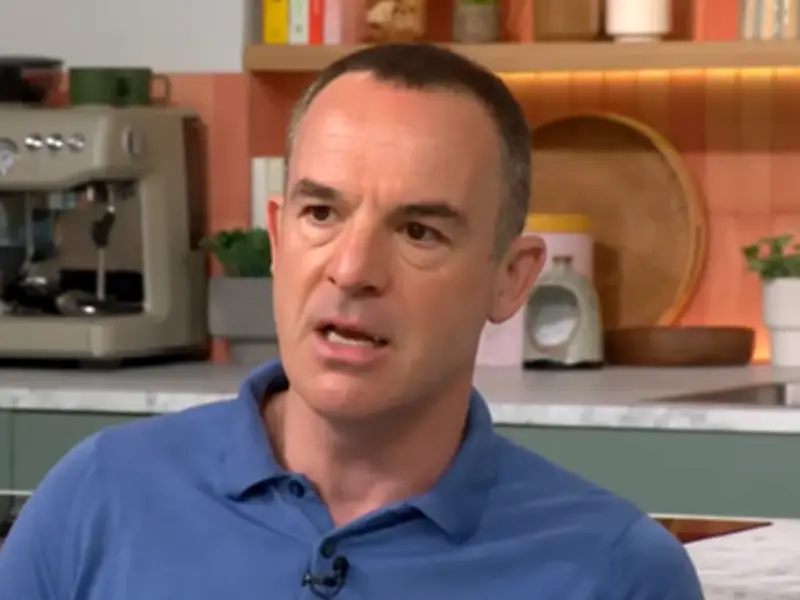
Personal finance expert Martin Lewis has warned about a 'demon appliance' which stands out as the biggest energy drain in homes - and should be used as little as possible. During his BBC Radio 5 podcast, Mr Lewis offered guidance as households grapple with rising energy costs during the colder months.
It has never been more vital - the energy price cap will rise by 4% from Thursday for a typical household in England, Scotland and Wales, just as cooler temperatures see many switching on their central heating. The increase will see the energy bill for the average household paying by direct debit for gas and electricity reach £1,723, up £5 a month or £60 a year if this level was sustained over 12 months.
Tumble dryer costs and dehumidifier advice
Mr Lewis identified the tumble dryer as one appliance that should be used sparingly, highlighting that it costs £1 per load. He said: "Do you know what the read 'demon appliance' is in most people's houses - the one that you don't want to use because it's really expensive. Tumble dryers. You're typically paying up to a quid per load so dry your clothes on an airer outside, to shorten the amount of time you're using your tumble dryer, or avoid using it completely. Those who have dehumidifiers can take some of the moisture out of the air. It's less wattage than a tumble dryer, so it can be more cost-effective."
Live listener Rob had noticed dampness developing in his apartment since attempting to dry laundry indoors. He asked: "If I were to buy a dehumidifier, would it be cheaper than using the heating to keep the place dry?" Martin answered: "Dehumidifiers take water out of the air rather than use the heating and they're much lower wattage appliances than standard heating. So if the dehumidifier works for you, it will definitely have lower electricity bills."
Radiator tips to cut heating waste
One key concern is that radiators heat areas where warmth simply escapes outside rather than raising the room temperature. Speaking previously on his BBC Podcast, Mr Lewis suggested that householders should look into fitting reflective panels behind radiators - directing heat back into the room rather than letting it seep through the wall.
He said: "A tip for you reflective panels behind radiators. Sheets of reflective material can be placed behind radiators. Crucially, this is on external wall radiators, so the heat doesn't escape. If you don't want to pay for those, then tin foil can work, although it doesn't work quite as well." He also offered further advice regarding radiators, saying: "If you've got radiators in rooms that you're not using, go and turn them off before you turn the heating on so you're not wasting cash overheating empty spaces. Changing the flow rate on your boiler can cut gas bill by over 9% and you won't notice the change."
October costs and meter reading deadline
Mr Lewis also cautioned that households should steer clear of using a 'demon appliance' as frequently as possible. He said: "Other general tips included: "Check your TV's on a low energy setting too and walk around your house." Be a draft detector - what drafts can you spot as you walk around your house? And then try, if you can, to seal them up."
Homes on a standard tariff with average usage are expected to spend £145 on energy in October, compared with £109 in September. The increase of a third is down to a combination of increased usage due to cooler temperatures and higher unit rates under the latest price cap.
Ben Gallizzi, energy expert at Uswitch.com, said: "Submitting a meter reading, if you don't have a smart meter, before or on Thursday October 1 will ensure the energy used is charged at the correct rates and not estimated by a supplier. That same deadline applies for the 15 million households on standard tariffs wanting to beat the hike entirely by locking in a lower-rate fixed deal before energy costs rocket for winter."
Ofgem changes the price cap for households every three months, largely based on the cost of energy on wholesale markets. The energy price cap was introduced by the Government in January 2019 and sets a maximum price that energy suppliers can charge consumers in England, Scotland and Wales for each kilowatt hour (kWh) of energy they use. It does not limit total bills because householders still pay for the amount of energy they consume.