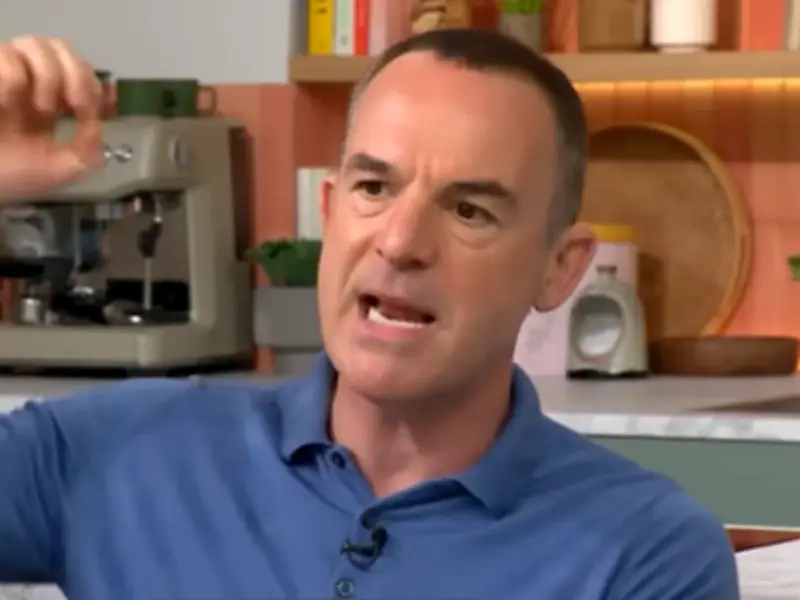
Martin Lewis has explained why your energy bills might still be going up despite settling on a fixed tariff. A fixed tariff locks in the amount you will pay for a unit of gas or electricity - usually for a year or two, depending on the deal.
The alternative is to be on the price cap, which is set every three months by the energy regulator Ofgem. The price cap rose earlier this month to £1,723 per year for a typical dual-fuel household paying by direct debit in England, Scotland, and Wales, and is set for a further sharp rise in January due to the ongoing situation in the Middle East involving the US, Israel, and Iran.
Why your fixed tariff bill can still rise
A fixed tariff will avoid that increase, but that is not to say your bill will not increase. Money-saving expert Mr Lewis said that there were two reasons why this could be the case.
“If you fix your energy bills, can the cost rise? Well, the simple answer is yes, but you need to understand what's going on here. When you get a fix, the rate you get is locked in for a year or more. That literally means the standing charge and the unit rate when you get it will stay for the entire length of the fix. But lots of people get in touch with me to say, 'I got a fix, it's outrageous, they're now asking me to pay more.'
There are two reasons this happens:
- You used more: What's locked in is the rate you pay for each unit of energy you're using. If you use more units of energy, you're going to pay more.
- Direct Debit estimates: If you're on monthly Direct Debit, they estimate that you're using more, even if you're not. That is about going to them and saying, 'Hold on, hold on, I'm not using as much as you think. Look, I can prove I'm not using as much, bring my Direct Debit down.'
Price cap set to rise again in January
“It is still important to understand that a cheap fix means the cost of each unit of energy used is locked in.
“Now, if you're on the price cap - the standard default tariff right now - your price has just risen, and it is likely to rise by around 20 per cent more based on current predictions in January. So getting a fix will prevent that.
“In fact, if you go and do a comparison right now, you will find that you can get a fix cheaper than the current price cap, never mind when it likely rises 20 per cent in January, which is the highest-use period of the year.”
What is the price cap?
Ofgem says that the price cap is the 'maximum amount your supplier can charge for a unit of energy and standing charge together'. It adds: "It does not limit the cost of your total bill. The more energy you use, the higher your bill will be."
Both the level of the price cap and the level of standing charge you will pay can vary depending on:
- where you live
- how you pay for your energy (Direct Debit, standard credit or prepayment meter)
- the fuel type you use (gas or electricity)
- the type of meter you have
“To find your cheapest fix, it depends on where you live and how much you use,” Mr Lewis said. “Go and use MoneySavingExpert's Cheap Energy Club, which is—as far as I'm aware—the only whole-of-market by default comparison out there, so it will show you all tariffs and not try and hide the ones that don't pay.”
“Just to be clear: what I'm saying is only for those who are on a price cap. If you're already on a fix or you're already on a special deal, it's likely you're paying less than the fixes available right now, so the logic of whether you should fix or not is very, very different.”