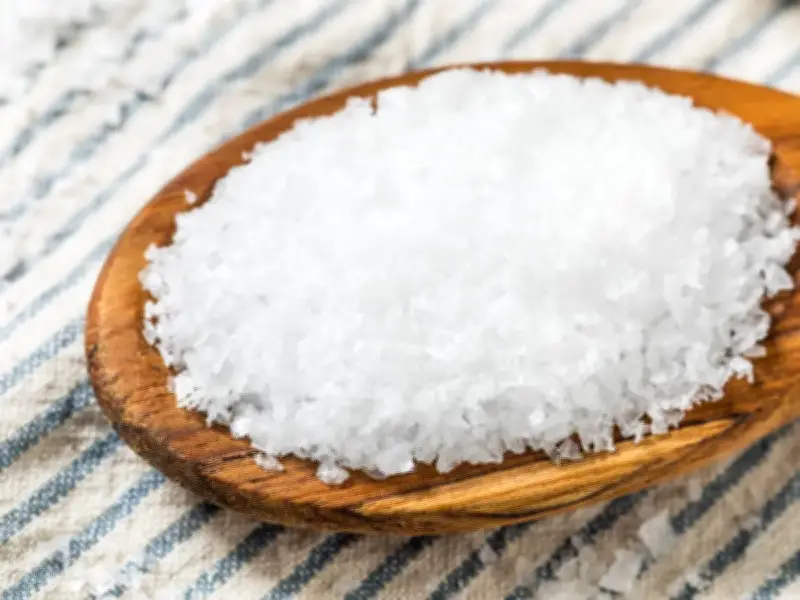
Maldon Salt, the premium sea salt brand stocked in Tesco, Sainsbury's, Waitrose and Asda, has defended its production methods after an investigation revealed that German-mined rock salt is used during the process. The company insists its traditional techniques justify the "sea salt" label.
Investigation reveals imported salt
The Observer reported that undercover reporters witnessed four lorries unloading roughly 12 tonnes of salt in bags bearing the K+S logo over two days in October. The brand, which has crafted its distinctive pyramid-shaped flakes for 144 years, charges £2.85 for a 250g box, making it more than 80% more expensive per kilogram than standard supermarket rivals such as Saxa.
Shoppers have labelled the proudly British brand's packaging as "misleading" following the findings. However, the company has stood by its use of imported ingredients, insisting that the production process itself truly counts.
Company response and regulatory clearance
A spokesperson for Maldon Salt told Express.co.uk: "Maldon is a heritage brand and the custodian of the ancient craft of salt making for 144 years. Our artisan salt-on-salt production techniques are part of that heritage.
"Rock salt is ancient sea salt, from evaporated prehistoric seas. The ancient sea salt minerals dissolve into the seawater at Maldon, creating a brine. The brine is heated in open salt pans, where evaporation produces 100% Maldon sea salt flakes."
They insisted that "Maldon Salt's products and labelling comply with all applicable food-safety and labelling legislation".
Regulators and labelling laws
The Observer revealed that regulators looked into the process between 2019 and 2020 and took no further action, as the brand is fully compliant with UK food safety laws. It was cleared by Essex Trading Standards and the Food Standards Agency following a 2019 inspection.
According to a spokesperson for Essex County Council, there are no specific legislative guidelines for determining whether the term "sea salt" is accurate or misleading. The company has since updated its website to acknowledge the process, stating that "natural, ancient sea salt forms part of the brine-making, to enrich the seawater with natural minerals."
Tim Bonner, Head of the Countryside Alliance, has called on Government ministers to strengthen food labelling laws. He said: "As with the labelling of other food products, this is clearly misleading. Consumers need to make properly informed decisions when choosing British goods."