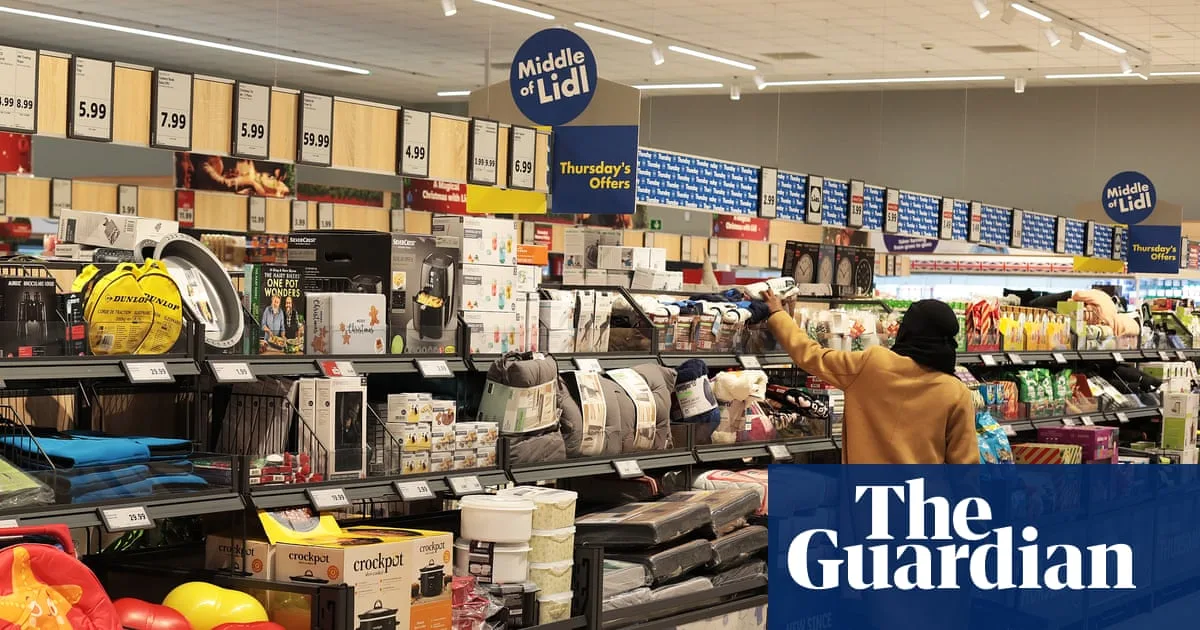
Lidl has surpassed Morrisons to become the fifth largest supermarket in Great Britain, according to market research firm Worldpanel by Numerator. The German discounter's sales rose 8.8% year on year in the 12 weeks to 17 May, giving it a record market share of 8.6%, compared with Morrisons' 8.3%.
Morrisons, based in Bradford, saw sales grow only 1.3% over the same period. Lidl's growth was driven by households seeking to reduce their weekly grocery bills amid rising living costs. The discounter now trails only fellow German chain Aldi, which holds fourth place with a market share just under Asda's.
Lidl GB, which opened its first UK store in 1994, now operates 1,000 stores and 13 distribution centres, employing 35,000 people. In the year to February 2025, its sales rose 8.3% to £11.7bn, while profits more than doubled to £156.8m. In April, Lidl pledged to open 50 more UK stores and invest over £600m in expansion.
Ryan McDonnell, chief executive of Lidl GB, said: 'Becoming Great Britain's fifth largest supermarket is a significant milestone and a clear indication of the momentum we have built.' He added that households are looking for value without compromising on quality.
Morrisons disputed the figures, arguing that its market share was underestimated because Worldpanel excludes sales from its convenience stores, of which it has hundreds, while Lidl has none. A Morrisons spokesperson said: 'Our Worldpanel market share has been stable since the beginning of 2025 and Morrisons continues to serve over 10 million customers a week.'
The rise of discounters comes as grocery price inflation eased to 3.1% in the four weeks to 17 May, the slowest pace since December 2024. Shoppers increasingly turned to promotions, with spending on discounted items up 9.5% year on year, while full-price spending grew only 0.1%.