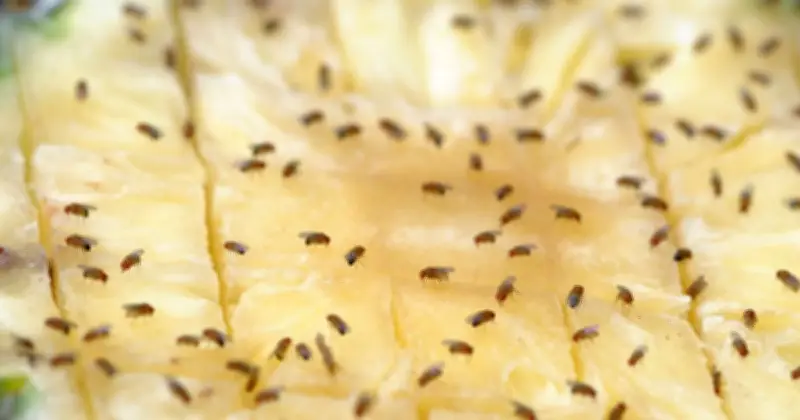
Ground cinnamon, which costs as little as 89p at Aldi, can be sprinkled around bins to help keep fruit flies away, avoiding the need for expensive harmful chemicals.
Fruit flies are a common nuisance in kitchens, where they feed on fresh produce and linger in the air. The spice contains strong-smelling compounds widely reported to have an effect on insects.
Research on cinnamon's effects
Research published in PubMed examined 17 volatile plant compounds for their effects on spotted wing drosophila. The researchers reported that cinnamon oil and its components had the highest contact toxicity among the compounds tested, while also stating that the most effective natural products required further field testing.
There are also practical steps households can take to make kitchens less suitable for fruit flies. The Royal Horticultural Society (RHS) explains that many vinegar flies feed on decomposing organic matter, particularly fruit, and says several species can occur in homes around fruit.
Hygiene and trapping advice
The RHS recommends good hygiene when dealing with fruit flies and advises removing old, damaged and diseased fruit rather than allowing it to remain available. Its guidance also highlights trapping and monitoring as ways of managing spotted wing drosophila.
Anyone wanting to test the cinnamon method could put a small amount around the outside of the bin, particularly where flies are being noticed. There is no recommended dosage; simply open the jar and leave a generous dusting.
Not a universal solution
There are different types of fruit fly, and each may react differently to cinnamon. The RHS distinguishes between different groups commonly referred to as fruit or vinegar flies, which is another reason not to treat the cinnamon research as proof of a universal solution.
At 89p, the Aldi spice is relatively inexpensive to try, but the evidence supports treating it as an optional household tip rather than a proven pest-control treatment.