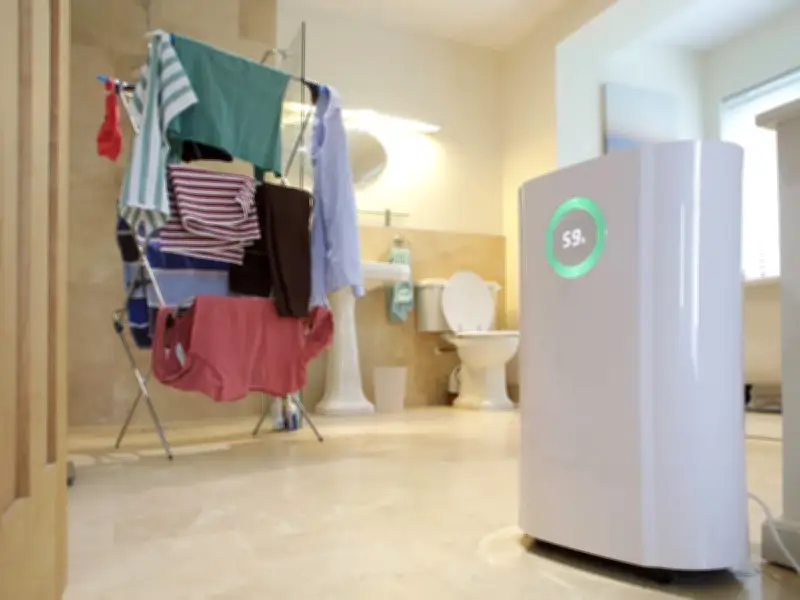
Drying wet washing indoors during freezing winter weather can quickly become a battle against damp, rising energy bills and condensation. Experts agree on the same principle: contain the moisture in one area and provide it with an escape route.
Best rooms for drying clothes
George Penny, home energy expert at The Solar Co, said: "The bathroom is usually the best choice, provided it has an extractor fan or a window that opens. It's already designed to handle moisture, and the extractor fan can pull the damp air outside before it spreads through the rest of the house."
He added that a utility room fitted with an extractor fan or a spare bedroom with the door shut and a window cracked open are strong backups, while living rooms and bedrooms should be avoided.
Chris Michael, co-founder of Meaco, echoed the importance of keeping the door shut: "If you use a dehumidifier, a smaller room with the door closed lets you concentrate drying in one area. If you don't have one, choose a warm room with good ventilation, ideally with an extractor fan. Keep the internal door closed to limit the moisture to the room."
Speed up the drying process
Getting laundry to dry faster mainly depends on what you do before hanging it on the drying rack. Select the fastest spin cycle appropriate for your fabrics to extract as much water as you can. George recommended rolling heavy jumpers or towels inside a dry bath towel and pressing down firmly to squeeze out excess water.
Chris added: "If you're drying washing without a dehumidifier, opening a window helps some moisture escape. If you're using a dehumidifier, close the windows and door so it can work on the air in that room."
He cautioned that simply cranking up the thermostat won't tackle damp on its own: "Heating alone does not remove the water released into the air. Combine warmth with ventilation or a dehumidifier. Simply turning up the thermostat leaves that moisture inside your home."
Radiator drying and drying times
Both Chris and Salah Sun, head of product marketing at Beko, warn against hanging wet clothes over radiators. George recommended using targeted heat near the clothes airer, combined with ventilation, rather than warming the entire house solely for drying laundry.
How long clothes take to dry depends on fabric thickness, temperature and air circulation. George reckons lighter items like shirts and T-shirts need four to six hours, while jeans and towels require 12 to 24 hours in a well-aired room with a fan and gentle heat, whereas cold, stagnant rooms take considerably longer.
During Meaco trials on 13 T-shirts in a utility room, a desiccant dehumidifier with a fan managed it in one hour and 40 minutes, while a compressor model with a fan took just under two hours.
Preventing damp and mould
To keep damp and mould at bay, Chris suggests maintaining around 55% relative humidity during colder months and staying alert for ongoing window condensation, musty odours or mould around frames and behind furnishings.
Salah noted that winter heating, paired with shut windows and damp laundry, can allow condensation to penetrate walls, carpets and furniture if not properly managed.