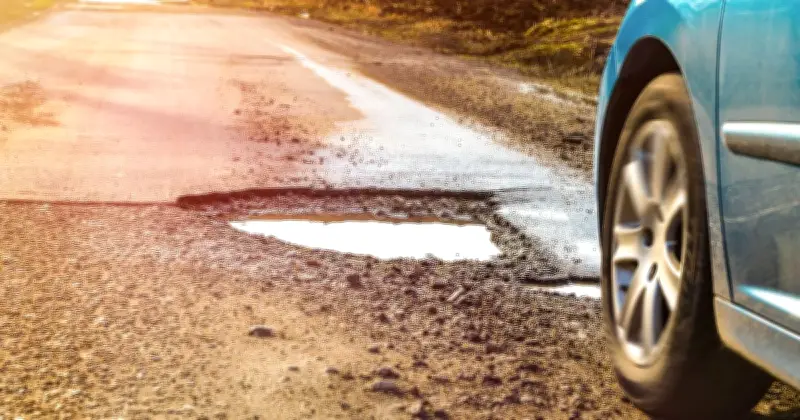
Potholes are a major headache for UK drivers, but a tyre expert has revealed how motorists can drive through craters without destroying their rubber, potentially saving hundreds of pounds in repair costs. Striking a pothole in the wrong place can cause heavy damage to vehicles.
Pothole Damage on the Rise
Earlier this year, reports to the RAC from broken-down drivers around potholes averaged 225 per day in February. That number is more than five times the 43 per day recorded throughout the whole of 2025. Budget tyres account for around 43% of replacements due to their cheap price tags. However, scrimping on a cheaper tyre could backfire when the car is put under strain.
Craig Sprigmore, Retail Director at Goodyear, stressed that premium tyres are likely to offer better protection. More premium brands tend to use stronger internal belt packages and tougher rubber compounds. More expensive tyres are also generally fitted with reinforced sidewall designs to better absorb and disperse sharp impacts.
Expert Advice on Tyre Choice
Speaking to the Express, Craig said: "Premium tyres aren't behind the wheel doing the driving; they're on the wheel refining the driving experience, helping provide the security and confidence drivers want. Their higher-quality engineering and manufacturing can make them more likely to withstand pothole damage, though no tyre can withstand every road-surface obstacle."
"A pothole's impact can concentrate a large amount of energy into a small area of the tyre. Depending on the vehicle's speed and the angle of impact, this can damage the ply cords that help the tyre maintain its strength and shape. Tyre choice also matters for performance, as it can significantly affect stopping distances and wet-road performance, including the tyre's ability to evacuate surface water and grip the tarmac."
Avoiding Potholes Where Possible
However, Craig urged motorists to simply avoid potholes whenever they possibly could. Even adjusting the steering by a fraction of a centimetre could be enough to stop road users striking the gap. He added: "Drivers should stay alert and avoid potholes where it's safe to do so. Well-maintained roads also help reduce the risk of impact-related damage and support tyre performance and longevity."
In October, the Government confirmed that an extensive road resurfacing mission has gotten underway, with almost 7,000 miles completed this year. According to the Department for Transport (DfT), figures from local councils show that there has been over 10% more resurfacing than last year. Officials stressed that a whopping £4.9 billion has been spent on roads this year alone.