Glastonbury, known globally for its music festival, is also the UK's caravan capital, with an estimated 300 people living on the roadside or in rudimentary encampments. The presence of around 150 caravans has led to friction with local residents, who complain of fly-tipping and antisocial behaviour.
However, many van-dwellers are not living on the roadside by choice. In June this year, two caravans were destroyed in an apparent arson attack, with a cooking gas cylinder exploding "like a bomb."
Growing Hostility and Fear
"It feels like a hate crime," one caravan-dweller told The Guardian. "If the wind had been blowing the other way, more vans could have gone up and people could have been killed."

Despite the hostility, Glastonbury remains a refuge for many. YouTuber Joe Fish spoke to Lou, a woman who says she has turned down an offer of temporary council accommodation because she feels safer in a caravan: "My own personal experience is that people that are left on the edge, they're vulnerable. They're just vulnerable people and you take away that support network and you can end up with trouble, and troubled people."
Community Support Network
Lou said the caravan community has formed its own support network, though it can be torn apart: "There's a good little sort of community of people which is totally getting broken down every time we get moved on," she said. "That community where we help each other out. People that are completely on the edge, that have nothing to live (on) from one day to the next, we all share. It's the kindest group of people you could ever meet."
Many Glastonbury residents would like to reduce the number of caravan households, which numbered 157 at last count. Local Conservative councillor Susannah Hart has called for Somerset council to declare a "state of emergency."
Housing Shortage and Costs
There are around 13,000 households on Somerset's "homefinder" list looking for social housing. Liberal Democrat MP for Glastonbury and Somerton, Sarah Dyke, told the House of Commons that the availability of affordable housing in Somerset had plummeted and rents had risen, forcing people into vans and vehicles.
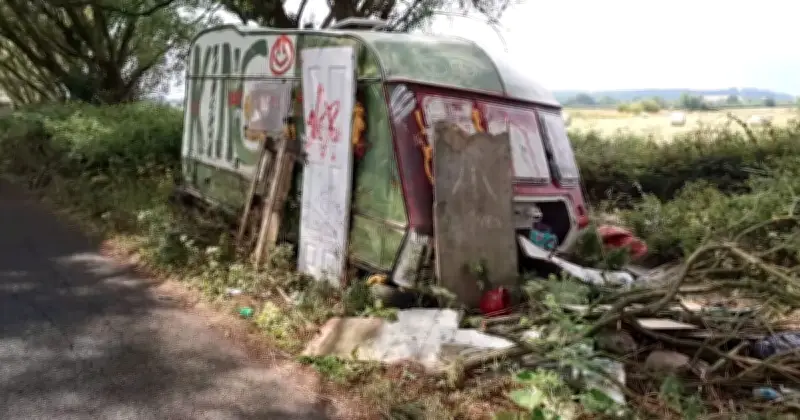
It can be a dangerous way to live, with minimal heating and sanitation, as well as the threat of violence. Joe came across one caravan that had been partially demolished by a fallen tree branch: "You can see this was being inhabited," he said. "It's got food on the side. You can see still see the pans up on the hob."
Councillor Ewan Cameron told Joe that the council has removed over 100 abandoned vehicles in and around the town since 2021, at a cost of around £72,000. Reflecting on how locals must feel about living on roads lined with dozens of caravans, Joe says: "If you live in these properties, how would you feel if this was the view that you look out on every morning?"
"But it's a really tricky situation," he added. "At the moment, there is nowhere else for the van dwellers to actually call home."