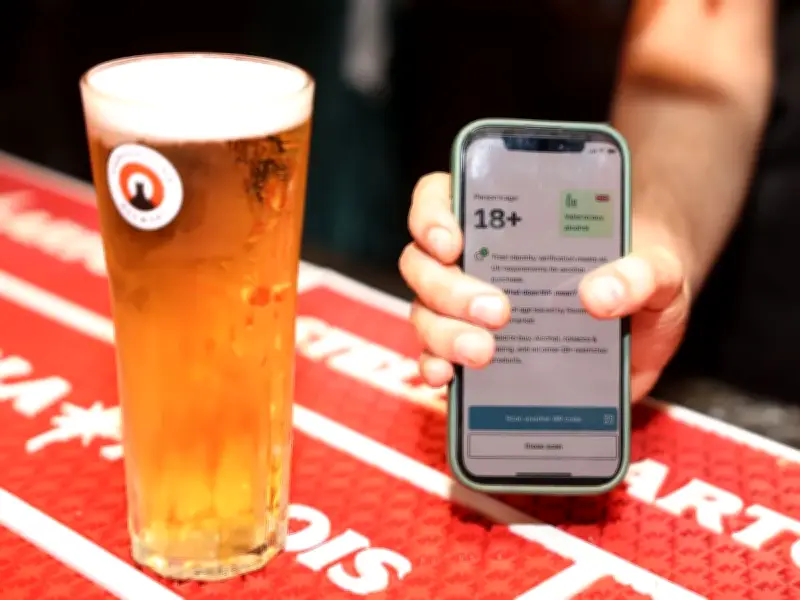
New laws announced today allow pubs, restaurants, shops and music venues to accept digital age verification apps when customers buy alcohol, meaning revellers can leave their paper ID at home.
Up to now buyers have needed to show physical documents with their date of birth and photo, such as a passport or driving licence. The rules mean approved phone apps can now be used as an alternative to showing a passport or driving licence on a night out.
How the apps work
One of these apps, Yoti ID, requires young-looking revellers to scan their face before generating a QR code, which can be presented to bar staff while ordering a drink. The QR code is only valid for 30 seconds to prevent it being used by other people. It requires a driving licence or passport to set up, but these can then be left at home.

A face scan checks that the person trying to buy alcohol is the person who set up the app. The government will continually review which apps make the grade to be acceptable forms of ID.
Future expansion and official reaction
In coming years it is hoped the system can be expanded beyond alcohol sales to let shoppers buy other products like paracetamol, alcohol and cigarettes.
Digital government minister Stephanie Peacock said: "It will remain an individual or business’ choice whether to use or adopt it, and physical ID will remain a valid way for customers to prove their age. This groundbreaking change in the law will mean you do not need to carry a physical ID, nor hand over sensitive personal information such as your name or address just to prove your age - allowing everyone to feel safer on a night out."
Yoti co-founder Robin Tombs said: "The change in law to allow digital IDs for alcohol sales is a landmark moment for digital identity in the UK." And he continued: "Customers can share only the information needed to verify their age, depending on the certified service being used, giving them an additional secure and privacy-preserving way to prove they are over 18."
Voluntary measure and available apps
There is no obligation for businesses to bring in the measure. It is separate to Keir Starmer's controversial plan to bring in compulsory digital ID to prove people have the right to work in the country.
The move follows a change to the rules under the Licensing Act expanding acceptable forms of ID. Currently available apps include Luciditi ID, Yoti ID and Post Office EasyID.
David Crack from CDD Services said: "This legislation enables certified providers to deliver age checks securely, without exposing unnecessary personal information. With widespread adoption and interoperability, digital verification can become an enabler to participation—not simply a gatekeeper. That’s when the real magic begins."