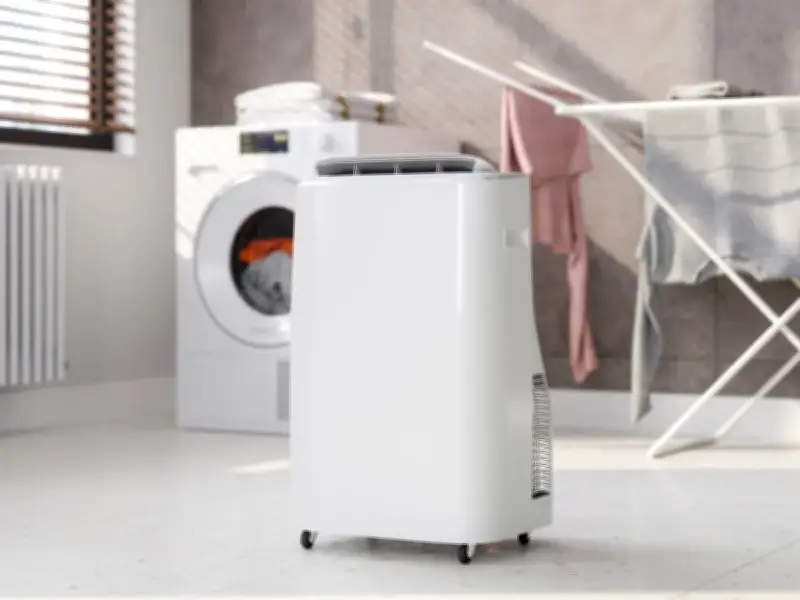
Placing a dehumidifier at least 15 centimetres away from walls and furniture is key to drying clothes faster and preventing condensation, while positioning it against a wall can reduce its effectiveness and push up energy bills, experts have warned.
Dehumidifiers are among the most effective ways to dry clothes quickly and keep them smelling fresh during the winter months, but using them incorrectly could see energy bills soar. Damp clothes can take a long time to dry and, if left too long, can end up smelling musty or developing mould.
Clothes dry far more efficiently outside because of the airflow carrying away excess moisture, which is why dehumidifiers have become a popular purchase at this time of year. However, they will only do their job properly if used in the right way.
Why clearance matters
Experts at Eva Dry warned that positioning a dehumidifier against a wall will prevent it from drying clothes effectively. They said: "Remember that dehumidifiers operate by sucking in the damp air. They then remove excess humidity and discharge the dehumidified fresh air. Therefore, if you place your dehumidifier against a surface that blocks the intake or exhaust vents, you reduce the positive effects of your unit."
It is crucial to ensure there is plenty of clearance around every side of a dehumidifier, as without this the damp air will not be able to flow properly and moisture will continue to hang in the room. Positioning dehumidifiers beside a corner or against furniture can also lead to the unit overheating and increase the likelihood of the appliance malfunctioning.
Instead, ensure a dehumidifier is positioned at least 15 centimetres away from all surrounding surfaces, as it requires an area with strong air circulation to function properly.
Best positions for drying and condensation
When drying laundry, position the dehumidifier in reverse so that the warm-air outlet faces towards the clothes airer, and the gentle warmth accelerates the drying process. Ensure that all doors and windows remain shut when operating a dehumidifier, as otherwise the appliance will be continuously removing fresh humid air from outside and clothes will take considerably longer to dry.
Dehumidifiers are not only handy for drying laundry — humidity can also trigger condensation, which occurs when warm air comes into contact with a cold surface, creating moisture. Condensation most commonly builds up on windows, and if left untreated, it can rapidly lead to mould growth in the surrounding area, which can creep beneath wallpaper or work its way inside furniture.
One straightforward way to tackle condensation is to position the dehumidifier in the hallway. The expert added: "For dehumidifiers that cover large areas, it's a good idea to place them somewhere central such as a hallway or landing."
Hallways and other central locations benefit from good airflow that circulates evenly throughout the home, so simply leave doors open, switch the dehumidifier on, and it should swiftly bring down the humidity levels indoors. This approach tackles condensation without the need to run the dehumidifier for lengthy periods, meaning savings on energy bills while keeping the home more comfortable.