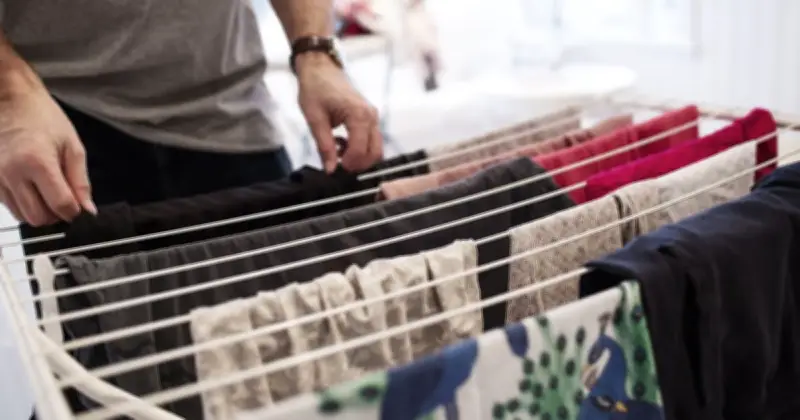
A simple 10-minute washing machine step could help households dry laundry indoors faster this winter without relying on a tumble dryer, according to money-saving expert Ricky Willis of the website Skint Dad.
Tumble dryers, along with washing machines and dishwashers, account for 14% of a typical energy bill, making them one of the most energy-hungry home appliances, according to the Energy Saving Trust. With household expenses rising, many people are looking for ways to cut back on using them or stop using them altogether.
The 10-minute extra spin trick
Willis urged households to always put their washing machine on a high spin cycle once the wash cycle has finished. He said: “That way, less moisture will be retained, and drying will take much less time. Trust me; when you take your load out of the washer, you’ll be thankful you’ve listened to this advice.”
Appliance retailer AO explained that the 10 to 15-minute extra spin works by spinning the drum at ultra-high speeds, which “pulls water from the fabric by sheer force”. They said: “In a nutshell, the faster and longer the spin, the more water will be extracted from your clothes. Since there’s now less water in your clothes, these clothes will dry much quicker when hung up or popped into your tumble dryer. This nifty little trick will help save you a lot of time relying on drying clothes in winter.”
Why the method works and saves energy
Removing more water from clothes makes drying easier, as there is less moisture to evaporate. Well-spun clothes retain less moisture, so they dry faster when hung up, even in cool, damp winter weather. An extra spin can shorten drying time by several hours or even a full day, which is especially helpful as winter approaches, when higher humidity and less sunshine can slow natural drying.
Adding an extra spin cycle uses far less energy than running a heated airer or tumble dryer. A typical spin is energy-efficient because it uses mechanical force, rather than heat, to remove water. Exact figures vary depending on the machine and energy rates, but an extra spin may use as little as 0.1 kWh, while a heated airer could use 0.3 to 0.5 kWh per hour over several hours.
Best places to dry clothes indoors
Once clothes are out of the washing machine, Willis said where you position your drying rack in the house is “very important”. He explained: “Wet clothes have a horrible habit of causing mould if they’re damp for too long, so drying clothes efficiently inside means you should identify the best rooms in your house to stand your drying rack. In damp weather, find the least humid room in your house to carry out the drying process, as wet clothes release damp into the air. Ensure you have enough floor space to stand your drying rack. Whichever room you choose to stand your drying rack should have enough floor space, and the more available open space, the better.”
He noted that the room could be a dedicated laundry room, the kitchen, garage, spare room, or even the dining room, but it should ideally have sunlight and encourage airflow, so opening doors and windows helps. The important thing is to ensure the drying rack is not surrounded by too many oversized items, as this will slow down the drying process.