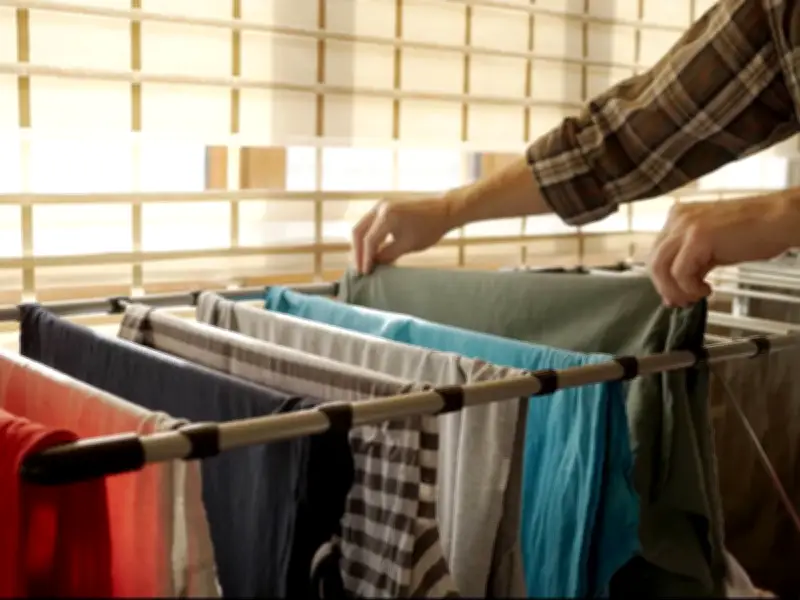
Drying laundry indoors becomes problematic at this time of year if you're keen to avoid relying on a tumble dryer. While a tumble dryer can rapidly dry clothes inside, it's expensive to buy and run, and may occupy significant space in your home.
Tumble dryers, alongside washing machines and dishwashers, represent 14% of a typical energy bill, making them among the "most energy thirsty" household appliances, according to the Energy Saving Trust. To reduce energy bills, you might be seeking to limit their use or eliminate them entirely.
If so, there's one crucial step you need to take after every wash cycle, according to Ricky Willis of the money-saving website Skint Dad.
The secret to faster drying
The secret to drying clothes more quickly without a tumble dryer lies in preparation, according to Ricky. He advised households to always set your washing machine to a high spin cycle once the wash programme has completed.
He said, "That way, less moisture will be retained, and drying will take much less time. Trust me; when you take your load out of the washer, you'll be thankful you've listened to this advice."
Appliance retailer AO explained that the 10 to 15-minute additional spin you're incorporating works by rotating the drum at extremely high speeds, which "pulls water from the fabric by sheer force". They explained, "In a nutshell, the faster and longer the spin, the more water will be extracted from your clothes."
Since there's now less water in your clothes, these clothes will dry much quicker when hung up or popped into your tumble dryer. This nifty little trick will help save you a lot of time relying on drying clothes in winter.
Why is this method effective?
Extracting more water from your clothes makes the drying process considerably easier, as there is less moisture left to evaporate. Thoroughly spun clothes hold less moisture, meaning they dry more rapidly when hung up, even in cool and damp winter conditions.
An additional spin can cut drying time by several hours or even an entire day, which proves particularly beneficial as we edge closer to winter. The colder months typically bring greater humidity and reduced sunshine, both of which can hamper natural drying. Running an extra spin cycle will help trim drying times as the chillier weather draws in.
Is a spin cycle energy-saving?
Running an extra spin cycle consumes far less energy than operating a heated airer or tumble dryer. A standard spin is energy-efficient because it relies on mechanical force rather than heat to draw out moisture.
A washing machine's spin cycle uses only a small fraction of the electricity required by a heated airer or tumble dryer. Precise figures will differ depending on your appliance and energy tariff, but an additional spin may use as little as 0.1 kWh, while a heated airer could consume between 0.3 and 0.5 kWh per hour over several hours.
An extra spin cycle is an excellent starting point when drying clothes and an energy-conscious decision that can help bring down your overall energy consumption.
What is the best place in your home to dry your clothes?
Once your laundry emerges from the washing machine, the next step is to place it on an indoor airer for complete drying. According to Ricky, the location where you set up your drying rack within your home is "very important".
He explained, "Wet clothes have a horrible habit of causing mould if they're damp for too long, so drying clothes efficiently inside means you should identify the best rooms in your house to stand your drying rack."
In damp weather, find the least humid room in your house to carry out the drying process, as wet clothes release damp into the air. Ensure you have enough floor space to stand your drying rack. Whichever room you choose to stand your drying rack should have enough floor space, and the more available open space, the better.
Ricky highlighted that this could be a dedicated laundry area, the kitchen, garage, spare bedroom, or even your dining room, though it should "ideally" benefit from natural sunlight and promote air circulation, so opening doors and windows will aid the indoor drying of your clothes. The "important thing" is to make certain your drying rack isn't surrounded by an excess of other large items, as this will "slow down the drying process".