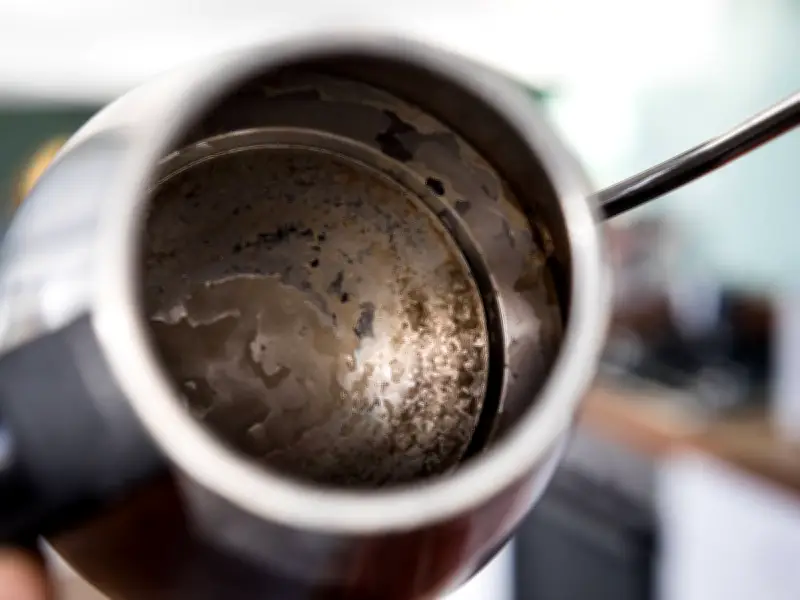
A cleaning enthusiast has shared a £2.50 citric acid trick that she says is the most effective way to descale a kettle, leaving it sparkling clean without the smell or taste of vinegar.
Why limescale builds up
Living in a hard water area means dealing with limescale, a chalky deposit mainly made of calcium carbonate that forms when hard water is heated or evaporates. Kettles are particularly prone because minerals separate out during boiling and settle at the base, gradually forming a crusty layer.
Left unchecked, limescale can damage the kettle and increase energy bills, as a scaled heating element has to work harder to boil water.
The citric acid method
Instagram user Lucy demonstrated the method in a video, showing a kettle with visible limescale at the bottom. She filled the kettle about a quarter full with tap water, added roughly half a box (about 125g) of citric acid powder, and boiled it as normal. After cooling, the inside was gleaming with no trace of limescale.
"Every time, it amazes me how well it's come out," she said. "Can you see that? Not a single bit of limescale inside. It's honestly like magic. There you have it: the quickest and easiest way to descale your kettle."
She added: "I have tried many ways, and this is by far the most effective! And if you're wondering why you don't have limescale, it's because you get it with hard water!"
Viewer reactions and alternatives
The clip drew comments from viewers who praised citric acid as the best descaler. One commenter noted that a little goes a long way, suggesting using 2 tablespoons for a full kettle. Others mentioned that slicing a lemon and boiling it can work, though concentrated powder is more thorough for stubborn limescale.
For those without citric acid, vinegar or lemon juice methods can be used, involving boiling and soaking for 20-30 minutes, then rinsing thoroughly.