

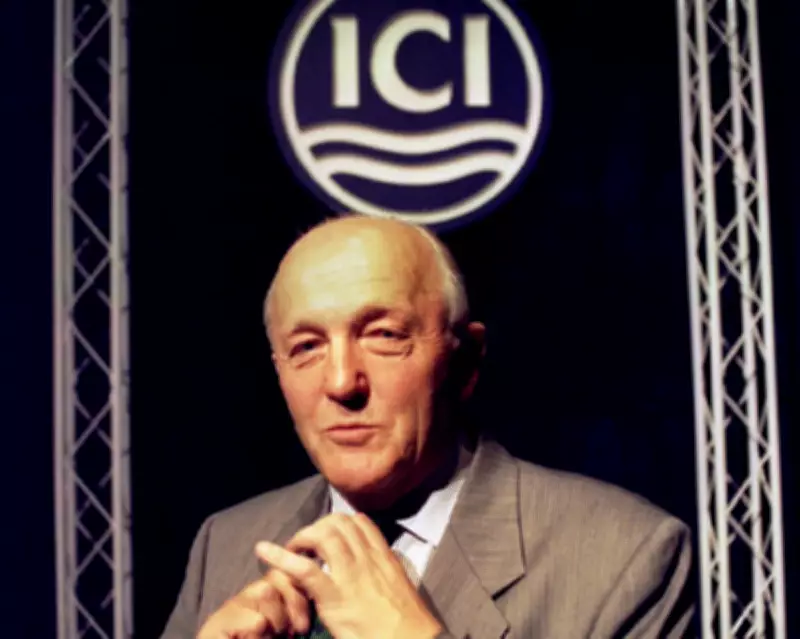
Sir Ronnie Hampel: A Titan of British Industry Passes at 93
Sir Ronnie Hampel, a formidable figure in the British business establishment, has died at the age of 93. As chief executive and chairman of ICI in the 1990s, he played a pivotal role in reshaping the nation's largest manufacturing company and overseeing the creation of the pharmaceutical giant Zeneca, which later became part of AstraZeneca.
Early Career and Rise at ICI
Hampel joined ICI in 1955, during an era when the company was regarded as the bellwether of British industry. He quickly advanced through various roles, gaining experience in its sprawling divisions. Initially, heavy chemicals dominated ICI's operations, but Hampel recognized the emerging potential of bioscience sectors. In 1965, he moved to the plant protection division, marking the start of his deep involvement in ICI's strategic evolution.
After a stint in the United States, he returned to London in 1977 as general manager, commercial, a position that groomed him for higher leadership. This role involved dealings with ministers and government departments, including participation in a committee addressing the 1978 lorry drivers' strike, which gave him a lasting taste for Whitehall connections.

Leadership and the Zeneca Demerger
In the 1980s, Hampel's reputation for toughness and intellectual clarity grew as he chaired the paints division and later ICI Agrochemicals. By 1985, he was appointed to the ICI board, a time when the company achieved record profits but faced calls for greater focus. Hampel championed a more streamlined management approach, leading a taskforce in 1990 that recommended concentrating on seven core businesses and selling others, such as fertilisers.
The company faced a significant challenge in 1991 when Lord James Hanson acquired a 2.8% stake, triggering a phoney bidding war. Hampel was instrumental in ICI's counterattack, reviewing tactics daily and commissioning forensic examinations of Hanson's accounts, which helped turn the tide. This success cemented his position, and he became chief operating officer.
The pressure from Hanson accelerated ICI's restructuring. In February 1993, the company announced a split, demerging its bioscience businesses into a new entity named Zeneca. Hampel served as chief executive and deputy chairman of ICI during this transformative period.
Chairmanship and Corporate Governance
In 1995, Hampel was knighted and became chairman of ICI. He oversaw the controversial appointment of Charles Miller Smith as chief executive, who led acquisitions like Unilever's speciality chemicals business. However, these moves resulted in stifling debt and contributed to ICI's eventual break-up, with Hampel sharing responsibility for the financial strain.
Concurrently, Hampel accepted a government role as chairman of the Hampel committee on corporate governance. He skillfully managed media expectations, producing a report that codified previous guidelines without imposing many new obligations, showcasing his diplomatic acumen.
Later Years and Legacy
After leaving ICI in 1999, Hampel became chair of United News and Media, where he clashed with chief executive Lord Clive Hollick over remuneration disclosure and facilitated the sale of television interests at a market peak. He also sold the Daily Express to Richard Desmond, a move that dismayed some journalists.
ICI was eventually sold off in pieces, but its legacy endures through companies like Ineos and AkzoNobel. Meanwhile, Zeneca evolved into AstraZeneca, validating Hampel's decision to split it from ICI.
Personal Life and Interests
Born in Shrewsbury in 1932 to Austrian immigrants, Hampel attended Canford school in Dorset and later studied modern languages and law at Corpus Christi College, Cambridge, where he won a half-blue in tennis. He served in the Royal Horse Artillery during national service.
In 1957, he married Jane Hewson, who supported him throughout his career. They had four children: Katie, Andrew, Rupert, and Peter. Hampel was an avid tennis and golf player, becoming one of the first Britons to join the Augusta National club. He also served on the Wimbledon tennis committee and chaired the trustees of the Eden Project in Cornwall during retirement.

His influence extended beyond ICI, including a 13-year tenure as a non-executive director at BAE Systems, where he confronted leadership issues head-on. Sir Ronnie Hampel's death marks the end of an era for British business, leaving a legacy of strategic vision and unwavering determination.





