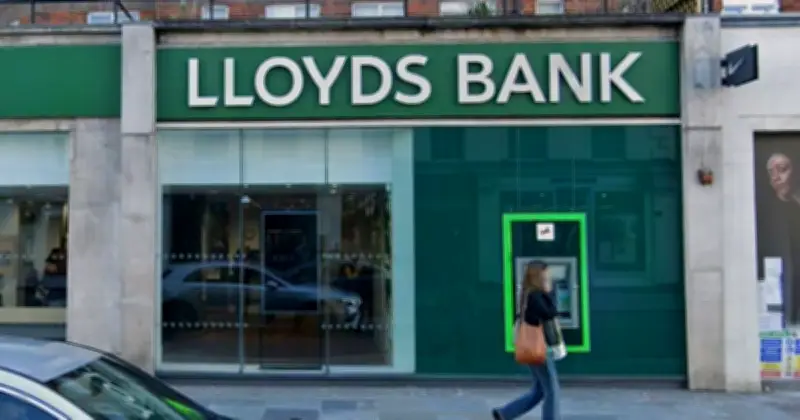
The Government has tabled new legislation that will place legal obligations on the Financial Conduct Authority (FCA) to safeguard in-person banking services across the UK, with changes expected to take effect early in the new year.
An amendment to the 2026 Finance Bill has been drafted, mandating that the FCA must "exercise its functions so as to secure, so far as reasonably practicable, that individuals and businesses throughout the United Kingdom have reasonable access to face-to-face banking services".
Review triggers new legal duties
The addition follows an independent review into banking services, which assessed people's needs for in-person services such as access to cash. One recommendation was that the Government should put new laws on the books "as soon as possible to create an access to banking services obligation on designated banks", and that this should "extend the remit and powers of the FCA".
Richard Lloyd, who chaired the review, told the BBC Money Box show: "If we see cross-party support in Parliament for this, then I think we should see the law changed and put in place in time for early in the new year."
He added: "We then need the regulator to get on and supervise this. So this isn't going to be a voluntary scheme; this is going to be supervised, clear rules set out for the banks to have to follow."
Banks urged not to wait for legislation
Mr Lloyd said he has already been in discussions with bosses at the big name banks, telling them to act to safeguard their in-person provision even before any rule changes. He said: "The message I've been giving to the banks as well is: don't wait for legislation, get on with this now."
He added: "We can see the harm that's being done to communities, individuals, to small business owners—don't wait for the law before you respond." Many of the big name banks continue to close branches, leaving smaller towns and rural communities with minimal in-person provision or access to cash.
He shared stories from people in more remote areas with limited bank branch access, where "people are having to spend a whole day doing their banking". Mr Lloyd said: "That is not reasonable. Those rules will be set out: what is acceptable in terms of people's travel and where in-person facilities would naturally be put. So I think we should see a significant change here, and that will be the test: is it reasonable? Does it work for consumers?"
What the proposed laws include
The draft legislation sets out that when the FCA considers "whether access to face-to-face banking services is reasonable", it must have "particular regard" for the rurality and remoteness of a community, including the distance and travel time people face to access alternative services; the availability, frequency and affordability of public transport in the area; digital exclusion and access to reliable broadband and mobile connectivity; the age and social care profiles of the local population; and the needs of cash-dependent consumers and businesses.
Under the amendment, the FCA would also be tasked with publishing guidance "setting out the circumstances in which the closure of a bank branch or reduction in face-to-face banking provision would result in unreasonable access to banking services". In a case where the FCA decides there would no longer be reasonable access after a branch closure, it may direct one or more banks or building societies in how to ensure adequate provision continues.
Another obligation is that the Treasury "must lay before Parliament an annual report prepared by the FCA on access to face-to-face banking services, including an assessment of provision in rural and remote communities".
Shared hubs and Post Office role
Mr Lloyd told the Money Box show he is hopeful banks will do more to maintain in-person services. He said: "I think we'll see those shared banking hubs expanded, offering more services, more consistent services for more of the day. I think we'll still see a role for the Post Office. But there are already signs—and I'm wanting to see more of this quicker—that the banks are recognizing that it's in their interest, as well as in the interest of their customers, that they keep in-person facilities open."
Banking hubs are shared spaces run by the Post Office where basic banking services are available, with opening times varying. Basic banking services, including taking out cash, making a deposit or paying in a cheque, can also be accessed at local Post Office branches. The full Access to Banking review report is available on the Government website.