
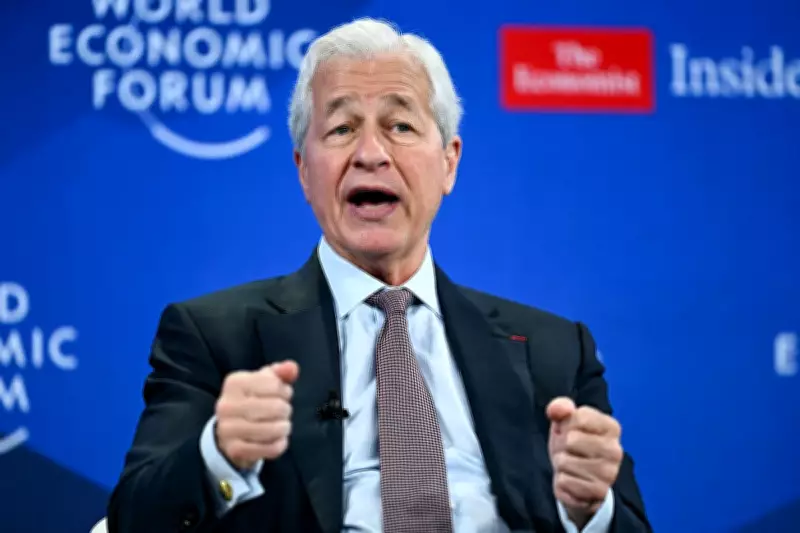
Jamie Dimon, the chief executive of JPMorgan Chase, has issued a stark warning that the world faces significant interest rate shocks as a direct consequence of Donald Trump's military conflict with Iran. The banking leader cautioned that spiralling oil and gas prices, driven by Iran's blockade of the crucial Strait of Hormuz shipping lane and attacks on regional energy infrastructure, would create stickier inflation that pushes interest rates higher than markets currently anticipate.
Economic Ripples from Geopolitical Conflict
Higher interest rates translate to more expensive borrowing for loans, investment funds, mortgages, and government debt. They typically correlate with reduced economic growth as companies scale back spending on new projects and hiring, while consumers cut non-essential purchases to manage household finances amid rising essential bills. Mr Dimon elaborated that nations heavily dependent on imported energy are already experiencing these effects, with disruptions extending beyond energy to commodity byproducts like fertiliser and helium.
Global Supply Chain Vulnerabilities
"Given our complex global supply chains, countries are experiencing disruptions in shipbuilding, food and farming, among others," Dimon stated in his annual shareholder letter. He emphasised that prolonged elevated oil prices pose far greater risks than temporary spikes, with inflation expected to reach approximately 4 percent in the UK this year, while food prices could more than double that figure.
The JP Morgan leader noted that the outcome of current geopolitical events may prove decisive in shaping the future global economic order, though he acknowledged uncertainty remains about the ultimate impact.
Central Bank Dilemmas and Market Expectations
Last month, the Bank of England's Monetary Policy Committee voted unanimously to maintain interest rates at 3.75 percent, citing uncertainty surrounding the Middle East conflict that had just commenced. The committee is scheduled to reconvene on 30 April, with significant divisions emerging between economists and market rate expectations.
Money market traders currently anticipate two interest rate increases this year, though this projection has fluctuated from nearly four increases just two weeks prior. Most major economists maintain expectations that the Bank of England will hold rates steady through at least the first half of 2026, with some even pricing in potential cuts later in the year.
The Policy Conundrum
The Monetary Policy Committee faces a complex dilemma: while raising rates represents the conventional response to inflation, cutting them typically addresses poorly performing economies and rising unemployment - both challenges currently confronting the United Kingdom. Domestic-focused analysts may revise their outlooks in coming weeks as the new financial year commences, the MPC vote approaches, and Trump's deadline for Iran to reopen the Strait of Hormuz expires.
Meanwhile, the Organisation for Economic Co-operation and Development recently predicted both the Bank of England and US Federal Reserve would maintain current interest rate levels throughout this year. The Bank of Japan is expected to increase rates this month, while several major banks, including JP Morgan Chase, forecast the European Central Bank could raise rates up to three times this year.
Criticism of Trump's Diplomatic Approach
In his shareholder communication, Dimon appeared critical of Donald Trump's combative diplomatic stance, noting the former president has complained about world leaders including Sir Keir Starmer for insufficient support in the Middle East conflict and has even suggested the United States might consider withdrawing from NATO.
The Wall Street giant warned that such moves could not only weaken American influence but might eventually render other nations vulnerable to manipulation by "bad actors." Dimon cautioned that economic weakening of democracies or fragmentation of their economic bonds could produce truly adverse consequences, precisely what adversaries and autocratic nations desire as their stated objective.
"They would like to see all of our allies far less dependent on the United States and therefore far more dependent on them," Dimon explained. "In this scenario, many countries would be compelled to seek deeper economic bonds with some possible bad actors - over time, they could become vassals of these countries and unable to avoid coercion from them."
Brent crude oil prices, which dipped below $100 at April's beginning, have since rebounded to approximately $110, reflecting the ongoing volatility and uncertainty surrounding energy markets amid the Iran conflict and its broader geopolitical implications.




